




Karzai to seek removal of Taliban from UN blacklist
Afghan President Hamid Karzai said he would press for Taliban names to be removed from a UN blacklist to spur reconciliation as support grows among the world powers for a negotiated truce with local fighters who renounce Al-Qaeda.
Karzai said he would ask for the names to be scratched at a major conference in London Thursday at which he hoped to win Western support for a plan to offer money and jobs to cajole Taliban fighters into laying down arms.
Afghan President Hamid Karzai said he would press for Taliban names to be removed from a UN blacklist to spur reconciliation as support grows among the world powers for a negotiated truce with local fighters who renounce Al-Qaeda.
Karzai said he would ask for the names to be scratched at a major conference in London Thursday at which he hoped to win Western support for a plan to offer money and jobs to cajole Taliban fighters into laying down arms.
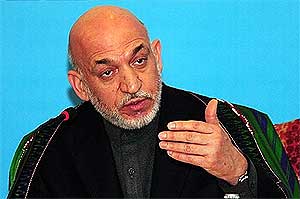 "I will be making a statement at the conference in London to the effect of removing Taliban names from the UN sanctions list," Karzai told reporters in Istanbul.
The idea had previously met resistance but "as we are talking today, there is more willingness that this can be reconsidered," he said.
The White House response was noncommittal but did not rule out Karzai's plan.
White House spokesman Robert Gibbs noted that top US generals David Petraeus and Stanley McChrystal had drawn parallels between Afghanistan and reconciliation schemes that had worked with factions in Iraq.
Gibbs did not comment in detail on Karzai's plan.
But he said Washington was open to "a similar path to what happened in Iraq... provided that whoever this is accepts the Afghan constitution, renounces violence, and publicly breaks with groups that advocate violence."
"That's, I think, what people expect under the notion of reconciliation."
The move is seen as a step towards persuading militants to accept peace talks.
Karzai wants to bring low- and mid-level fighters into mainstream society to end the gruelling insurgency but the leadership of Islamist insurgent groups active in the battered country is hostile to negotiations.
The NATO military commander in Afghanistan has also voiced support for negotiated peace.
"As a soldier, my personal feeling is that there's been enough fighting," US General Stanley McChrystal said in an interview with Britain's Financial Times published Monday.
"I believe that a political solution to all conflicts is the inevitable outcome. And it's the right outcome."
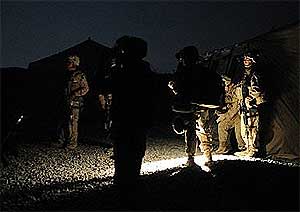 World powers meeting in London this week will back plans for a truce with local Taliban commanders in Afghanistan, provided the fighters renounce Al-Qaeda, US envoy Richard Holbrooke said Monday. Facts: UN Taliban Blacklist
The special US envoy for Afghanistan and Pakistan said 65 nations meeting in London on Thursday would back Kabul's proposal to set up a reintegration fund to persuade Taliban fighters to lay down arms.
"The reintegration program that President (Hamid) Karzai is announcing and the international community will support is an opportunity for people fighting at the local commander level to stop fighting, come in from the cold and rejoin Afghan society -- if they renounce Al-Qaeda," he said.
But Holbrooke, who was speaking during a debate to be broadcast on German's ARD television, angrily denied accusations that Washington was ready to negotiate terms with the Taliban in order to end the bloody war.
"Reintegration is not a negotiation with the Taliban leadership," he said.
Karzai was in Istanbul for talks with Pakistani President Asif Ali Zardari on Monday to be following by a meeting with leaders of his country's neighbours on Tuesday.
It was the fourth round of Turkish-sponsored fence-mending talks between the presidents of Afghanistan and Pakistan since 2007, with Ankara pushing the two neighbours to enhance cooperation against Islamist insurgents.
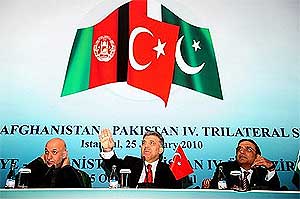 Monday's meeting was also attended by Pakistan and Afghan military and intelligence chiefs, and in a joint declaration afterwards both parties stressed cooperation between their security forces and intelligence agencies.
Turkish President Abdullah Gul said Ankara would be ready to contribute to efforts to persuade the Taliban to lay down arms.
Relations between Kabul and Islamabad became strained as extremists who fled the US-led ouster of Afghanistan's Taliban regime in late 2001 found a safe haven in Pakistan's northwestern tribal regions.
Afghanistan claims much of its insurgent violence, including attacks on US and NATO soldiers, is planned in Pakistan and has accused its neighbour of not doing enough to curb the militants.
Afghan and US officials suspect Pakistan's powerful military is sponsoring the Taliban, preparing for when US troops leave so Islamabad can influence a Taliban government and offset regional superpower India.
Under a plan announced by US President Barack Obama in December, 30,000 US troops will go to Afghanistan this year -- on top of more than 70,000 already there -- before they begin withdrawing in July 2011.
Turkey, the sole Muslim country in NATO, is using its traditionally close ties with both countries to mediate between them. It has about 1,700 soldiers in Afghanistan and takes part in reconstruction and training Afghan police.


Are you sure you want to delete this comment?
This action cannot be undone.