




US hails Taliban commander's capture as 'big success'
The United States hailed the capture of the Taliban's top commander as a "big success" in its joint efforts with Pakistan to combat extremism, an issue on which the countries often have been at odds.
The Pakistani military earlier confirmed that Mullah Abdul Ghani Baradar, second only to Mullah Mohammed Omar in the Afghan Taliban hierarchy, had been arrested but provided no details on the circumstances surrounding his capture.
The United States hailed the capture of the Taliban's top commander as a "big success" in its joint efforts with Pakistan to combat extremism, an issue on which the countries often have been at odds.
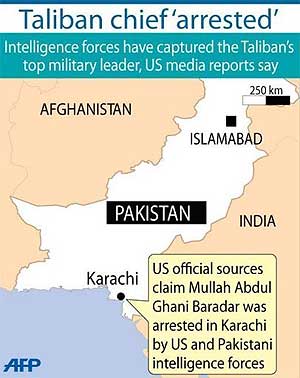 The Pakistani military earlier confirmed that Mullah Abdul Ghani Baradar, second only to Mullah Mohammed Omar in the Afghan Taliban hierarchy, had been arrested but provided no details on the circumstances surrounding his capture.
The confirmation unleashed a burst of congratulatory statements by exultant US officials, two days after the first reports that Baradar was seized in Karachi last week in a secret operation involving Pakistani and US intelligence officials.
"It is a big success for our mutual efforts in the region," White House spokesman Robert Gibbs said.
'Gold mine' of information
Baradar ran the Taliban's war against the United States in Afghanistan and was privy to what experts said was a "gold mine" of information.
He is the most important Taliban figure to be captured since a 2001 US-led invasion ousted the Islamist movement from power in Afghanistan for sheltering Osama bin Laden and other Al-Qaeda leaders blamed for the September 11 attacks.
It was not known what, if anything, he has disclosed to his interrogators but analysts said his responsibilities spanned the gamut from strategy to finances to contacts and ties with other militant groups.
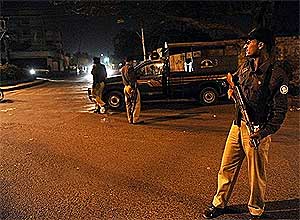 His capture in the sprawling Pakistani port city of Karachi signaled a dramatic change in direction for Islamabad, which has long resisted US pressure to take action against Taliban leaders operating from its territory.
Profile of Baradar: Taliban founding father
It could not have come at a more crucial time for the United States with US surge forces in Afghanistan engaged in their opening offensive in the southern town of Marja against Taliban forces.
Gibbs said President Barack Obama discussed the capture in a White House Situation Room session of his war cabinet that included the US ambassador to Pakistan, Anne Patterson.
"Ambassador Patterson gave a robust update on both the governmental and military side," Gibbs said.
General Stanley McChrystal, ground commander of the 113,000 US-led and NATO troops fighting against the Taliban across Afghanistan, was to join the meeting via video conference, the White House said.
In Islamabad, Major General Athar Abbas, the Pakistani military spokesman, announced Baradar's arrest in a curt and unrevealing statement.
"At the conclusion of detailed identification procedure, it has been confirmed that one of the persons arrested happens to be Mullah Baradar," he said.
'Significant development'
In Kabul, Richard Holbrooke, the special US envoy, said Baradar "got caught" and called it "a significant development."
But Holbrooke, like others, refused to go into detail about the operation.
"I am not going to join any speculation," he said. "I am not in a position to share. This is an intelligence matter, but we commend the Pakistanis for their role in this and it is part of the deepening co-operation between us."
US officials had long complained that Islamabad's spy service was failing to crack down on the Afghan Taliban but had recently refrained from public criticism while Washington doled out billions in military and civilian aid.
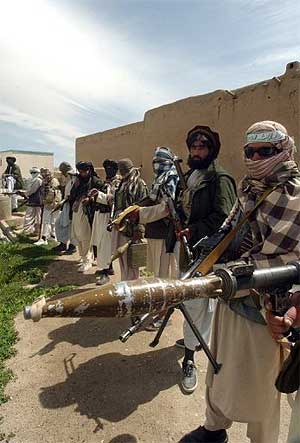 Baradar's detention also exposed the presence of Afghan Taliban leaders in Pakistan. Despite Pakistani denials, the leadership is widely reported to be headquartered in Quetta, the capital of southwestern Baluchistan province.
"This arrest is very significant. It is a major setback for the Taliban. It will have a demoralizing effect on them, something in the favor of both the United States and Pakistan," said Pakistani political analyst Hasan Askari.
"It will also help advance President Obama's new strategy in Afghanistan. There appears to be a shift in the Pakistan army's policy."
India recently offered to resume dialogue with Pakistan, going some way under US pressure to easing Pakistani fears about its arch rival, and Askari suggested the army was willing to make concessions on the Taliban.
The Taliban have denied Baradar's capture and accused US officials of trying to deflect attention from the offensive in southern Afghanistan, where 15,000 US, NATO and Afghan troops are trying to capture a Taliban stronghold.
Six foreign soldiers have been killed so far in Operation Mushtarak ("together" in Dari), a huge offensive testing a US-led counter-insurgency strategy that aims to follow up battlefield success with civil security and reform.
-AFP


Are you sure you want to delete this comment?
This action cannot be undone.