




US cautiously supports Karzai's new election law
The United States Wednesday voiced support for Afghan President Hamid Karzai's move to take control of an election watchdog in an apparent break with key allies fighting in the war-torn country.
"We are supportive of the Afghan government stepping up and assuming its responsibilities for its own (election) process," State Department spokesman Philip Crowley told reporters, giving cautious backing to the move.
The United States Wednesday voiced support for Afghan President Hamid Karzai's move to take control of an election watchdog in an apparent break with key allies fighting in the war-torn country.
"We are supportive of the Afghan government stepping up and assuming its responsibilities for its own (election) process," State Department spokesman Philip Crowley told reporters, giving cautious backing to the move.
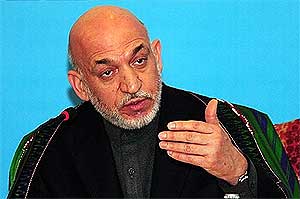 He was reacting after Karzai triggered international dismay by changing a law to give himself control of the Electoral Complaints Commission (ECC), just seven months ahead of legislative elections due in September.
The amendment allows Karzai to appoint all five members of the ECC, a key body which threw out as fraudulent more than half a million votes cast for him in last year's corruption-tainted presidential polls.
Britain and Canada, still reeling from August's presidential elections debacle, led diplomatic concern that there was now even less chance that future elections will be free and fair.
Under a previous law, three of the watchdog's members were appointed by the UN Assistance Mission in Afghanistan in a bid to ensure the panel remained neutral in a country riven by graft and tribal allegiances.
But Washington, which heads up the NATO and US-led coalition fighting a Taliban insurgency in Afghanistan, appeared to break ranks with its allies.
"The credibility of future Afghan elections is vitally important to giving the Afghan government legitimacy in the eyes of its people," Crowley said.
He cautioned though that it was important that Afghan leaders "name appropriate officials to these posts that will give the Afghan people confidence that the future elections will be free, fair and legitimate."
Grave doubts
British Foreign Secretary David Miliband said however he had grave doubts about the upcoming September polls, which have already been delayed from May.
"I don't think you will find anyone who will say that they expect the next elections in Afghanistan to be free and fair," Miliband told British lawmakers.
"What we need is to ensure that the elections provide a credible representation of the views of the people."
 Canada was also "troubled" that Karzai's decree could diminish the level of the election commission's independence, Canadian Foreign Minister Lawrence Cannon said.
"A strong and independent ECC is vital for the future of a democratic Afghanistan, and any efforts to weaken this body are disturbing," he said.
Afghanistan's second-ever presidential election in August descended into farce and held the country in the grip of political stasis for months.
Former senior UN official in Afghanistan Peter Galbraith, who resigned over last year's fraudulent poll, urged the West to withhold funds to bankroll future elections until the ECC is reinstated to its original make-up.
The international community "should insist there should be a truly independent election commission, not one appointed by him," Galbraith told the BBC.
Karzai was eventually declared president after the August polls by the Independent Election Commission (IEC), which is also appointed by the president, and returned to office in November.
The election cost the United Nations 300 million dollars and the ECC threw out around one third of the ballots cast for Karzai.
Foreign influence
But Karzai's latest move was justified by his spokesman Siamak Herawi as a move towards ridding the election commission of foreign influence.
 "With foreigners in the commission it was not a national body, nor was it an Afghan body. So to Afghanize the process, the president changed some articles of the law," Herawi told AFP on Tuesday.
Asked who would appoint the panel under the new law, he said: "The president."
The timing of the move appears to have been carefully chosen by Karzai, according to lawmaker Abdul Kabir Rangebar, former head of Afghanistan's lawyers' association.
The decree was made before parliament returned on Saturday from its winter recess and the Afghan constitution gives the president the right to issue decrees when parliament is not sitting, he said.
More alarming however, Rangebar said, was the new requirement that presidential candidates have written support of 100,000 registered voters and post a bond of up to 2.5 million afghanis (50,000 dollars).
"I think these requirements are very strict and with the exception of drug smugglers, no one will be able to comply," he told AFP.
-AFP


Are you sure you want to delete this comment?
This action cannot be undone.