



Asian shares hit 7-week low as China doubles down on zero-Covid
MSCI's broadest index of Asia-Pacific shares outside Japan shed 2.54 percent this morning and fell to its lowest level since March 16, the day when Chinese vice-premier Liu He boosted shares by pledging to support markets and the Chinese economy.
The benchmark is down 3.6 percent from last Friday's close, which would be its...
Asian shares tumbled to their lowest in seven weeks today but the dollar stood tall as investors globally shunned riskier assets over fears that higher US interest rates and China's reinforcement of its zero-Covid policy could hit growth hard.
MSCI's broadest index of Asia-Pacific shares outside Japan shed 2.54 percent this morning and fell to its lowest level since March 16, the day when Chinese vice-premier Liu He boosted shares by pledging to support markets and the Chinese economy.
The benchmark is down 3.6 percent from last Friday's close, which would be its worst week since mid-March. Japan's Nikkei bucked the trend, rising 0.8 percent on its return from a three-day holiday.
Chinese blue chips shed 2.6 percent, the Hong Kong benchmark lost 3.6 percent, and China's yuan tumbled to an 18-month low in both onshore and offshore markets.
Dickie Wong, director of research at Hong Kong brokerage Kingston Securities, attributed the falls to the plunge in the US market overnight as well as fears about the health of the Chinese economy.
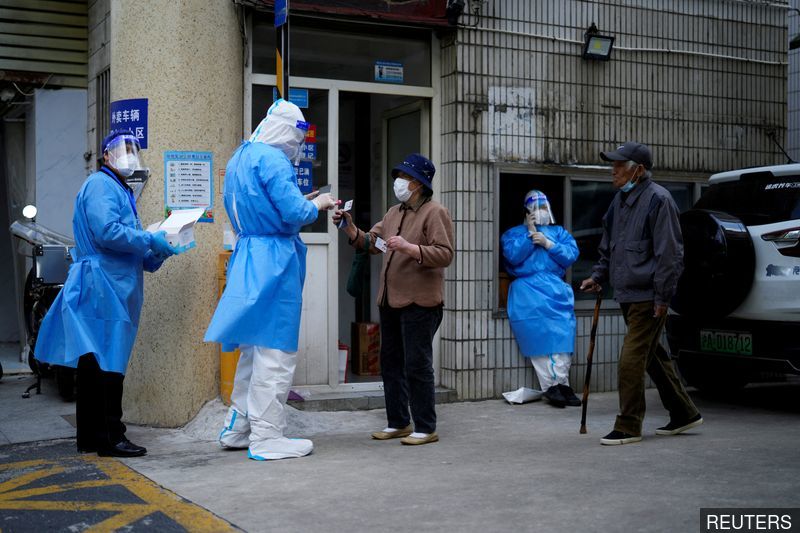
China will fight any comments and actions that distort, doubt, or deny the country's Covid-19 response policy, state television reported yesterday, after a meeting of the country's highest decision-making body.
Investors said that appeared to rule out any easing in the zero-Covid policy, which is slowing Chinese economic growth and snarling global supply chains.
"The silver lining is the expectation that new Chinese fiscal measures could come out over the weekend," Wong said. "That's the only thing giving Asian markets some support at their current low valuations."
US falls, Europe slightly better
Overnight the Dow Jones Industrial Average and the S&P 500 both fell more than 3 percent, and the Nasdaq Composite shed 4.99 percent in its biggest single-day plunge since June 2020.
Things looked slightly better in Europe, however, where regional share futures fell 0.14 percent and FTSE futures lost 0.2 percent. US futures were flat.
The US market declines were largely a result of fears about the pace of Federal Reserve tightening.
"Risks remain elevated for a policy mistake – either by (the Fed) not tightening quickly enough to combat inflation or being overly hawkish, resulting in the end of the current business cycle," said David Chao, Invesco’s global market strategist for Apac ex-Japan.
US payroll data due later today will help traders gauge how hot the economy is running.
The market is pricing in an 82 percent chance of a monster 75 basis point rate hike from the Fed at its meeting in June, according to the CME's FedWatch tool, even after the Fed raised rates by 50 basis points this week and Powell ruled out a 75 basis point hike.
US yields are rising on expectations of a fast pace of rate hikes. The yield on US 10-year notes was last at 3.055 percent after crossing 3.1 percent overnight for the first time since November 2018.
As investors moved towards less risky assets, the dollar index was at 103.62 today, having hit a fresh 20-year peak of 103.94 overnight supported by expectations the US will hike interest rates faster than other central banks.
The dollar index is 0.43 percent higher this week, its fifth consecutive week of gains.
Sterling, for example, fell 2.2 percent against the dollar yesterday. The Bank of England raised rates by 25 basis points as expected, but two policymakers expressed caution about rushing into future rate hikes.
Bitcoin, one of the risk-friendliest assets, tumbled 8 percent overnight and hit a two-and-a-half-month low. It was last trading at around $36,300.
Oil prices shrugged off concerns about global economic growth as worries about tightening supplies underpinned prices ahead of the European Union's impending embargo on Russian oil.
Brent futures rose 0.6 percent to US$111.57 a barrel. US crude rose 0.64 percent to US$108.95 a barrel.
Gold was flat at US$1,876.4 an ounce.
- Reuters




Report this comment
Are you sure you want to delete this comment?
This action cannot be undone.