




Three areas at 'unhealthy' levels
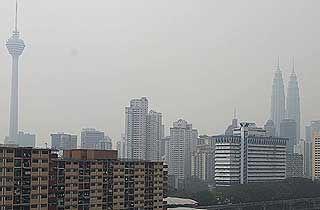
Three areas, Port Klang,Cheras and Shah Alam - have been declared unhealthy as of 5pm due to the haze.
Three areas, Port Klang, Cheras and Shah Alam - have been declared unhealthy as of 5pm due to the haze.
 Port Klang
recorded an air pollution index reading of 138 up from 125 before 11am.
Shah Alam recorded a reading of 120 at 5pm.
The reading in Cheras stood at 107.
Meanwhile, Kajang is one point below unhealthy level with a reading of 100.
Air quality is deemed unhealthy at readings of 101 to 200, very unhealthy from 201 to 300 and hazardous if above 300.
Another 26 areas have been classified as having a moderate reading, including Nilai (96), Petaling Jaya (93), Putrajaya (92) and Batu Muda in Kuala Lumpur (99).
Only three states - Kedah, Perlis and Terengganu - have all areas deemed 'good'.
Sarawak not affected yet
Kuching and Limbang in Sarawak recorded the best readings with 29.
 Readings of between 0 and 50 shows good air quality while 51 to 100 is moderate.
All areas registered fine, tiny particles of dust in the air which is the primary cause of poor air quality apart from Kemaman in Terengganu which recorded ground level ozone.
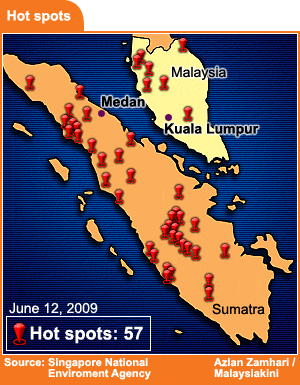
Hot spots in central and northern Sumatra had increased due to the dry weather. Here, isolated hot spots had been detected, with six in peninsular and ten in Sabah and Sarawak.
The index was released by the Department of Environment and the the next reading will be released at 5pm.
Wind, weather, hot spots
A combination of windy conditions, dry weather and the intensity of hot spots in Sumatra have carried dust and pollutants across the Straits to our shores .
 The Meteorological Department confirmed that the south-westerly winds are moving towards this region from Sumatra at the speed of 20-30 kmh.
In the past, the open burning of forests in Sumatra had been blamed for the smog in neighbouring Southeast Asian countries.
As of today, there were 57 hot spots in Sumatra, a drop from 98 yesterday.
Illegal slash and burn methods to clear land for plantations in Indonesia is rampant.
But the authorities there have insisted that efforts are being made to stop this primitive agricultural practice.
In Kuala Lumpur, an Environment Department spokesperson said that the situation will remain the same if wind direction does not change and there is no rainfall.


Report this comment
Are you sure you want to delete this comment?
This action cannot be undone.