




RM110mil blown on NCR land grab
Antidote Sarawak Chief Minister Abdul Taib Mahmud’s land policies have suffered another humiliating setback, barely a month after the state government’s landmark defeats in court to Agi anak Bungkong and Mohd Rambli Kawi.
The Sarawak government has now been ordered to pay compensation to Amit Salleh and 663 other Native Customary Rights (NCR) landowners in Suai, near Bintulu. The natives have claimed compensation amounting to some RM110 million.
The court found that the state government had illegally stripped these Malay, Kedayan and Melanau communities of their NCR land. As a result, the native communities had lost valuable teak and sentang trees they had planted.
 Taib’s administration of 29 years has faced stinging criticism for steam-rolling over natives’ land rights, to enrich private companies closely linked to top state officials. His ‘New Concept’ land agenda has pushed aggressively for joint ventures (JV) between native landowners and oil palm plantation companies.
There has been growing criticism that Taib’s land policies deprive Sarawakian bumiputera communities of their land and livelihood.
The JV projects have showered massive profits on well-connected investors, while yielding absurdly meagre dividends for participating NCR landowners.
 On Feb 21, the Federal Court, the supreme legal authority in Malaysia,
dismissed
the Sarawak government’s application to review earlier decisions in favour of Amit Salleh and other representatives of the communities of Kuala Nyalau and Ulu Nyala, Suai.
Amit Salleh and others had won a suit filed in 2000 against the state government, following a botched JV deal involving 1,223ha of native customary reserve land.
The native communities had been signed up to a JV agreement in September 1994, with a company called Bumisar Jaya. The native communities were to be bestowed a 25 percent share in the new JV company, while Bumisar Jaya would receive 75 percent.
It was a term of the JV contract that Bumisar Jaya would apply to the state government to convert the NCR land into ‘Mixed Zone Land’ for at least 60 years, so that oil palm and other crops could be cultivated by the JV company.
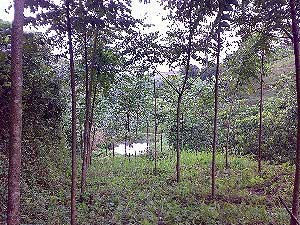 However, the application for conversion dragged on. While the JV remained in limbo, the natives planted some 720,000 teak trees and nearly 4,000
sentang
trees. Finally, by mutual consent, the JV agreement was terminated in March 1997.
There was speculation that the state government failed to support this native-initiated JV because the government was not used as a ‘middleman’ as laid out in the ‘New Concept’ model. In this model, the NCR landowner receives 30 percent of JV shares, the government 10 percent, and the private investor chosen by the government, 60 percent.
The native communities were taken aback when the state government extinguished their Native Communal Reserve rights in December 1998.
By this time, the teak and sentang trees were over 10m tall, and 60cm in girth, and ready for harvesting. Their value, according to the communities, was almost RM102 million.
The communities sued the state government for the loss of the trees, as well as for RM8.56 million for deprivation of their 1,223ha of land, or RM7,000 per hectare.
Cost of contempt for land rights
The state attorney-general’s chambers has exhausted its avenues of appeal. The state government faces the prospect of compensating the Suai landowners with RM110 million of taxpayers’ money, thanks to its contempt for natives’ land rights.
According to High Court judge Abdul Aziz Rahim, upon ruling in favour of the Suai communities in 2005: “The customary rights of the natives to use and cultivate land reserved for them are property within the meaning of Article 13(1) of the federal constitution.
“These rights entitle the natives to use and cultivate their land in such manner as may bring them income and along with it betterment of their lives. Thus to take away these rights would mean depriving the natives of the main source of their survival.”
Lawyers representing the Kuala Nyalau and Ulu Nyala communities, including MS Sandhu, John Antau and Musa Dinggat, have not issued any public statement since the Federal Court decision to dismiss the application for further review. They had presented the case to the press after the earlier judgments.
The state government remains defiant, though it too, has not issued any comment yet on this latest court ruling. The government is wary, perhaps understandably, of repeating its widely derided press statement condemning the court rulings in favour of Agi anak Bungkong and Mohd Rambli Kawi.
There must be grave rumblings of unease among Sarawak’s land policy makers, since over 100 NCR land rights cases filed against the government and its business associates are working their way through the judicial system.
 High-profile court cases such as that of Amit Salleh are likely to create greater impetus among natives to challenge the state government’s unpopular land policies. They may even erode support for Taib’s
(right)
government ahead of the imminent state assembly elections, expected to be held later this year.
PKR state information chief and land rights lawyer See Chee How pointed out that it appears the courts have been bold in safeguarding the natives’ customary land rights.
“It has taken Amit 10 years, but he and his community folk have been justly rewarded for their decision to defend their land rights.
 “Nor Nyawai, Madeli Salleh, Agi Bungkong, Rambli Kawi, and now Amit Salleh - when will the state government learn from these decisions?” asked See (
left)
, reeling off a list of pivotal court decisions favouring NCR landowners over the state government.
It certainly appears that Malaysian judges have had greater leeway in making decisions concerning NCR issues, than the much-ridiculed judges in Mohammad Nizar Jamaluddin’s lawsuit against Umno’s Zambry Abd Kadir or in Anwar Ibrahim’s show trials.
But it is unclear whether these independent legal findings will be allowed to continue, given the degree of perceived political influence by the ruling Barisan Nasional on the judiciary.
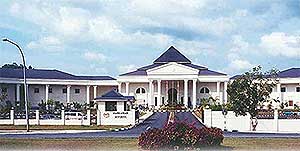 The Kuching High Court passed an early litmus test today, throwing out an appeal by Ladang Sawit Bintulu and the Sarawak government for a stay of
judgment
on the return of NCR land to Agi anak Bungkong and 15 longhouses in Sebauh.
It remains to be seen, too, whether the dramatic news of these court decisions will be disseminated to impoverished rural corners of Sarawak.
Many Malaysians are also waiting anxiously to see whether such news will have any impact on the voting patterns in the upcoming state assembly polls and, later, national elections, in this swing state.
KERUAH USIT is a human rights activist - anak Sarawak, bangsa Malaysia . This weekly column is an effort to provide a voice for marginalised Malaysians.


Report this comment
Are you sure you want to delete this comment?
This action cannot be undone.