




NEM targets unachievable for Sabah
Manufacturers in Sabah have concluded that the recently-announced New Economic Model (NEM) targets set for 2020 are an impossibility for the state.
Manufacturers in Sabah have concluded that the recently-announced New Economic Model (NEM) targets set for 2020 are an impossibility for the state.
At best, the benefits to the state are expected to be indirect and tied to the country’s overall performance.
 The indirect benefits of the NEM to Sabah, however, also hinges on the federal government pumping in funds to build up the state’s infrastructure, according to the manufacturers.
This is reckoned to be especially true of tourism, education, aquaculture and other revenue-oriented sectors.
The figures tell the dismal NEM story for Sabah, according to the Federation of Sabah Manufacturers (FSM).
The federal government wants to lift the country’s US$7,000 average per capita annual income to US$15,000 by 2020 to attain high income economy status by 2020.
The damper in this, points out the FSM, is that the state’s present per capita income is only US$3,000 per annum, much lower than that in the neighbouring and almost equally poor state of Sarawak.
Impossible targets
“Sabah has to grow by 15 to 16 percent per annum in the next decade to reach NEM targets,” said FSM chair Wong Khen Thau. “That is impossible.”
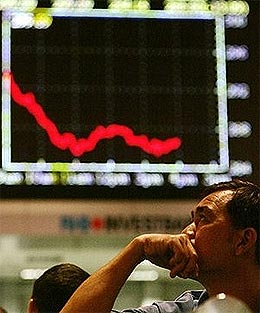 Given the 1997/8 Asian currency crisis and the recent global financial economic crisis, he’s not sure that Malaysia’s growth target of seven per cent per annum averaged over the years 1990 to 2020 can be met.
In that case, the indirect benefits to Sabah through Malaysia’s overall economic performance is not expected to materialise.
Wong also sees many problem areas in the NEM yet to be addressed. He cites these as the urban poor, the urban-rural divide, ethnic disparities and the growing gap between the Malay haves and have-nots.
This is expected to result in eventual shortfalls between expectations and actual results.
“The transformation expected will not take place unless there’s a well-planned mechanism and policies to help bring about the changes envisaged,” said Wong. “There’s a need to formulate the NEM and this has not been done.”
In short, the NEM is generous with perceptions and sweeping with generalisations but short on specifics. “It helps to have a constructive plan which can be implemented pragmatically, continued Wong. “It’s not enough to generate a feel good factor.”
The thrust of the NEM, according to Wong, should be to avoid “beggar thy neighbour” policies.
Still backward after 47 years
This trend has been pronounced in the past where government leaders only helped their own kind, noted Wong. “There are no indications as yet that such approaches have been or will be ditched”.
 “We cannot deny that there are poor among various ethnic groups and there should be an inclusive approach,” said Wong. “The poor should be helped as a group and not along ethnic lines as in the past.”
Touching on Sabah and Sarawak in particular, he lamented that not many people can accept the fact after 47 years that Malaysia is one country. “We can see the manifestations, for example, in the small number of Federal civil servants from Sabah and Sarawak and the continued backwardness of the two states in Malaysian Borneo, he charged.
“The faster we change along the lines of the 1Malaysia, the better it will be for all of us,” said Wong. “This will also have a bearing on the goals set in the NEM.”
The FSM is not entirely alone in its pessimism about the NEM and the prospects for Sabah.
Malaysian Institute of Economic Research Research Fellow from Sabah, Pang Teck Wai, does not rule out the 1Malaysia agenda breaking apart if the NEM fails.
“There’s a chance that Malaysia will fail to get out of the middle income trap or even worse, slip into a low income economy,” said Pang. “A high income economy does not jive with many things that we are currently experiencing.”
Malaysia may fail
He described these aspects as crime, corruption, low quality education, large numbers of low income households, poor rural basic infrastructure and bad urban public transportation.
Zainal Ajamain, an expert attached to Innoprise Corporation Sdn Bhd, is more specific and sees the problem in Sabah as also due to “too many similar government plans with not enough focus”.
He reels off these as the Sabah Outline Perspective Plan 11, Halatuju Pembangunan dan Kemajuan Sabah, Sabah Development Corridor Blueprint, continuation of the 9th Malaysia Plan (2006-2010) and the 10th Malaysia Plan (2011-2015).
However Sedia (Sabah Economic Development and Investment Authority) president and chief executive Yaakub Johari remains cautiously hopeful.
“The NEM promises high income, inclusiveness and sustainability,” said Yaakub. “These are also the guiding principles of the Sabah Development Corridor.”


Are you sure you want to delete this comment?
This action cannot be undone.