




Absent voters to include overseas residents?
The Election Commission (EC) will consider the pleas of many Malaysian living overseas if there are “thousands” appealing but it has to first broaden the category of postal voters.
Addressing the queries by Malaysiakini on the EC’s efforts to recognise this group, its chairperson Abdul Aziz Yusof said: “If there are enough, for me 5,000 is a lot and then we can consider amendments to the absent voters category.”
The ‘absent-voter’ category under the Elections (Registration of Electors) Regulations 2002 only recognises military personnel, civil servants, full-time students and their spouses, who may participate in elections by casting their votes at the embassies in the countries where they live.
It does not, however, include those who retain their citizenships although living overseas, and as a result those living abroad have no choice but to return to Malaysia if they want to vote whenever an election is called.
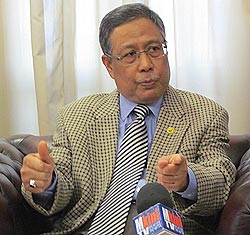 “But for them to vote at the embassies - we enable all the high commissions and consulates in all countries to be able to manage this group - but even pilot projects that were suggested were to no avail,” said Abdul Aziz (
left
).
The main concern, he said, was the fact those living abroad, which is estimated to be over 1 million, do not inform the embassies or the EC when they shift from their registered locations.
He explained that it is a mammoth task to undertake, and it requires a constitutional amendment.
“They don’t furnish us with their details and there are also those who have yet to register as voters,” he argued.
 Abdul Aziz said the EC also needs the manpower and the capacity to manage a bigger group.
“How are we going to send them their ballot papers? By post, fax or email? We have to also train the presiding officers and consider the availability of embassies ,” he said.
Preferably, he advised those living abroad to return to the country.
“Similarly, India and Bangladesh, when they announce a general election, their voters have to return to their countries to cast their votes,” he said.
Assistant registrars in higher learning institutions
Meanwhile, on another matter, Abdul Aziz said that the EC has been given the green light to proceed to appoint assistant registrars in public and private higher learning institutions.
Abdul Aziz said that the Higher Education Ministry had given the approval last year to enable tertiary students to register as voters.
According to the latest tally, there are about four million eligible voters yet to be registered and a high percentage of them are those 21 years and above.
 Malaysia currently has 11 million registered voters out of a population of about 27 million.
“With this facility the students don’t have to go through the trouble to register themselves as voters because they are aged 21 years and over,” he said.
Abdul Aziz said that the EC had given the permission to universities and colleges to appoint a representative from the student affairs department and management to conduct the registration.
“To validate the registration, the assistant registrar has to compile the names every three months and check the details of the individual according to their identification card,” said Abdul Aziz.
He added that once registered, information on the voters will be displayed at strategic locations for one week.
“This is to make it easier for the community and for those who have objections,” he said.
Related stories:
EC: Delineation of electoral boundaries unlikely
EC not gearing up for 13th GE despite talk of snap polls
Gov't officers can't back political parties


Report this comment
Are you sure you want to delete this comment?
This action cannot be undone.