




Egypt's incomplete revolution
COMMENT Eighteen days of disciplined and peaceful protests by millions of Egyptians have forced one of the West's favourite tyrants in the Middle East to resign, 30 years after assuming power.
Suddenly, Feb 11 is regarded the unlucky date for tyrants. Jubilation and widespread celebrations in Egypt that day were a repetition of what took place in Iran exactly 32 years ago, when the Shah dictator-monarchy finally collapsed, to give way to the establishment of the first civilian government there in 1,000 years.
COMMENT Eighteen days of disciplined and peaceful protests by millions of Egyptians have forced one of the West's favourite tyrants in the Middle East to resign, 30 years after assuming power.
 Suddenly, Feb 11 is regarded the unlucky date for tyrants. Jubilation and widespread celebrations in Egypt that day were a repetition of what took place in Iran exactly 32 years ago, when the Shah dictator-monarchy finally collapsed, to give way to the establishment of the first civilian government there in 1,000 years.
With all its weaknesses and shortcomings, Iran, until then considered an unquestioning ally of the West, soon rose to become the only working Muslim democracy in a Middle East ruled by kings, emirs, 'elected' presidents and sheikhs.
It was a revolution which proved to be a nightmare for the West and Israel for decades to come, a fact proven by the speed in which Western media predicted the end of the revolution, when a few thousand anti-government protesters, as in any other democracy, marched in the streets of Tehran to protest against its president Mahmoud Ahmadinejad’s re-election.
How does one compare both these 'revolutions' of Feb 11?
For a start, Iran's Islamic revolution is arguably more comprehensive. It marked the complete dismantling of the evil monarchy system represented by the Shah, who was armed to the teeth by the US to become a bulwark nation for Israel, not unlike present-day Egypt.
The Islamic revolution in Iran did not happen overnight, certainly not within 18 days, neither was it left leaderless, however one may argue about the beauty of a leaderless movement.
It was a culmination of
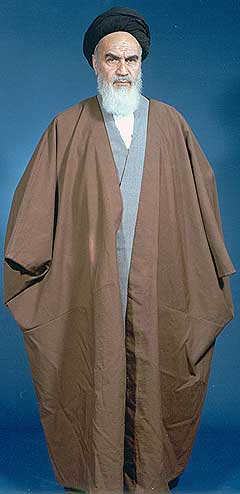 hundreds of years of conflict between the Shi'ite ulama who had hitherto shunned politics and those who called for greater role of the ulama beyond the mosques and centres of learning.
Ayatollah Khomeini achieved a feat no Muslim leader could have achieved in modern history - he was an exiled leader, having no access to media or tools like the Internet, Twitter or satellite news channels to give voice to the people, while the entire West supported the corrupt Shah regime financially and militarily.
Against this backdrop, it would seem ridiculous to even dream that a revolution could be achieved there, much less overthrow such a regime!
Yet, the Islamic Revolution achieved exactly that, and more. Not only did it overthrow the Shah, it also dismantled the repressive state apparatus, its brutal army's chain of command and its notorious Mossad-like intelligence, the Savak.
It established a modern and creative Islamic political system, and revamped the social and education systems, which had been geared toward crass Westernisation and de-Islamisation. All of which gave a new dimension to modern Muslim political thought.
Defining a revolution
Fast forward to 2011 in Egypt, and events were being replayed. Once again, Feb 11 haunted the West.
This time, aware of their mistakes in 1979, Western leaders rushed to change their tune almost immediately after Hosni Mubarak conceded to people's demands. Suddenly leaders found their voice, and many broke into a litany of democracy and reforms.
Yet, the 'Egyptian revolution', if one could call that, is far from complete. This statement, of course, is made at the risk of being called a killjoy.
A revolution must effect complete change. A revolution takes place when every facet of a nation, whether political, social, religious or economic, is in dire need of repair. One that leaves even small fractions of legacies of the past system is bound to fail.
The French Revolution in 1799 achieved that, with the coffin of the 'invincible' and 'divine' French monarchy never to be opened again.
So did Iran's Islamic Revolution in 1979. Both revolutions have had results which are contradictory with each other and both may even contribute to the conflict between Islam and the West in the decades to come.
The French revolution almost removed religion altogether from the equation, shaping modern Europe for centuries to come.
The Iranian revolution, on the other hand, ensured a greater role for religion and transformed the entire landscape of not only Iran but also the Muslim world. Yet, the fact is that both would fit into the definition of a revolution.
The unfinished business of the 'Egyptian revolution' appears to be left to the army rather than representatives from the people who have fought so hard, some with their lives, to achieve the greatest hurdle of pushing out a stubborn tyrant.
Contrary to fears expressed by right-wing leaders in Western capitals, it would now appear that the end of Mubarak's reign has yet to translate itself into a complete tragedy for his former masters in Washington, and its blue-eyed boy, Israel.
One should not have any illusion that Washington gives two hoots for the aspirations of the people of Egypt.
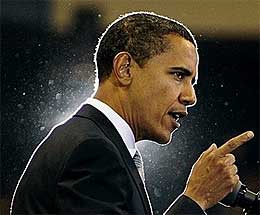 This is proved when among the first statements by president Barrack Obama was a call on the Egyptian military to ensure the continuation of the country's peace treaty with Israel. This is a sick joke played on those who sacrificed life and limb to achieve Mubarak's demise.
It was due to the need to protect this treaty that the West had been propping up Mubarak all along. It was this same treaty which made Egypt a pariah in the eyes of the Muslim world, losing all respect from Arabs, only to be redeemed 30 years later by the resolve of its youth in the past 18 days.
But how long can the Egyptians hold their heads up high over their proud achievements? Feb 11 in Tahrir Square: people power it certainly is, but revolution?
Now that power is securely in the hands of an army which has been built with billions of dollars of aid from Washington, the weeks to come will show who will become the real casualty of the past 18 days - the corrupt system left by a Zionist ally, or the people themselves.
In a way, the patience and restraint shown by the army since Jan 25 did earn it respect and trust to lead the country's transformation, but whether or not the Egyptian generals would ultimately bite the hand that fed it, remains to be seen.
After all, Obama has repeated what his predecessors had always emphasised: Israel's security is sacrosanct.
ABDAR RAHMAN KOYA, in his 30s, is editor at the Islamic Book Trust based in Petaling Jaya.


Report this comment
Are you sure you want to delete this comment?
This action cannot be undone.