




Court: Expunge disparaging remarks on Anwar
The Federal Court has allowed Anwar Ibrahim's application to expunge portions of a Court of Appeal written judgment related to the Sodomy II trial that were deemed disparaging of the politician and his lawyers.
The Federal Court has allowed Anwar Ibrahim's application to expunge portions of a Court of Appeal written judgment related to the Sodomy II trial that were deemed disparaging of the politician and his lawyers.
However, the three-member panel dismissed defence counsel Karpal Singh's application for a revisit of the interpretation of the word ‘decision’ in Section 3 of the Court of Judicature Act.
The bench led by Chief Judge of Malaya Zulkefli Ahmad Makinuddin also dismissed Anwar's third appeal to date for the recusal of Kuala Lumpur High Court judge Mohd Zabidin Mohd Diah from hearing the case.
The other two federal court judges on the panel were Justice James Foong and Justice Abdull Hamid Embong.
Justice Zulkefli, in announcing the unanimous decision, also found that it was not wrong for Court of Appeal judge Abdul Malik Ishak to go into portions of the merits of the case "for completeness’ sake".
 The court ordered that four paragraphs - 6, 15, 18 and 75 - be expunged from the records of the judgment, “as we rule these to be offensive and disparaging of the accused and also counsel”.
However, five other paragraphs disputed by Anwar and his lawyers were ordered to be retained.
Anwar, 64, had complained about Justice Abdul Malik's July 6 judgment when testifying from the dock to enter his defence in the Sodomy II trial.
Abdul Malik had written: "This case will fall in history. It will be chronicled as the only known case in our country or for that matter within the Commonwealth enclave where the appellant as an accused person persistently and consistently filed one application after another in an attempt to recuse the learned trial
judge from hearing and continuing to hear the sodomy trial which is
ongoing."
Karpal in his submission today said Abdul Malik's judgment was intended to satisfy his political masters.
He said there was no basis for the remarks, as the merits of the appeal were not heard at the Court of Appeal when it allowed a preliminary objection by the prosecution.
‘Remarks unwarranted’
Karpal also complained to the judges that, after the hearing of the appeal is dismissed on a preliminary objection, it should normally be the end of the matter and the merits are not heard.
 However, in this case, Justice Abdul Malik
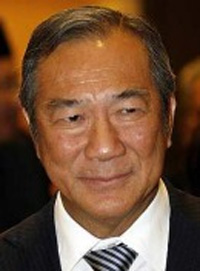
(inset in photo)
had "without jurisdiction and for an apparent purpose invoked a non-existent jurisdiction to maliciously and scurrilously (go into the merits and) embark on a relentless attack on Anwar and the lawyers (in the written judgment)".
"This amounts to judicial assassination of the worst kind ... (and) to make matters worse, the appellant and the lawyers were not given an opportunity to defend ourselves... as the appellate court had allowed the preliminary objection.
“The remarks were uncalled for and put the Judiciary in bad light. If the case was allowed to be heard on its merits, we (would have been) prepared to defend ourselves. However, we were not allowed to do so as the court allowed the preliminary objection."
Karpal also questioned as to how Justice Abdul Malik produced the written 40-page judgment on the day the appeal was heard at the Court of Appeal.
Various law journals had reported that the judgment was produced on July 6, but lawyers for Anwar only received it on Aug 15.
Anwar said he had expected the decision, but that he is happy with the expunging of the remarks.
"This shows the excessive behaviour of justice Abdul Malik, who holds the title ‘Datuk’ ... (it is) irresponsible (of him) to make the remarks and (he) still (presides over) cases."
DPP Nordin Hassan, who led the prosecution team, submitted that justice Abdul Malik had entered into portions of the merit in his judgment for the sake of completeness.
 “Furthermore, in the record of appeal the full details of the merits are also stated by the court,” he said.
However, Nordin caused a minor confusion when he told the court that the defence could not appeal if a judge did not recuse himself, but the prosecution could do so.
Asked by Justice Foong (left) as to how this is so, the DPP clarified that if a decision that disposes the rights of the accused was made - as in Anwar's case - and the judge hearing it recuses himself, then it would be appealable for the prosecution.


Report this comment
Are you sure you want to delete this comment?
This action cannot be undone.