




PM wants TI-M's Low to tackle graft, says analyst
Transparency International Malaysia (TI-M) president Paul Low's appointment as Minister in the Prime Minister's Department was likely in response to Malaysians who had voted against graft on May 5.
Transparency International Malaysia (TI-M) president Paul Low's appointment as Minister in the Prime Minister's Department was likely in response to Malaysians who had voted against graft on May 5.
"I would assume that he would be put in charge of overseeing the Malaysian Anti-Corruption Commission (MACC) and to curb corruption and cronyism.
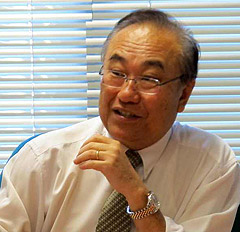 "There two issues were paramount in voters' minds at the time of election and for this reason it is a reflectionof the aspirations of the people to fight corruption," Asian Strategy and Leadership Institute director Ramon Navaratnam said.
Contacted after the announcement of the cabinet line-up yesterday, Ramon, who had headed TI-M when Low ( right ) was vice-president of the group, said that the appointment, however, raises the bar for the new administration.
"People would now want to see results. There have been too many big sharks swimming happily. Let us see if action will be applied to some of them.
"Otherwise (the appointment) will be counter-productive and be more rhetorical," he said when contacted.
The appointment was also given the thumbs up by MACC chief commissioner Abu Kassim Mohamed who said that it shows the new administration's "seriousness" in tackling the problem.
"The MACC sees this as a reiteration of Prime Minister Najib Abdul Razak's commitment towards good governance of this country," he said in a statement.
Low is one of eight Ministers in the crowded Prime Minister's Department, announced yesterday.
Maybank CEO to revive NEM?
Other non-politicians announced are Maybank chief executive officer Abdul Wahid Omar and Hindraf founder, P Waythamoorthy.
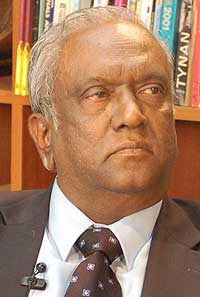 Ramon (
left
) said that Abdul Wahid's appointment is also seen as a positive, as he does not come with political baggage.
"He has proven to have a track record of competence. He is also non-political and will be able to review the bad parts of the New Economic Policy and bring attention to the stalled New Economic Model," he said.
Portions of the New Economic Model, including the removal of race-based affirmative action, was put on hold after it was announced in 2009 , bowing to resistance from vested interests.
Abdul Wahid is expected to oversee the Economic Policy Unit (EPU), taking over from Nor Mohamed Yakcop.
"But it is a concern that the administration is still top heavy. Why is everyone concentrated in the prime minister's department and not decentralised?" Ramon asked.


Report this comment
Are you sure you want to delete this comment?
This action cannot be undone.