


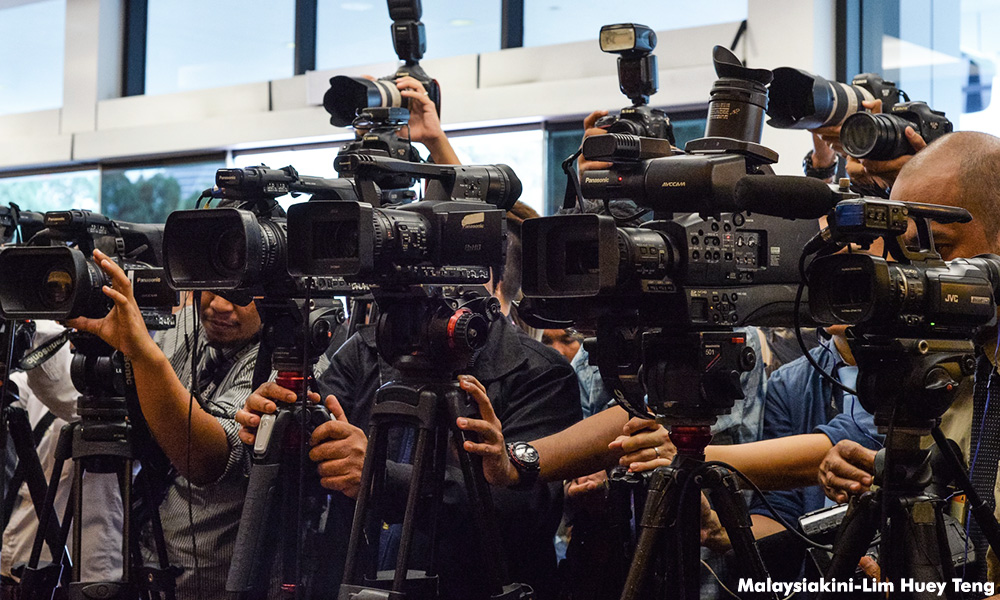

Media trust among the informed grows, gov't credibility slips
Trust in the mass media has risen drastically among informed members of the public while trust in government has fallen significantly this year, according to a trust barometer annual global study.
"Malaysia had one of the biggest rises in media trust among the informed public globally, possibly due to the constant coverage of alleged corruption at 1MDB," said Robert Kay, the managing director of global public relations and communications marketing company Edelman Malaysia.
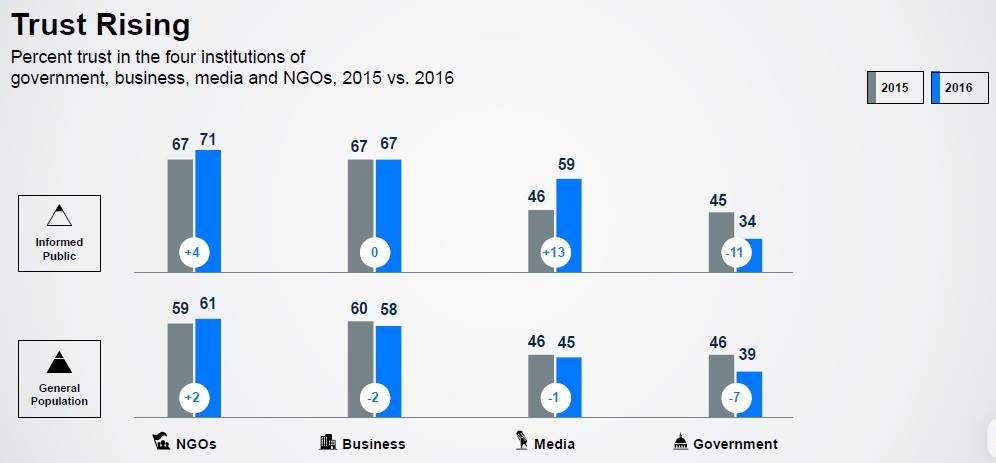
There was a 13-point rise to 59 percent in terms of trust in the media among the informed public, Kay said during the presentation of the study results in Kuala Lumpur today.
Trust in the mass media has risen drastically among informed members of the public while trust in government has fallen significantly this year, according to a trust barometer annual global study.
"Malaysia had one of the biggest rises in media trust among the informed public globally, possibly due to the constant coverage of alleged corruption at 1MDB," said Robert Kay, the managing director of global public relations and communications marketing company Edelman Malaysia.
There was a 13-point rise to 59 percent in terms of trust in the media among the informed public, Kay said during the presentation of the study results in Kuala Lumpur today.
Noting that this increase could be due to the extensive media coverage on 1MDB, he further pointed out that the coverage had also led to the temporary suspension of The Edge Weekly and The Edge Financial Daily .
The two publications had their publishing licence revoked temporarily by the Home Ministry for three months in late July last year, though the suspension was later lifted.
"In speaking out against the government, specifically Prime Minister Najib Abdul Razak, hybrid media and high-profile media figures risked prosecution," Kay said.
This may have created a "halo effect" for media in general, he explained.
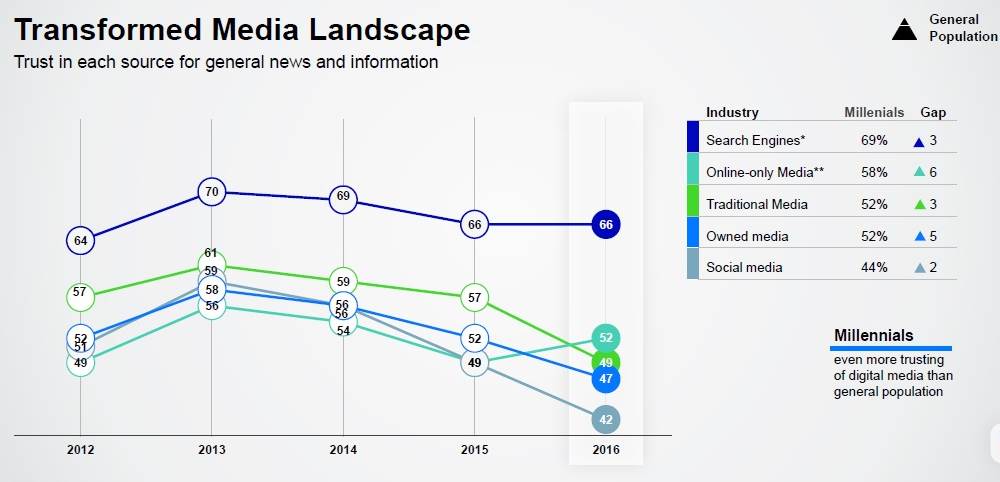
Despite that, Kay pointed out that trust in traditional media fell eight points to 49 percent.
This could be a sign that there is a need for them to be more rigorous, balanced and transparent in their reporting to regain credibility, he said.
He noted that there was actually an anomaly in the data - the divergence of trust in the media.
While there has been a dramatic increase in trust in the media among the informed public, there has been a one-point fall to 45 percent among the general population this year, Kay said.
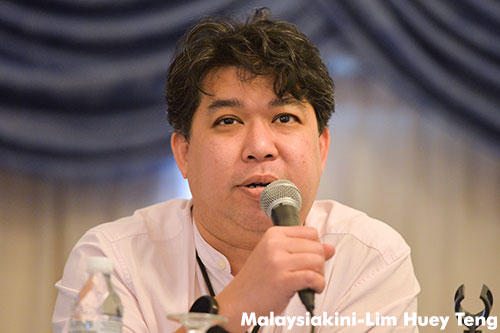 The chief executive officer and editor of
The Malaysian Insider
, Jahabar Sadiq (
photo
) said this discrepancy in the finding scares him.
The chief executive officer and editor of
The Malaysian Insider
, Jahabar Sadiq (
photo
) said this discrepancy in the finding scares him.
"I suppose that the informed public who trust the media are trusting the media outside of Malaysia because they tell more.
"The general public, maybe the uninformed ones that have no access or money to go through paywalls, don't trust the media because they see the difference between what comes on the media and the reality of life," Jahabar said at a panel discussion after the study results were presented.
Trust in government fell seven points
Meanwhile, trust in government fell seven points to 39 percent among the general population and 11 points to 34 percent among the informed public, Kay said.
This, Kay noted, pointed to a major challenge for those in power.
"Government credibility (this year) took a big hit over significant issues around alleged corruption and freedom of expression.
"The real and perceived lack of transparency and widespread allegations of mismanagement in government-linked companies (GLCs) appear to be impacting trust overall," he added.
Prime Minister Najib Abdul Razak has been plagued by financial scandals since last year, related to his brainchild 1MDB.
However, Kay pointed out, the government has made a concerted effort to explain the Trans-Pacific Partnership Agreement (TPPA) to the general population.
The initiatives around the TPPA seem to have got positive feedback, he said, "as the government looks to restore trust and credibility where it can".
However, political analyst Oh Ei Sun noted that people generally make a distinction between government and politicians.
People might perceive politicians as "actors on a stage" while the government is perceived as a "service provider".
As such, in order to regain and maintain the trust of the people, the government must "institutionalise this perception that it is a service provider", Oh said during the panel discussion.
Another area where Malaysian trust has dropped significantly is on content shared on the social media, with a seven-point drop to 42 percent this year, Kay said.
This could be the result of the rampant spread of misinformation through social media in the past year, he added.


Are you sure you want to delete this comment?
This action cannot be undone.