


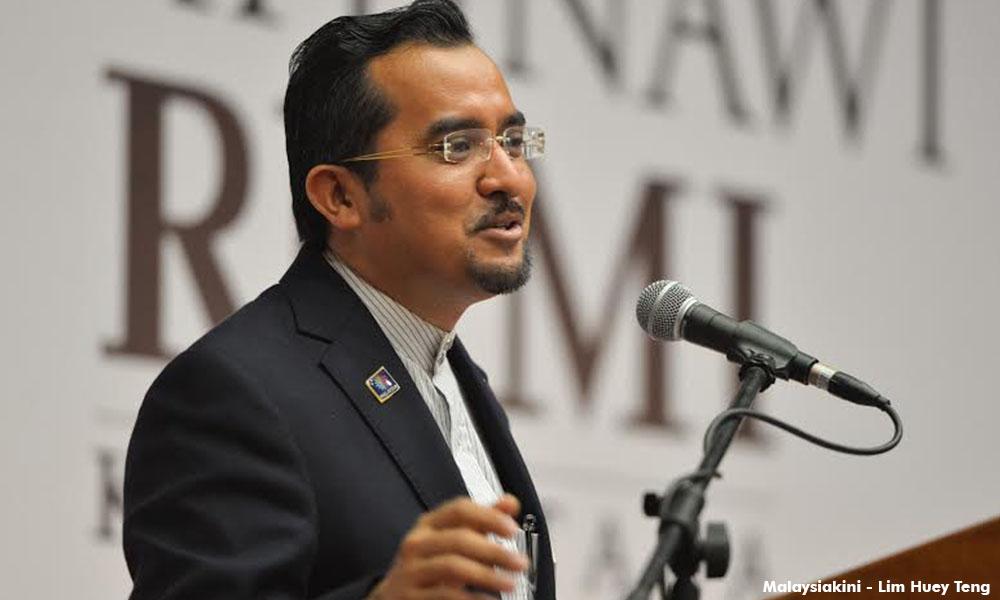

Deputy minister: Not tabling does not mean rejecting Act 355 move
BN's decision not to take over and table the private member's bill to amend the Syariah Courts (Criminal Jurisdiction) Act or Act 355 does not translate into its rejection, Deputy Minister in the Prime Minister's Department Asyraf Wajdi Dasuki said today.
Explaining the "confusion", Asyraf, who oversees Islamic affairs, pointed out that the bill, first tabled by PAS president Abdul Hadi Awang, would go through the procedures in accordance with Parliament's standing order, which requires all government bills to be settled first.
If the bill is tabled, he said, PAS' version of the bill would be open for debate in Parliament...
BN's decision not to take over and table the private member's bill to amend the Syariah Courts (Criminal Jurisdiction) Act or Act 355 does not translate into its rejection, Deputy Minister in the Prime Minister's Department Asyraf Wajdi Dasuki said today.
Explaining the "confusion", Asyraf, who oversees Islamic affairs, pointed out that the bill, first tabled by PAS president Abdul Hadi Awang, would go through the procedures in accordance with Parliament's standing order, which requires all government bills to be settled first.
If the bill is tabled, he said, PAS' version of the bill would be open for debate in Parliament.
"When it is debated, it will depend on the parliamentary democratic process to discuss the pros and cons of every aspect of the suggested amendments," he added in a media statement.
Asyraf said if the bill is passed with a simple majority, it would be placed under the government's responsibility.
Once the bill becomes a government statement, the government would scrutinise the suggested amendments - either to retain or improve them.
"As a responsible government taking into account the different religions practised in the country, we have to take into account all factors, including aspects in the bill that have confused the rakyat.
"It doesn't arise that the government is rejecting Act 355, the only difference is that it has been suggested for it to be moved by PAS as a private member's bill," he added.
Announcing BN supreme council’s decision on the bill yesterday, Prime Minister Najib Abdul Razak had said that it was up to the speaker to decide whether to allow the bill to be tabled or otherwise.
The decision, he said, was in line with the coalition's practice of consensus.
'Right explanation must be given'
Meanwhile, fellow cabinet member Nancy Shukri who praised the BN supreme council’s decision said that this is because implications of such bills needed to be explained.
“Maybe they have to amend certain parts of it (and) look into it.
“We from BN don't want to simply agree or disagree without knowing the details,” she told reporters when met in Parliament today.
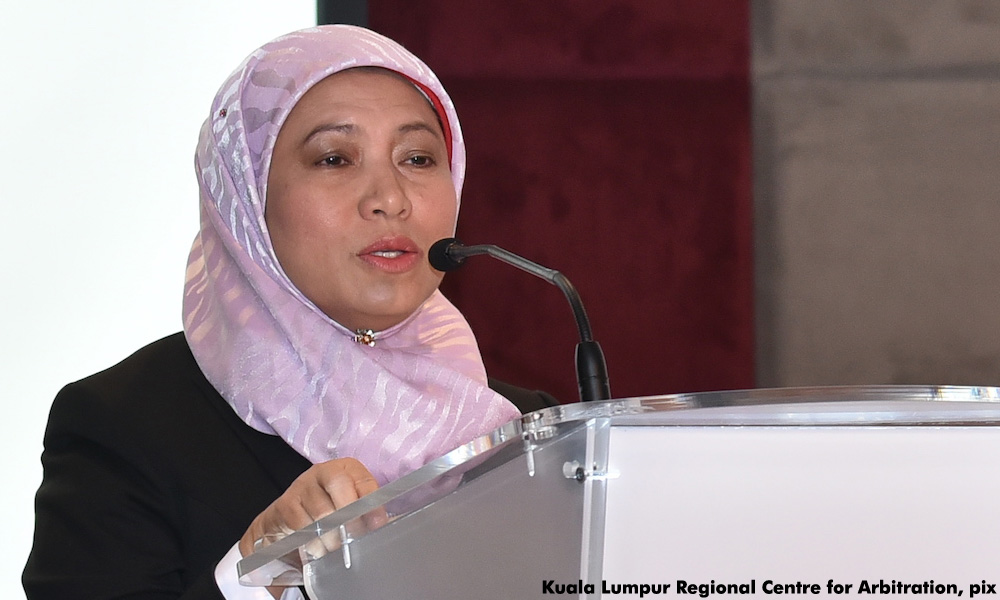 While acknowledging how she, herself, is Muslim, Nancy (photo) however pointed out how many non-Muslims might not be able to understand the bill.
“Even people like us have not been given enough explanation. How can we support it?
“By supporting it in Parliament, our people may think that we are disappointing them. They have given us this chance to do the part we have to play in Parliament,” she pointed out.
Stressing that she would support “whatever that is good for Muslims”, she however reiterated that the right explanation must be given, adding that such explanations should also be made nationwide.
“I'm not saying it (the bill) is good but to a certain extent it will help but maybe they will have to amend certain parts of it. The caning, it's a bit too much,” she added.
Fellow Minister in the Prime Minister’s Department Wee Ka Siong, believes that the decision made by the BN supreme council showed the spirit of BN in taking into consideration the views of all parties.
“So BN should now go down and start preparing work for the 14th general election.”
Taking the opportunity to slam MCA’s nemesis DAP, Wee pointed out how the latter had worked with PAS in the last two general elections.
“Then the relationship turned sour and they needed to find a scapegoat and conveniently it was MCA and Gerakan.
“They even asked MCA and Gerakan leaders to step down. But now it's clear,” said Wee, in light of the BN supreme council decision.
Previously, Deputy Prime Minister Ahmad Zahid Hamidi said that the government was looking to take over the bill, to the dismay of BN component parties, many of whom are opposed to it.
The motion to table the bill to amend Act 355 was first tabled by Hadi in last year's parliamentary seating, while it was allowed, the debate and voting for the motion was delayed until this seating at his own request.
The bill seeks to increase the penalties that the syariah courts can mete out, as well as expand its criminal jurisdictions over Muslims in criminal offences.
Some say this will allow states like Kelantan with existing hudud or Islamic penal code legislation to enforce harsher punishments and for more offences, as previously they were bound by restrictions in Act 355.


Report this comment
Are you sure you want to delete this comment?
This action cannot be undone.