




Q&A: Surprised by presidents announcement
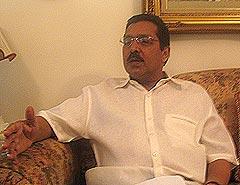
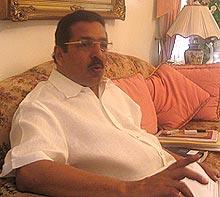
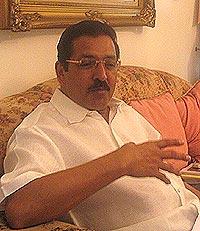
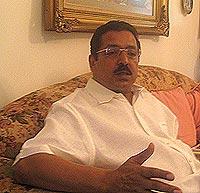
In an exclusive interview with malaysiakini , MIC deputy president S Subramaniam talks about his impending challenge, the state of Tamil schools and the Malaysian Nanban controversy.
Malaysiakini: Are you going to defend your post? Will you consider going for president?
 Subramaniam:
I am not planning, nor do I have intentions of contesting for the post of MIC president. As far as the position of deputy president is concerned, I'm sure the delegates would want me to continue to be with them and serve.
Subramaniam:
I am not planning, nor do I have intentions of contesting for the post of MIC president. As far as the position of deputy president is concerned, I'm sure the delegates would want me to continue to be with them and serve.
How is your relationship with the president S Samy Vellu after these developments, given the fact that you have been his deputy for some two decades?
We have a cordial relationship. During the last party elections, I was one of those who filed the nominations and supported his nomination. It is not for me to say whether it is right or wrong for him to declare his support for candidates for the post of deputy president. It is not for me to answer. It is for him to decide.
In an exclusive interview with malaysiakini , MIC deputy president S Subramaniam talks about his impending challenge, the state of Tamil schools and the Malaysian Nanban controversy.
Malaysiakini: Are you going to defend your post? Will you consider going for president?
 Subramaniam:
I am not planning, nor do I have intentions of contesting for the post of MIC president. As far as the position of deputy president is concerned, I'm sure the delegates would want me to continue to be with them and serve.
Subramaniam:
I am not planning, nor do I have intentions of contesting for the post of MIC president. As far as the position of deputy president is concerned, I'm sure the delegates would want me to continue to be with them and serve.
How is your relationship with the president S Samy Vellu after these developments, given the fact that you have been his deputy for some two decades?
We have a cordial relationship. During the last party elections, I was one of those who filed the nominations and supported his nomination. It is not for me to say whether it is right or wrong for him to declare his support for candidates for the post of deputy president. It is not for me to answer. It is for him to decide.
Did you feel disappointed that he named G Palanivel as his preferred choice for your post?
Of course, I was a bit surprised that he chose to name (a running mate), although he did mention it in private meetings two months ago. At that time, I was surprised he had decided to name the candidate so early, as the party elections is only next year.
Do you think the culture of political leaders hogging their posts for decades should be changed?
This is not something particular to MIC, it happens in all political parties. It appears to be the Malaysian culture. It might take time to change. There seems to be some healthy changes taking place in the MCA. As far as the other parties are concerned, they are not fully into this (new) culture.
Should the MCA practice (in limiting the term of office) be emulated?
That's for each individual party to decide.
Is the MIC still relevant to the younger generation of Indian Malaysians, is the membership declining?
The MIC is a party which is still relevant and is relevant to the younger generation. There is no decline in the membership. In fact, membership is on the rise, because the average Indian sees the MIC as the party that will represent the community, protect the Tamil language and culture.
So the party is very relevant to the Indian community and the younger generation. The formation of Puteri MIC is also bringing in more younger members into the MIC family.
Critics claim that MIC has failed to do much for the Indian Malaysian community.
The MIC as a party representing the Indian community has played a positive role for the well-being of the community, as the voice of the community in government. Of course, there were two voices in the cabinet before, now, there is only one voice. But the point is, MIC has achieved being the voice of Indians in government.
 We cannot say that the MIC has resolved all problems that beset the community. While the MIC has found resolutions for many problems, many issues have yet to be resolved. MIC has ensured that the Indian community is treated fairly in many areas, such as education, repairing school buildings, training of teachers for Tamil schools and the welfare of teachers.
But of course, the community is beset with a lot of other problems that the government is grappling to resolve. For example, there is the problem of gangsterism and the increasing number of single mothers. These issues are not the result of government (policies) but the result of many existing circumstances in the community. The government would very much like to resolve these problems, just as it would take on these problems if it would affect the Malay community.
Economically, we seem to be the weakest link in Malaysia. In terms of equity, we are disadvantaged, we remain at 1.5 percent. This can only be improved with government intervention. The government has agreed to intervene, but in the course of the Eight Malaysia Plan, nothing positive has taken place, causing a lot of disappointment.
Do you agree with Samy Vellu that the government has failed Indian Malaysians by not raising the equity level?
The government is committed to improving the Indian equity level as outlined in the Eight Malaysian Plan. But over the past few years, nothing seems to have happened. In that sense, it's a disappointment.
But more importantly, there are lesser number of Indians in business. They seem to be facing various problems such as the inability of getting business licences and obtaining the right business premises.
The community needs to also look at self-help initiatives, other than just relying on the party and government for help. They must look towards the community. There are business bodies, chambers of commerce and entrepreneurial organisations. They all have to contribute.
On the problems faced by Tamil schools?
The Tamil school problem, should in fact be a 'no problem' issue. It's a national school which is based on the Malaysian educational syllabus. The teachers are also provided by the education ministry.
Everything that needs to be done is already in place. However, the (school) buildings are suffering from a historical problem. Those days, when Tamil schools were in the plantations, the government dictated that these schools be partially-aided schools while national schools would be fully-aided.
The Chinese community have a somewhat similar situation because Chinese schools are also partially-aided schools. But then, they are a resilient community that places tremendous emphasis on education. Thus, the Chinese community can resolve the problems in Chinese schools with or without the help of the government. We can clearly see that.
In the case of Tamil schools, which are partially-aided and in the estates where the community members are workers with small salaries. Where would the other portion of funding for these schools come from?
For example, let's just say the community comes up with RM500,000 for the building of the school, the government will only supplement RM100,000. Its not even a 50-50! Its not a ringgit to ringgit arrangement. The rest of the money has to be collected from the community which is already poor. That poses a serious problem.
Do you think there is a general tendency in the community to shy away from vernacular education and opt for national schools?
I don't think that is exactly the psychological frame of the community. The Tamil community cherishes Tamil. But when parents choose what is best for their children in terms of quality of schools and quality of education, they tend to choose the best available school.
 Their purposes was never to leave Tamil schools, but if they have an alternative, they send their children to the best available school.
Tamil schools are entrenched in a serious problem. It is vital that this problem be looked at as a national problem and be resolved by the government once and for all.
As far as we are concerned, there are (approximately) only 500 Tamil schools in the country. What is the big problem in declaring all the schools as fully-aided schools? Wouldn't that solve the problems and politics behind the construction and refurbishment of Tamil schools? Ideally, that should be the correct situation.
What is your opinion on the language switch whereby Science and Maths are taught in English?
As far as the Indian community is concerned, Maths and Science have never been their strong subjects in terms of performance. Overall, there might be some students who excel in Maths and Science especially in Tamil schools. This might be the same situation in national schools as well.
The government's genuine attempt to improve the standard has advantages in the long run. Thus we have to convince the Tamil community that this in no way will reduce the importance of Tamil. There is still Tamil literature and Tamil as a spoken language (being taught in schools). However, the usage of English will only improve the quality of Maths and Science. Otherwise, in later years they will lose out in many ways.
Even when using the computer for research, everything is in English. English will allow students greater access to reference materials. I'm sure there will be more room for development of information technology to acquire knowledge.
I personally agree with the use of English for these two subjects.
What is happening to Malaysia Nanban ?
I think there was a dispute. I had an interest in the newspaper, which has been denied. That's only one part of the problem. Thereafter, the paper continued to be published.
 Then I think there was a dispute between the newspaper license holder and the management company, but the license holder is still exercising his right to publish the newspaper.
Can you elaborate on your interest in Malaysia Nanban ?
Some parties who were my nominees have not owned up to my interests and made it a dispute. I'm contemplating ways to take action, which includes legal action.


