




Q&A: Identity crisis among the Malays
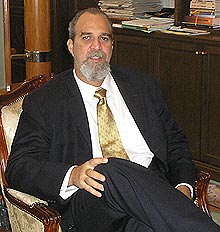
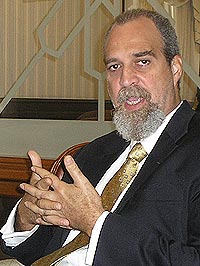
These are excerpts from the first of a three-part exclusive interview with Institute of Islamic Understanding Malaysia director-general Dr Syed Ali Tawfik Al-Attas.
Malaysiakini: Do Malays have a right to renounce Islam?
Syed Ali: The problem is, the Malays are Malays because of Islam, and therefore they are Muslims first. They are not Malays without Islam. The definition of Melayu is a person who is a Muslim first. Secondly, he follows the Malay customs and traditions. Thirdly he speaks the language of the Malay which is derived from Islam. These three make the Malay.
The Malay language is derived from the Arabic language, the language of identity for the Malays, in other words. The Malay language which gives the Malays identity comes from the Quran. 'Ilm (knowledge), for instance, is an identifying trait. And this 'ilm comes from the Quran. In fact, that's what Islam is, all about knowledge. The major feature in Islam is 'ilm.
These are excerpts from the first of a three-part exclusive interview with Institute of Islamic Understanding Malaysia director-general Dr Syed Ali Tawfik Al-Attas.
Malaysiakini: Do Malays have a right to renounce Islam?
Syed Ali: The problem is, the Malays are Malays because of Islam, and therefore they are Muslims first. They are not Malays without Islam. The definition of Melayu is a person who is a Muslim first. Secondly, he follows the Malay customs and traditions. Thirdly he speaks the language of the Malay which is derived from Islam. These three make the Malay.
The Malay language is derived from the Arabic language, the language of identity for the Malays, in other words. The Malay language which gives the Malays identity comes from the Quran. 'Ilm (knowledge), for instance, is an identifying trait. And this 'ilm comes from the Quran. In fact, that's what Islam is, all about knowledge. The major feature in Islam is 'ilm.
How would you explain the Malay mindset in relation to Islam?
 There are people in this country from that mentality, narrow-minded school where everything is the face, how you portray yourself outwardly. The Hadith (Traditions of the Prophet) says the ritual part or the outward appearance alone is not that important and yet this is forgotten. Now, it's the other way around, by the way you look, whether you are Malay or not. When did this phenomenon happen? This is not particular only to Malaysia but is happening the world over.
Recently, I met a person who had converted to Islam from Christianity outside of Malaysia. He said to me "If I had come to know of Islam in this country, I would not have become a Muslim". The sincerity of that conversion bothered me. If you're converting simply by the behaviour of people, it's not sincere but if your Islam is sincere, then this behaviour of the Muslim that is abhorrent should be criticised.
Malaysians have reduced their brain to think about money, food and sex, they don't care about anything else. Everything is perut, perut, perut (physical needs in this context). The size of the wallet is indicative in the waist and that shows me that these people are more interested in food than anything else, and this has now become what is called budaya (culture). It's not budaya . The budaya comes from Islam which always teaches moderation.
How big is the identity crisis faced by Muslims?
The Malay language is one of the most important aspects (of Malay identity) and derives from Islam. This Quranic language that is used now for identity, words such as dunia (earthly), akhirat (judgement day), are actually terms found in the Quran which define the Malay. It is a reasonable language with roots, conceptual philosophy, systems.
Scholars in the past admit and realise the importance of language and thought, that the both are reflective. Language influences the way you think and the way you think influences the way you speak.
If you are brought up in a certain atmosphere, your ideology or your philosophy will be reflected by the kind of language you use, words like 'freedom' and 'choice'. These conceptual philosophies attached to the words 'freedom' and 'choice' are understood by the individual who speaks them according to how he understands that particular worldview, and this worldview is defined by the language.
For the Muslims, if you're going to change the Malay language then they're going to suffer an identity crisis. And this has happened because the language is not Malay any more. It's just anglicised Malay. The Malay language should remain but English should be taught because you are teaching science that is dominated by the west. You don't have the Latinised terms in the Malay language.
 When the French, Spanish and Dutch colonised other nations, the first thing they did was to try and change the language. The French did that in North Africa by replacing the Arabic language with French. The Spanish did the same thing, look at the Philippines and South America. And the Dutch in Indonesia. The Indonesians are Malays but what happened to them? They are more confused than we are.
The British didn't do that here. They did not interfere with the language. On the contrary, they said let the Malays be better farmers, better fishermen without touching the language. So, the Malays actually preserved their identity through their language much better than the Indonesians did.
But wasn't this identity crisis prevalent 40 or 50 years ago, even as recent as the 1970s?
Yes... but not as apparent as today. As if the Muslims in the 70s were not as Islamic as the ones today. We're more interested today in rituals, rituals, rituals, rituals. Now, they're trying to dictate even the way we dress, what kind of dress is Islamic. The baju Melayu is already Islamic, you don't have to go and adopt some Persian-type gear like a flack-jacket which is based on the topography of the country and the weather.
Are government policies - affirmative action and the works - to blame for the prevailing social conflict, this accumulated feelings of insecurity and inferiority?
All of that is to blame. The Malaysian government is allowing people to build churches and temples but it's just where and how many you build. Sometimes, there's no need to have a thousand temples or churches in a small area, as long as you have a place for people to worship, which they already have. So why must they still argue?
Furthermore, here in this country there is no stringent law that says you cannot do that (build places of worship). Look at every other corner or tree and you'll see a little red Buddhist shrine. People don't disturb it, they respect it. We don't go and break it, for heaven's sakes!
I think sometimes these people are also stepping over their boundaries, the ones who demand too much. There already is freedom of worship, you're free to worship anywhere.
Does apostasy occur when a person stops practicing Islam or goes public about leaving the religion?
 Of course, your action reflects your belief, and of course, rituals are a requirement but you're not an apostate if you don't do it. Are you going to tell me that every Muslim here prays five times a day or doesn't drink? If supposing somebody doesn't fast, that doesn't make him an apostate?
It's with your intent, your action. This is what I get very frustrated at... it seems like now, we're reducing Islam merely to the laws, halal haram halal haram, that's all. Islam does not merely fall within the category of law alone.
Let's take the issue of punishment for apostasy that they are talking about now as death. That is the hudud law. It's not mentioned in the Quran as far as I know and there's a historical precedent to why these laws were first established during Khalifah Omar's time.
He could see that the Arab population was already reverting to the tribal pagan mentality. In order to preserve and protect Islam from being miscommunicated and confused, right at the onset he put the most stringent laws. This is the reason.
Therefore, the hudud laws are very strict precisely because of the intent designed to prevent the Arabs from returning to the jahiliyah mentality but that doesn't mean they apply for all time, especially not in a country with a multi-religious, multi-social strata like Malaysia.
Ikim chief: Malays are Muslims first
Tomorrow: Part 2 of interview with Ikim DG


Report this comment
Are you sure you want to delete this comment?
This action cannot be undone.