




Violence against Burmese monks lambasted
The Asean Inter-Parliamentary Myanmar Caucus (AIPMC) is concerned and disappointed over the use of brutal force by the Burmese junta today to break-up peaceful protests in the country.
The Asean Inter-Parliamentary Myanmar Caucus (AIPMC) is concerned and disappointed over the use of brutal force by the Burmese junta today to break-up peaceful protests in the country.
Media reports have surfaced of baton-wielding and tear-gas-firing Burmese police personnel against crowds of protesters, including students and Buddhist monks, in the capital Rangoon.
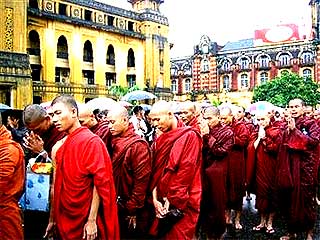 "The reaction of Myanmar's authorities towards the peaceful protesters is totally unacceptable," said AIPMC president and Kota Baru member of Parliament Zaid Ibrahim in a statement.
"The junta have really crossed the line now and AIPMC strongly calls on the regime to immediately stop the use of harmful means to disperse the crowds," he added.
Myanmar is the new name given to Burma by the junta.
According to the Reuters news agency, armed soldiers have used barbed wires to cordon off the area around the Shwedagon pagoda in Rangoon. About 500 monks were believed to be inside the pagoda at that time.
AIPMC parliamentarians from Malaysia, Indonesia, Philippines, Cambodia, Thailand and Singapore condemned the actions of the junta and strongly urge the Burmese government to initiate peaceful discussions with the monks to resolve the conflict.
The discussions should also include political and ethnic leaders, they added.
'Do more'
AIPMC also called on Asean leaders to immediately intervene in the situation to prevent further untoward incidents in one of its member countries.
Opposition Leader Lim Kit Siang, in a separate statement, also urged Asean member nations to do more to impress on the Burmese military junta to seek a peaceful solution to the "saffron revolution".
"Malaysia and Asean must come into the very forefront in regional and international efforts to support a peaceful resolution of the monk-led mass protest marches in Rangoon and Mandalay...
"...especially as Asean had given the Myanmar military junta a new legitimacy and fresh lease of life by admitting Myanmar into Asean ten years ago," he said.
However, he added, the Burmese government's promises of national reconciliation and democratisation have all come to nought in the past decade.


Are you sure you want to delete this comment?
This action cannot be undone.