




The Chinese are the biggest taxpayers
It is perhaps timely that Dr Mahathir Mohamad, speaking at a forum on the 'Future Challenges of the Malays' recently in Alor Star, should have stated that "Malays have to acknowledge that the Malay community contributed the least to making Malaysia a model country and to its current status in the world" ( The Sun , Monday, March 27, p 10).
It is perhaps timely that Dr Mahathir Mohamad, speaking at a forum on the 'Future Challenges of the Malays' recently in Alor Star, should have stated that "Malays have to acknowledge that the Malay community contributed the least to making Malaysia a model country and to its current status in the world" ( The Sun , Monday, March 27, p 10).
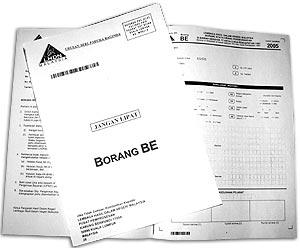
Mahathir went on to explain that because the government needed taxes from the people to develop the country and since the Chinese community made the "biggest contribution" in taxes, therefore, although the country had "progressed and prospered under the leadership of the Malays, such progress was built on the hard work of the other races (mostly Chinese)".
While I believe Mahathir's statement must be given very serious consideration indeed, (Mahathir, more than any other Malaysian, knows what he is talking about) nonetheless it is also my contention that not all concerned Malaysians would agree with his views particularly that the Malays were behind (in the payment of taxes) because of their "culture and attitude".
This is not the place to go into a theoretical and academic discourse as to why the Chinese are the "biggest" taxpayers and the Malays the "smallest". In reality, I believe the very premise of this question itself misses the point that such disparity exists not only between the two groups but indeed within the Chinese community itself.
Therefore, if at all the criteria of amount of taxation paid is to be the determining factor in ascertaining 'contribution' to development, then much more information is needed regarding the proportion of taxes paid in relation to incomes among the Chinese themselves.
Such criteria could rather be an indication of income inequalities among the Chinese and that the 'biggest' amounts paid were from the 'super-rich' section rather than the community as a whole. This in turn may reflect on the element of 'cronyism', patronage and 'unfair' business dealings between the 'super-rich' Chinese businessmen in cahoots with the Malay ruling class and business elite.
Networks of linkages
Therefore the 'biggest' contribution of taxes from this group may be due to the success of these many networks of linkages rather than the so-called "hard work" of the Chinese taxpayers as a whole.
 I have previously taken serious issue with the good doctor on the question of Malays being economically backward because of their "culture and attitude".
I have said, and continue to maintain, that the poor economic performance of the Malays is due to serious institutional structural constraints across the political and economic spectrum.
Indeed, I am prepared to 'stick my neck out', to say that apart from extensive physical infrastructure development over the years, the main rural social institutions for economic development through reforms such as land reform, the democratisation of social institutions, and the development of market demanded skills (including the use of the English language for computer technology), have remained neglected and there is therefore little, if any, change since the colonial days.
Basically and fundamentally, because there has been no serious attempt to improve the capacity and capability of rural workers to compete on a level playing field, their income levels have remained low or stagnant and hence it is not surprising that their low income taxation should reflect this scenario.
It is my humble, yet firm conviction, that the time is now right for these questions and issues to be seriously taken - before it is too late. The government cannot evade responsibility for giving the Malays a false sense of "protection" through the provision of subsidies as that has resulted in the sad state of MAS where some 6,000 workers, (30% of the workforce presumably mostly Malays) will be laid off.
I believe it is true to say that the government also failed to understand the social impact of the petrol hike in terms of maintaining the minimum quality of survival especially among low and middle income wage earners. Regrettably this pattern of subsidy withdrawal is likely to continue under globalisation and the main group likely to be adversely affected will be the Malays.
Further tensions
Finally, I have to say that the recent 'blurting out' of views on the pattern of race relations by persons who "claim" expertise but who do not have the academic and professional qualifications, are likely to create and inflame further tensions and feeling of animosity between races particularly in this situation of economic uncertainties and fears for the future.
In sociology, we are taught that when people (especially among low income groups that those that perceive themselves as being politically marginalised) have to cope with sudden unexpected changes and uncertainties, that negatively affect their lives and over which they have no control, they tend to 'regress' and fall back on religious and cultural practices that they know, and on which they can rely.
This perhaps is one reason for all the 'hype' about levels of morality, modernity and dress codes which seems to have become an 'obsession' of late. This does not help in the quest for political stability and integration in multi-ethnic and multiracial societies such as Malaysia.
DR COLLIN ABRAHAM
holds a doctorate degree in race relations from Oxford. He was initially a civil servant attached to the Welfare Ministry as well as undertook research projects with the Ministry of Rural Development and Economic Planning Unit. He was subsequently seconded to Universiti Sains Malaysia where he was associate professor in sociology, and more recently visiting fellow. He is currently pro-tem president, Malaysian Association of Social Impact Assessors.


Are you sure you want to delete this comment?
This action cannot be undone.