


/file/publisher-c1a3f893382d2b2f8a9aa22a654d9c97/2025/06/ca8880ea05b727bb0f0806738c1221e7.png)

Why LEDs Make a Better Insect Light Trap
LED ILTs vs Fluorescent
Flies and other flying insects pose a significant threat to businesses that demand contamination-free environments, such as those that involve the handling of food or pharmaceuticals. They also present a nuisance in customer-facing areas, such as hotels and eateries. Every business needs an effective solution for removing flies that is suitable for its specific environment, whether it be a large warehousing facility or a café. There are various factors for a business to consider when selecting an insect light trap (ILT).
While traditional ILTs may be effective at eliminating flies, LED ILTs offer equal, if not superior, efficacy and bring a host of additional benefits.
Sustainability
Energy Savings
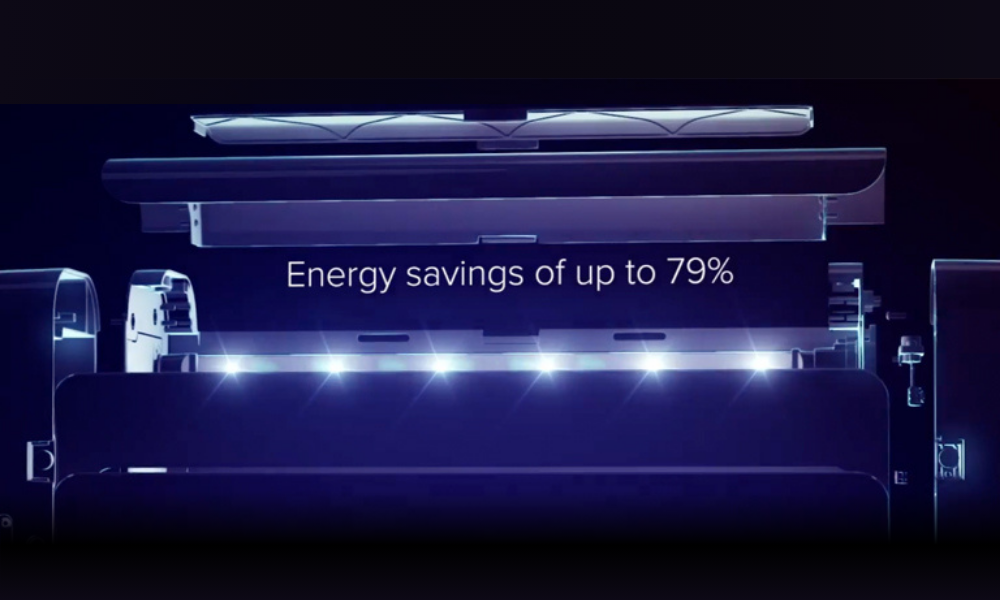
It is no secret that typical LED bulbs used in homes offer significant energy savings compared to conventional light bulbs, this holds true for conventional fluorescent bulbs used in Insect Light Traps (ILTs) as well. A typical LED strip in an ILT utilises only 10 Watts of power, contrasting with the 30–90 Watts consumed by units with fluorescent tubes. In our tests, a Lumnia ILT with Lumnia LED lamps demonstrated a potential power savings of up to 79%, compared to equivalent traps with fluorescent tubes.
LED lamps also allow for variable light output by reducing power, enabling even more energy savings compared to fluorescent tubes. The contrast in light output with the surroundings is crucial for attracting flies, so during night and low-light conditions, the power and output of our Lumnia LED lamps can be diminished while still effectively attracting flies.
Lumnia units feature day and night modes, further reducing power consumption when least needed, enabling businesses to save more and further decrease their environmental footprint.
Longer life
LED lamps also allow for variable light output by reducing power, enabling even more energy savings compared to fluorescent tubes. The contrast in light output with the surroundings is crucial for attracting flies, so during night and low-light conditions, the power and output of our Lumnia LED lamps can be diminished while still effectively attracting flies.
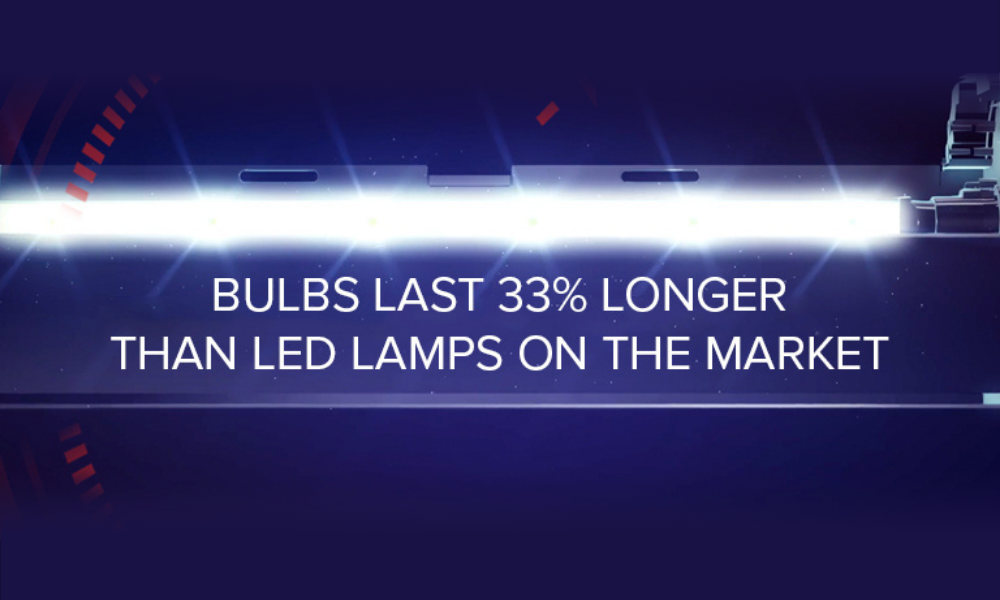
The standard fluorescent tubes used in insect light traps typically last about a year before needing to be replaced. During this time, the UV light output diminishes to only half of the original brightness. Lumnia LED lamps, on the other hand, produce UV light for a minimum of four years and the brightness only drops by no more than 30% of the original output. This reduces replacement costs and ensures prolonged effectiveness.
The UV output of our LED lamps is approximately 80% greater than that of conventional L3 fluorescent tubes used in ILTs. This means that even after four years of use, the UV output of LEDs remains equivalent to that of a new L3 fluorescent tube.
Safer
No hazardous chemicals
Fluorescent lamps use hazardous chemicals, including low-pressure mercury vapour and gases like argon, xenon, neon, or krypton, to generate light. The glass tube inside is coated with a fluorescent substance made from metallic and rare earth phosphor salts, converting UV light from mercury into desired wavelengths. In contrast, an LED lamp contains a small semiconductor wafer enclosed in plastic, with several placed on a strip for use in an ILT. Therefore, LED lamps do not have hazardous chemicals that can escape during normal use.
No glass
A fluorescent tube consists of a fragile glass tube that contains the mercury vapour and the other components mentioned above. The glass tube can easily shatter if dropped or receives an impact, which would scatter glass and other chemicals in the tube around the area where food is handled. In a Lumnia LED lamp, there is no glass or hazardous chemicals in a form that could be scattered in a food-handling area. In tests in which a Lumnia ILT is dropped repeatedly, the lamps don’t break, so they are perfectly safe for a food environment.
Hygiene
With some electric traditional fly-traps, flies are zapped and their body fragments can escape into the environment, leading to contamination risks in food-handling areas. Lumnia units for high-dependency areas are designed to overcome this by using powerful glue boards and an encapsulation module that captures flies and prevents insect fragments from escaping. This minimises the risk of cross-contamination, making fly control more hygienic.
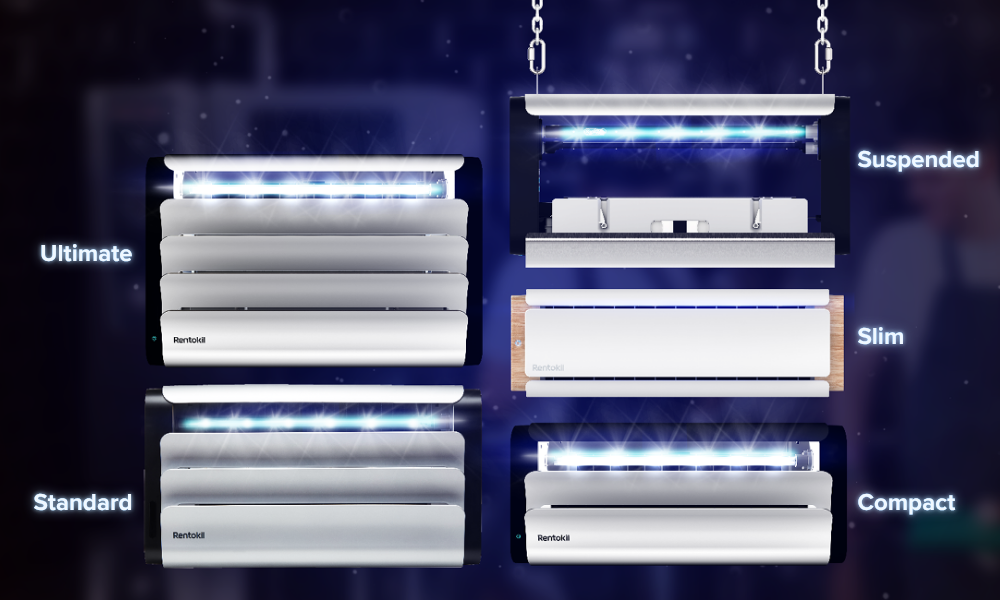
When compared to traditional fly traps, Lumnia LED ILTs aren’t only more effective but also cost-effective, sustainable and hygienic. It's the Lumnia range from Rentokil that boasts a greater reach and catches flies faster than any other LED ILT. And with their modern design, they’re aesthetically pleasing enough to be placed at front-of-house locations too.
Don't miss out! Rentokil’s Lumnia Slim and Compact are now available from RM520 and come with 6 free glueboard pieces for a limited time only. Terms and conditions apply. Perfect for customer-facing areas like dining rooms and retail spaces, each unit includes 6 free glue boards, ensuring sustainable, effective and hygienic fly management for your business. Contact our pest control experts today to find out more about the Lumnia TradeUp Programme.
This content is provided by Rentokil Initial Malaysia
The views expressed here are those of the author/contributor and do not necessarily represent the views of Malaysiakini.
Interested in having your press releases, exclusive interviews, or branded content articles on Malaysiakini? For more information, contact advertise@malaysiakini.com or advertise@fgmedia.my


Are you sure you want to delete this comment?
This action cannot be undone.