


/file/publisher-c1a3f893382d2b2f8a9aa22a654d9c97/2025/09/af37f1d8a401cf6ca301852badf03fc4.png)

Malaysian Women Politicians Confront Systemic Barriers, Online Abuse
Women in Malaysian politics face an uphill battle against systemic barriers, deeply entrenched patriarchal norms, and pervasive online harassment, shared three female political leaders during a panel discussion at the Gender Outlook Forum 2025.
The discussion, titled "Power, Presence, and Push Back: Women's Fight for Space in Politics," brought together Teo Nie Ching, Mas Ermieyati binti Samsudin, and Amira Aisya binti Abd Aziz to share their experiences and advocate for change.
The panellists underscored the urgent need for structural and legislative reforms to achieve meaningful female representation in legislative bodies and decision-making roles. Without such changes, Malaysia risks remaining far behind global standards in gender equality within its political landscape.
Addressing Systemic Hurdles and Advocating for Electoral Reform
Deputy Minister of Communications, Teo Nie Ching, presented on "Seats at the Table: The Fight for Gender Quotas and Representation in Political Decision-Making".
She highlighted that while women in Malaysia excel in education and health, political participation is the ‘weakest link’.
“So you can see that while we are doing fantastic in the education sector and very good at health. In these two sectors basically we do not really see any gender gap, but in terms of economic, we are doing so-so but we are definitely doing very, very, very, very bad in the field of politics. I think that is our weakest link … Among ASEAN countries, Malaysia, we are actually at the bottom. Because our women participation in politics is indeed the worst,” says Teo.
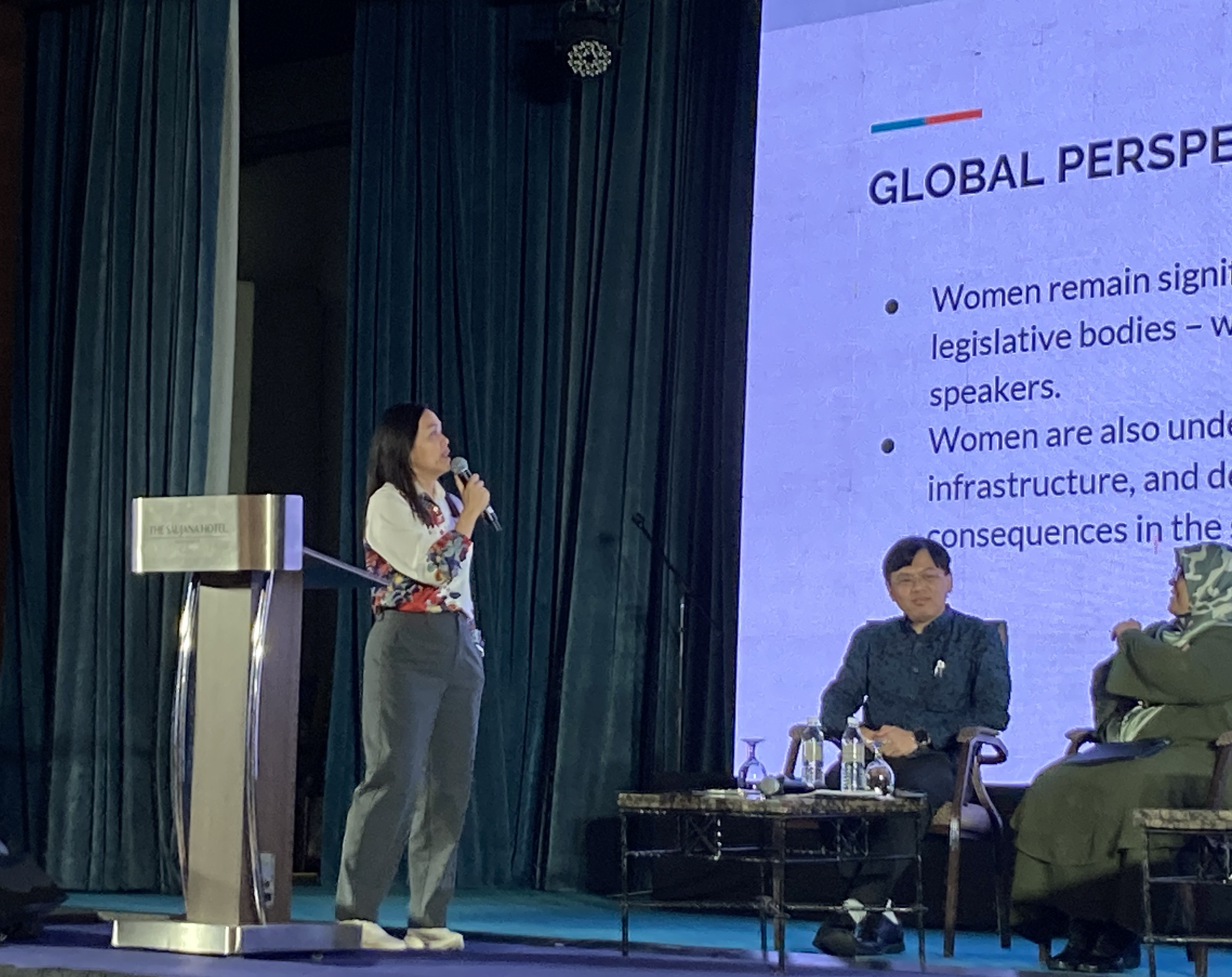
She presented statistics showing that women hold only 13.5% (30 out of 222) of seats in the Dewan Rakyat and 18.9% (11 out of 58) in the Dewan Negara. Teo brings to light that there has been no significant increase of female MPs since 2008.
“This is very, very frustrating because when I was first elected as a member of parliament, and that was in the year 2008, that was the first time I was elected as a member of parliament. At that point of time I was 27 years old. I was a young girl, the youngest MP in the house. But from then until now, the women MPs percentage did not increase. We do not see a huge increase after so many years,” says Teo.
She also noted significant party disparities in female representation, with DAP having the highest at 25% of its MPs, while parties like PAS and BERSATU have considerably lower percentages.
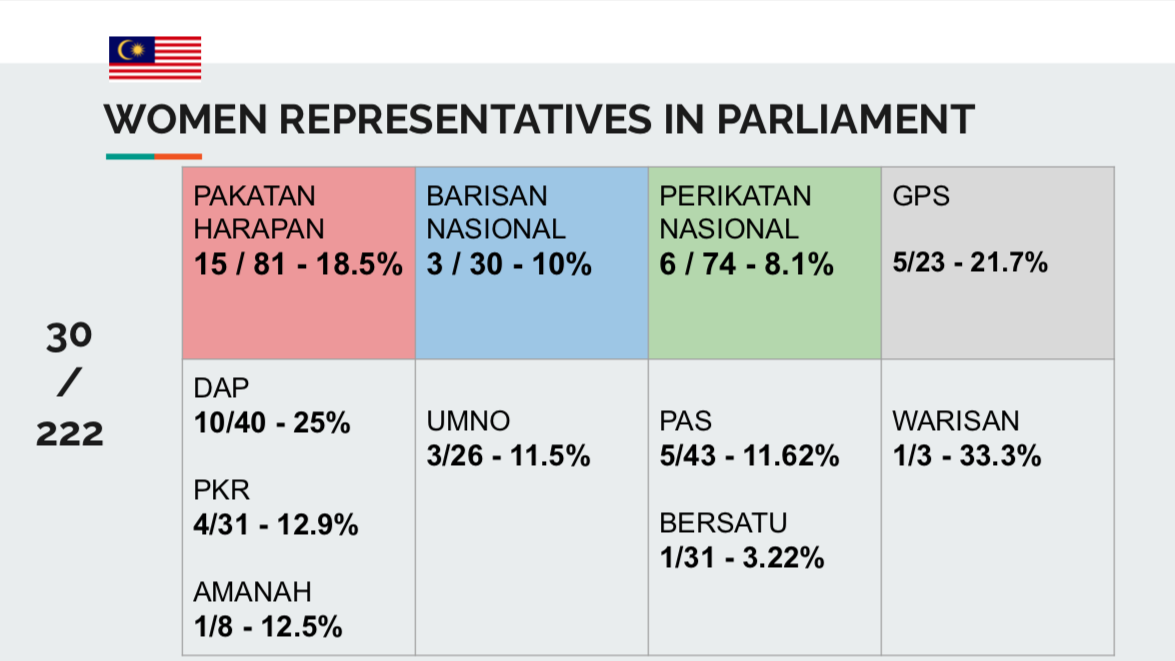
Teo Nie Ching proudly shared that DAP has already amended its party constitution to ensure one-third of its Central Executive Committee members are women. Furthermore, DAP plans to field 30% female candidates for parliamentary seats in the upcoming general election, a target she believes is "very doable" for the party. She also shared her own experience of successfully contesting and winning "unwinnable" seats, demonstrating women's capability to deliver in tough contests.
Breaking Glass Ceilings Through Resilience and Visibility
Mas Ermieyati binti Samsudin, Member of Parliament for Masjid Tanah, shared her compelling journey into politics, starting without a political lineage or powerful connections. She emphasised that politics is about "who dares to walk in, pull out the chair and make the room listen".
Ermieyati recounted, "My political journey began in 2001 not with a big plan but with a simple stop at Mahkota Parade after work. I had just graduated from University Kebangsaan Malaysia, doing my legal chambering at a shopping mall. I noticed a Puteri UMNO recruitment booth. Out of curiosity and honestly just wanting to make new friends, I signed up. That small decision changed everything. Soon I was invited to the meeting then into the committee. By 2002, just a week before my wedding, I became the Pro-Tem Chief of Puteri UMNO Alor Gajah division. I had no political family name, no powerful network. I was passionate but at the same time quite shy and unsure how to move in the new playground".
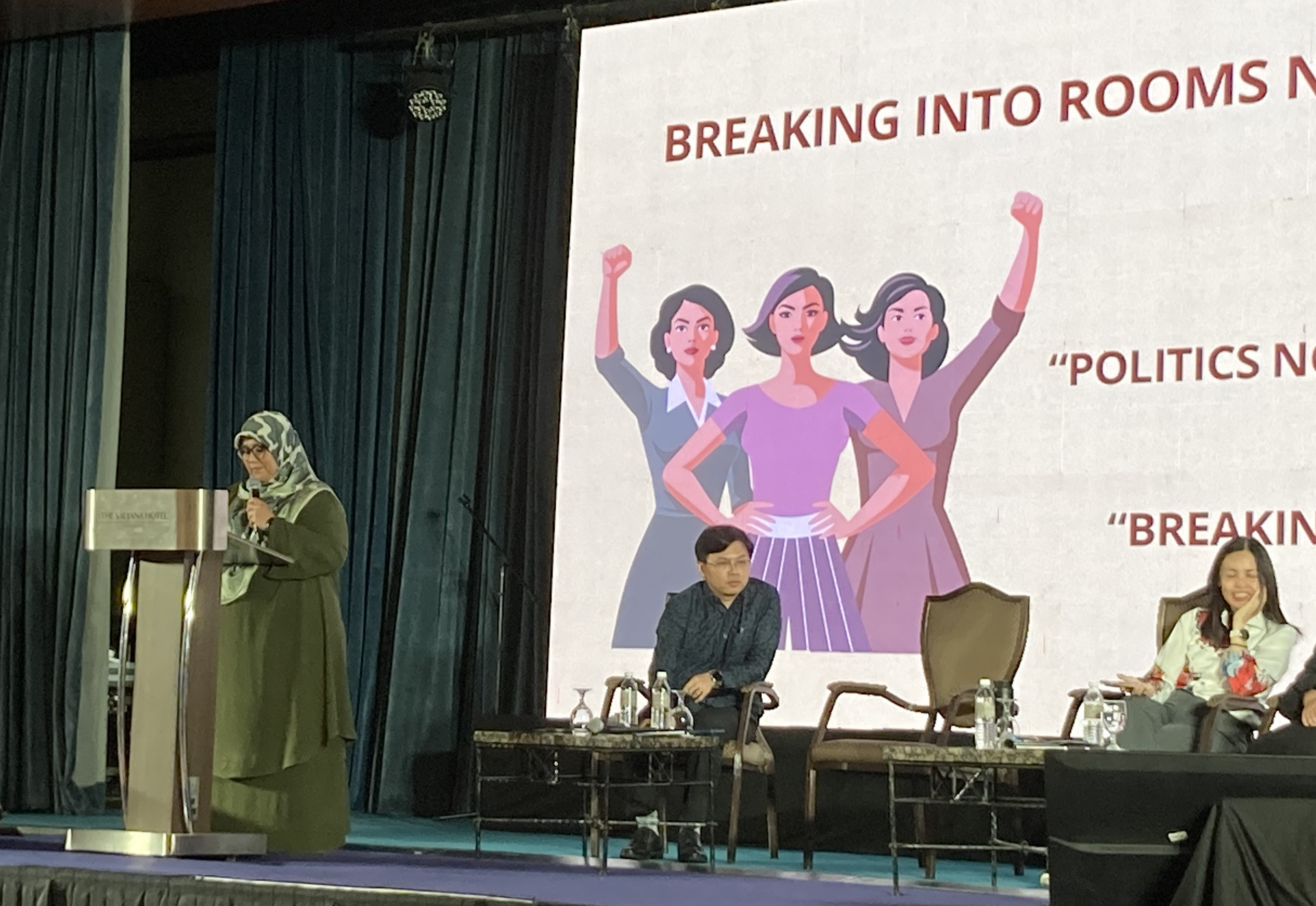
Her initial entry into politics was driven by curiosity and a desire to connect with others.
She broke a significant glass ceiling by becoming the first woman MP for Malacca in 2013, facing age bias during her campaign. Later, her nomination as Perikatan Nasional's Chief Minister candidate for Malacca, despite a narrow loss, symbolically cracked another barrier for women aspiring to high state offices.
Ermieyati acknowledged the personal toll of political transitions, describing how leaving UMNO in 2018 led to her being labelled a "traitor" and facing family harassment. This period brought on depression, which she overcame with family and friends' support, rebuilding herself "stronger, more determined".
Currently, she chairs the Public Accounts Committee, a historic first for Malaysia with both the chair and vice-chair being women. She fosters leadership within the committee by empowering members and building strong camaraderie.
She stressed that visibility matters, as women cannot influence policy if they are not present at the decision-making table.
Ermieyati concluded, "Breaking the glass ceiling is not about one woman's victory, it's about ensuring the ceiling disappears for the next generation. I hope in the years to come the phrase ‘The first woman to…’ will no longer be newsworthy because women leading in every arena will be the norm. And if you ask me what it takes, it takes courage to do that, it takes courage to start, it takes strength to stay, and it takes vision to make sure that you are not the last".
The Emotional Toll and Fight Against Online Harassment
ADUN Puteri Wangsa and Deputy President of MUDA, Amira Aisya binti Abd Aziz, brought a younger perspective, having entered politics just five years ago at the age of 25. She candidly shared that beyond policy debates, her daily political life involved a constant struggle for "emotional and mental survival".
Amira asserted, "Politics should be about ideas, politics should be about vision, but too often for women, it is about survival.”
“YB Nie Ching and YB Mas have shared extensively on women in politics, how women in politics are not the norm yet, we are still exceptions. And I totally agree with YB Mas' closing remarks that you know although sometimes you feel a bit proud when you are the first woman to do this, first woman to do that, but it's a very lonely label. And it's not a label that should be something that we should only celebrate. Because to me, what we should celebrate is if there are more women in the political arena, more women as leaders in politics,” says Amira.
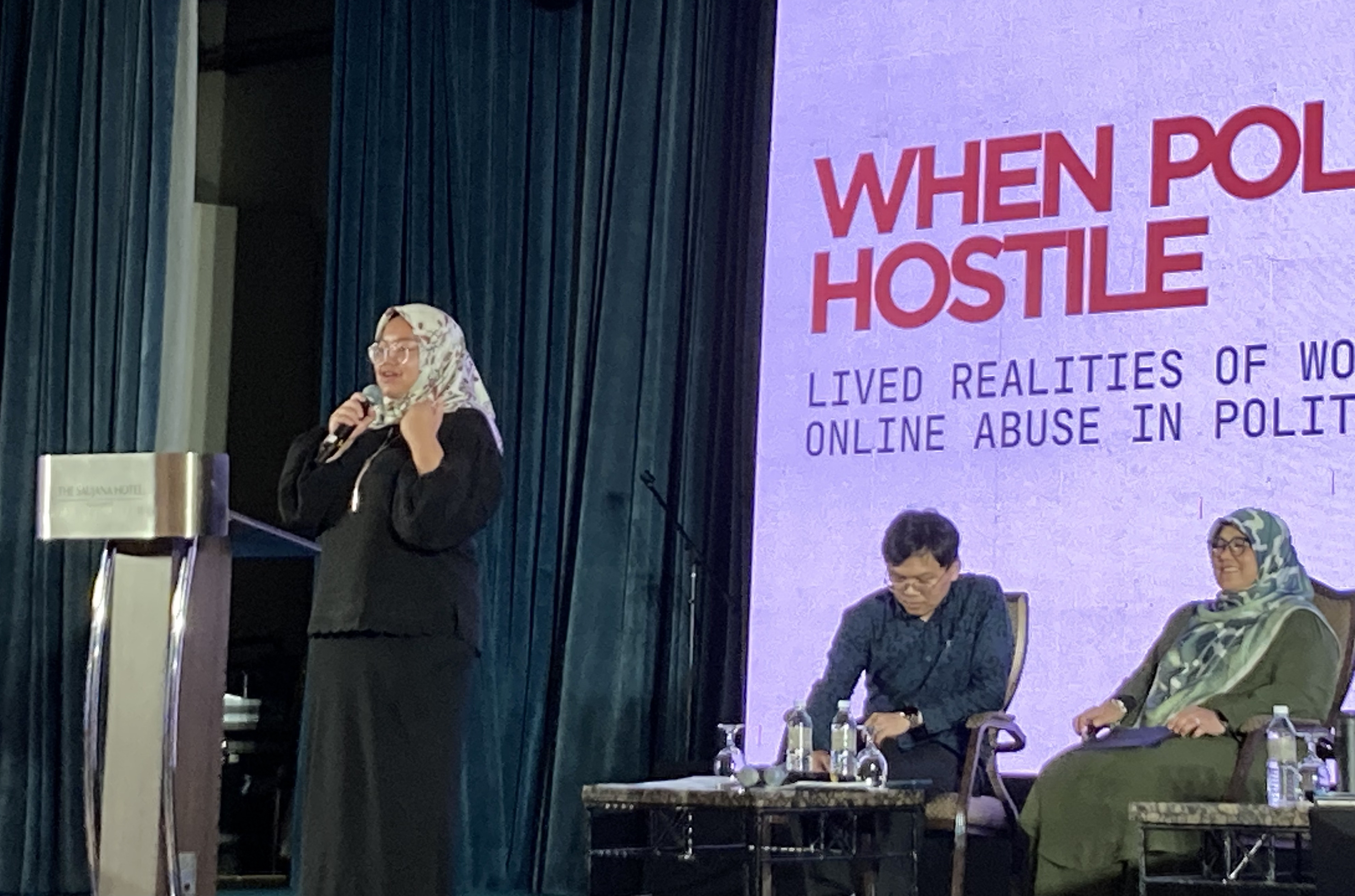
She noted that women are still exceptions in politics, with only 15.5% of MPs and less than 10% of state assembly members being female.
She highlighted the severe problem of online harassment and abuse, which deters many women from entering or remaining in politics. Citing an Inter-Parliamentary Union (IPU) report, she revealed that 60% of women parliamentarians have faced sexual harassment and violence, which also extends to their staff and party members.
She shared examples of the daily sexist comments and abuse she receives on social media, even when discussing serious policy issues.
Amira challenged the expectation for women politicians to be "iron ladies" with "iron skin and iron heart". She recounted lodging a police report against online harassment, only to be advised by a senior woman politician that it showed "weakness".
Amira powerfully stated, “Every insult against me is not just personal to me. To me every insult that I received is also a threat against any other young women who wanted to join politics. Because when they read what I have to face, what makes them feel like they want to speak out? What makes them feel that they want to enter politics? What makes them feel that they have a space in this arena? Unless myself and other senior female politicians are speaking up against all this abuse, all this harassment, young women will stay far, far away from politics.”
Despite the challenges, she is committed to ensuring that future generations of women do not have to fight for space in politics.
She noted that MUDA, her party, has 50% women representatives and fielded 53% women candidates in previous state elections, demonstrating a strong commitment to gender parity.
Calls for Cross-Party Cooperation and Accountability
The panellists acknowledged the difficulty of cross-party cooperation on women's issues in Malaysia. While a women's caucus existed in Parliament previously, Teo noted its current inactivity and limited impact beyond symbolic gestures.
However, Amira advocated strongly for establishing a functional cross-party women's caucus, similar to those in Nordic countries that have successfully pushed for women and children's rights. She mentioned her own experience of collaborating with women from different political parties and noted that many women leaders are supportive of empowering other women.
All three leaders indirectly called for greater accountability for politicians, particularly men, who engage in gender-based violence or sexist remarks. Amira noted that her police report on online harassment received no follow-up, underscoring the need for robust legal frameworks and enforcement.
The discussion concluded with a shared message of encouragement for young women to enter politics, despite the difficult realities. The panellists expressed hope that their ongoing efforts would make the political space safer and more inclusive for women who follow.
This content is provided by Westminster Foundation for Democracy.
The views expressed here are those of the author/contributor and do not necessarily represent the views of Malaysiakini.


