




Police misconduct: EAIC fits the bill Pt 1
It is commendable that the federal government is finally tabling a bill in parliament in response to the recommendation of the Royal Commission (RC) to enhance the operation and management of the Royal Malaysian Police.
The RC is to to establish an Independent Police Complaints and Misconduct Commission (IPCMC).
This has been a long journey as the RC completed its report and presented it to the Agong on April 29, 2005.
It is commendable that the federal government is finally tabling a bill in parliament in response to the recommendation of the Royal Commission (RC) to enhance the operation and management of the Royal Malaysian Police.
The RC is to to establish an Independent Police Complaints and Misconduct Commission (IPCMC).
This has been a long journey as the RC completed its report and presented it to the Agong on April 29, 2005.
While the government tabled a bill in 2008 to replace the IPCMC called the Special Complaints Commission (SCC), it did not secure the support of a majority of Malaysians and fell extremely short of the standards set in the IPCMC.
Then the government withdrew the SCC and on March 11 th 2009 and introduced the Enforcement Agency Integrity Commission bill (EAIC) for the first reading and on June 25 2009 it was tabled for second reading.
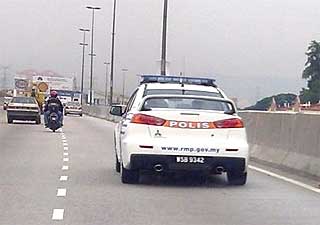 The EAIC bill is comprehensive and has incorporated many of the major points of the IPCMC.
It is a much stronger bill in contrast to SCC. The new bill has also taken into consideration many of the criticism leveled at the SCC
It can even be regarded as a much stronger bill in contrast to the Human Rights Commission of Malaysia Act (SHUHAKAM) especially in terms of the investigative powers.
In this article. I hope to make a comparative study of the EAIC in the backdrop of the IPCMC proposal, noting some of the major points incorporated or excluded in EAIC. There are five major aspects that are important for our reflection and analysis.
1. Not just the police but 21 enforcement agencies
The first is that the IPCMC was proposed to specifically target the Police force and not other agencies.
In one sense the RC could not recommend other enforcement agencies as its terms of reference were confined only to the Police.
The proposed EAIC is an external oversight body for twenty-one Federal enforcement agencies.
The criticism is whether the scope for the EAIC is too wide. Public concern is largely on the misconduct of the Police force in terms of corrupt practices, excessive use of force or inaction as indicated through the findings of the RC as well as documented in the SHUHAKAM Annual reports and inquiry findings.
Misconduct by others
However there have also been many complaints of the misconduct of RELA officials and therefore the enlargement might be better to set a more conducive culture for good governance, ethical and professional conduct of all the federal enforcement agencies.
It is imperative that the federal government must make available adequate funds and personnel necessary for EAIC to effectively carry out its task as an external oversight body which plays a complementary role alongside internal disciplinary authorities such as the Police Service Commission and the Public Service Commission.
2. EAIC composition of Commissioners similar to IPMC
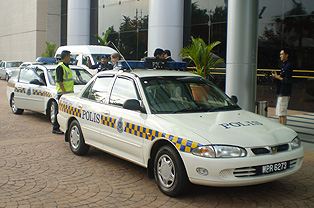 The second aspect of review is the composition of the EAIC commission members described in Section 5 of the proposed bill. Here there are some similarities but there are also differences from the IPMC and the SCC composition.
As recommended by RC, EAIC will have seven commissioners including a Chairman and Deputy Chairman.
They will all be appointed by the Agong on the advice of the Prime Minister for a three year term and a maximum of two terms consecutively.
In addition EAIC indicates that no person who is or was an enforcement officer will be appointed as members of the Commission, although they could be employed as a staff of the commission.
This is in contrast to the earlier SCC bill tabled which proposed that among the members would be the Inspector General of Police.
The neutrality and impartiality of the commissioners is integral to the integrity of the MAIC.
However the EAIC does not provide any indication of who should be appointed.
In the case of the IPCMC it was indicated that the Chairman and Deputy Chairman should have at least ten years of service as advocate and solicitor of the courts or in the judicial and legal service of the Federation or the State.
In addition the RC indicated that three (Chair and two deputy chair) of the seven commissioners should be full time.
In the EAIC the provision for full time or part-time commissioners is not indicated.
It is of utmost importance that the selection process and appointment is done in an open and transparent manner.
The RC did not make any recommendations for any consultative process in the appointment of commissioners.
Critical to restore public confidence
However this has now become a critical aspect in restoring public confidence in the light of the establishment of the Judicial Appointments Commission, as well as the criticisms raised on the appointment of Suhakam commissioners.
It might be necessary to add in the Schedule Section of the EAIC some indicators and guidelines on the selection of EAIC commissioners and some process of consultation among major stakeholders including civil society before the Prime Minister makes his recommendations to the Agong.
 This is a very important dimension of ensuring that the EAIC commissioners will fulfill their duties without fear or favour.
The credibility of EAIC is largely dependent on who is appointed as commissioners.
There is a need for some serious thinking on the background and expertise of Commissioners especially with EAIC having a very strong investigative role.
Therefore as the IPCMC had indicated that at least three of the seven commissioners should have at least ten years of legal expertise. This should be provided as one of the guidelines in the Schedules.
Furthermore EAIC commissioners should be full-time similar to that of the members of the Election Commission and members of the Public Service Commission.
Holding office in a part-time arrangement would not be suitable for such a heavy task.
In the case of SHUHAKAM which has a provision for the appointment of twenty commissioners however, only sixteen have been currently appointed.
All of whom serve in a part-time capacity. Critics of SHUHAKAM have indicated that in a number of cases involvement of certain commissioners in their other capacities might be regarded as a conflict of interest.
On this score the EAIC has a provision in Section 11 of the proposed bill for its commissioners to disclose interest and not take part in any discussion, proceedings or hearings or in any decision making pertaining to that case.
Part 2
DATUK DR DENISON JAYASOORIA is currently Principal Fellow at the Institute of Ethnic Studies, Universiti Kebangsaan Malaysia and member of the Human Rights Commission of Malaysia (Shuhakam). He was a member of the Royal Commission to Enhance the Operation and management of the Royal Malaysian Police. Views expressed in this article are the personal views of the writer and does not necessarily reflect the views of these institutions.


Are you sure you want to delete this comment?
This action cannot be undone.