




Green living in Mukugawa
The Oxford historian, Felipe Fernandez-Armesto, in his epic work 'Civilisations' highlights the importance of society's relationships to climate, ecology and geography in determining a society's success.
The Oxford historian, Felipe Fernandez-Armesto, in his epic work 'Civilisations' highlights the importance of society's relationships to climate, ecology and geography in determining a society's success.
Farming, herding, fishing and hunting are the basis of life, not conflicts and war. The birth, growth and development of agriculture, which transformed the nature of civilisation, began in Asia and remains an intrinsic aspect of our history.
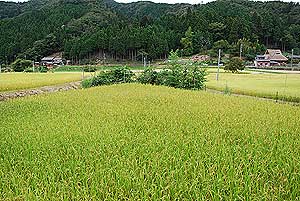 In the autumn of 2009, I participated in a social immersion journey to a small farming community in Mukugawa, Japan, to rediscover the human-ecological balance as a participant of the Nippon Foundation Asian Public Intellectual (API) regional programme.
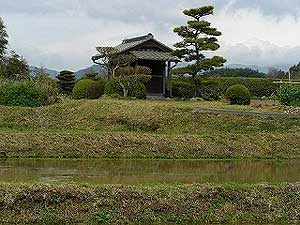
I drank in the scenes. The coach ride from Kyoto to Mukugawa in Shiga prefecture took us through some of the most picturesque mountain scenes I have ever seen. Evergreen Japanese cedars (sugi) bordering golden rice fields, beautiful wooden cluster homes with neat gardens, early autumn blooms and occasionally I caught a glimpse of a meandering river. I am soon in the hamlet of Mukugawa, a mountainous village in Shiga Prefecture.
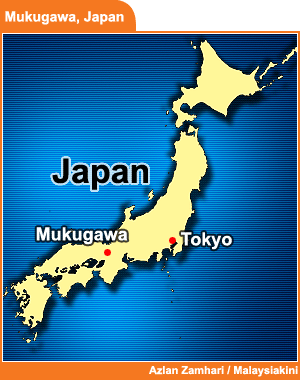 Two weeks for a social immersion journey in a village of 30 households with a population of about 70 persons seemed too long on the first day. How wrong are perceptions! Every moment in Mukugawa was a discovery of a community's endeavours in sustaining the human-ecological balance in the world's second largest economy.
One is considered young at 60 in Mukugawa. Most of the villagers, mainly rice farmers, are in their 70s and 80s. But they are not giving up cultivating paddy, growing vegetables and fruits, fishing and hunting. The average age of Malaysian farmers is 60 but they want retirement.
In narrating the story of his life, Inoue Shiroudaya, a community leader took us through the pages of the history and life of Mukugawa, such as the difficulties of the war years. Many villagers were killed during the war years from 1941-1945 and the burden of keeping the village alive fell on those left behind. Helping each other was vital for survival.
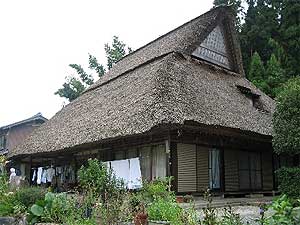 The post-war generation had to adopt many survival strategies and therefore embrace the concept of sustainability. "I did not know what waste was. Everything was reused or sold for cash," said Shiroudaya who is very concerned about the problems of aging communities and abandoned villages in Japan.
"There is so much wisdom, heritage, cultural practices that respect the human-ecological balance here. Mukugawa is beautiful." I agree with that. Shiroudaya encourages the young, who want an alternative lifestyle in a rural setting, to come to Mukugawa that has begun to welcome newcomers and shed some of its exclusivity.
Korenaga Hiroshi, a forestry graduate in his 30s, has moved his wife and four children from Himeiji city to Mukugawa. He is working with local residents promoting chemical-free farming, conservation of old houses and reviving forgotten cultural practices.
The children are so happy, full of laughter and hugging us foreigners. Busy in the afternoons chasing dragonflies and butterflies, plucking flowers and fishing - things only possible in an environment that fosters the human ecological balance.
Children learn early an integrated natural eco-system helps to sustain a wide variety of animals and plants.
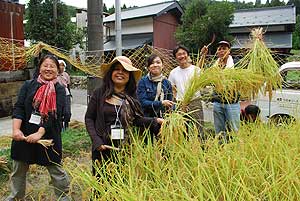 A graduate in French literature who spent several years in France, Shu Nakajima, 29, migrated to Mukugawa to rear goats and produce Che'vre Cheese-it was mouth-watering.
Although busy with his business, Nakajima is an anti-war activist and campaigns against exploitation of women and labour. He counts among his blessings, the mountains, forests, fields and cultural life of Mukugawa.
The newcomers are strengthening the pivotal role rice has played in sustaining socio-cultural and economic activities. Rice fosters the spirit of communal integrity. For rice in Mukugawa, like all regions in Southeast Asia, is connected to culture, economy, tradition and religion.
The sun-dried chemical free Mukugawa rice is superbly tasty. Japan was known as mizumono kuni (land of luxurious rice crops) in ancient times.
A river well-loved
Rivers are so much a part of human history: wars fought over rivers, ongoing conflicts over ownership of rivers and controversial dams that destroy rivers. Rivers die as a consequence of poor river governance.
The river Ado, the artery of Mukugawa, is pristine as the local people point out it's their duty as upstream dwellers to protect the water so that the people downstream have clean water.
 Do we city dwellers have an interest in water beyond the flush toilet lever?
Japanese rivers are traditionally governed by the local people. The spirit of self-governance was nurtured during the Edo-Meiji era (1603-1912). Local governments in Japan enjoy extensive autonomy empowering them to institute very strict laws to protect resources such as land, water and forests.
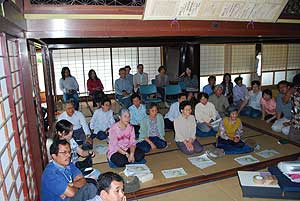
Yukiko Kada, governor of Shiga, a former academician and an independent politician, underscores the important role of communities in protecting natural resources (in a discussion with API participants).
She meets with community leaders and activists regularly to discuss initiatives like Satoyama and Yui-no-Sato Mukugawa aimed at regenerating villages through adopting principles of human-ecological balance.
 The Selangor government is discussing revitalising abandoned urban centres.
This is an opportunity for it to do so in the context of human-ecological balance and not focus on building boulevards and walkways!
The tenacity of Mukugawa's small community of aging farmers in continuing with their agricultural livelihood in depopulated areas is a marvel of the human spirit.
It is also remarkable that young people have given up their urban lifestyles and come to revitalise the traditional rural economy of Mukugawa through sustainable agricultural practices, rejecting large-scale mechanised farming.
Academicians and non-profit organisations too are reviving forgotten cultural practices that heal and rejuvenate the earth and revitalise communities.
JOSIE M FERNANDEZ is currently an Asian Public Intellectual Fellow, director of Philanthropy Asia, researcher and engages with Transparency International Malaysia in anti-corruption measures.
An educationist, Josie moved on to citizen's advocacy as founder president of ERA Consumers and regional director (Asia Pacific) for Consumers International.
She holds a masters degree in development management from the Asian Institute of Management, Philippines. Working on sustainability, philanthropy and anti-corruption actions are some of her current passions besides writing.


