




Climate deal: Will Copenhagen deliver?
Will Copenhagen see celebrations at the end of this week as Kyoto in Japan did on Dec 11, 1997 when the Kyoto Protocol was signed? It was the first globally agreed treaty to reduce carbon emissions, the cause of global warming.
More that 100 heads of state and government leaders are now in Copenhagen for the UN Climate Conference which began on Dec 7 and ends Friday (Dec 18).
Will Copenhagen see celebrations at the end of this week as Kyoto in Japan did on Dec 11, 1997 when the Kyoto Protocol was signed? It was the first globally agreed treaty to reduce carbon emissions, the cause of global warming.
More that 100 heads of state and government leaders are now in Copenhagen for the UN Climate Conference which began on Dec 7 and ends Friday (Dec 18).
Hopefully a deal will be hammered out on the basis of sustainability of planet Earth, and justice for the poor and nations affected seriously by carbon emissions of others, not theirs.
The United States, European Union, China and Japan are the biggest culprits of carbon emissions which contributes to rising sea levels, floods and droughts, affecting countries like Bangladesh, Sudan, Maldives, Seychelles and Tuvalu.
The island states are most vulnerable to rising sea levels.
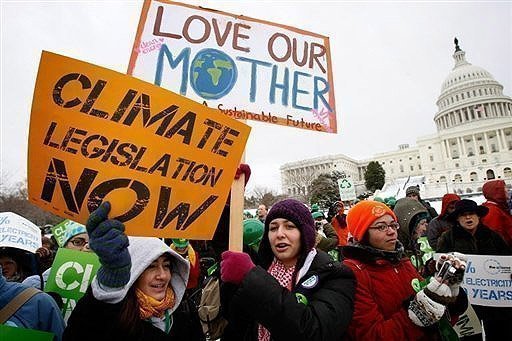 The poor nations are nervous that a deal based on justice for them may not be reached. The head of the delegation from Tuvalu to the conference made an impassioned plea to delegates last week to save Tuvalu.
He cried at a plenary session of the conference on the catastrophe awaiting Tuvalu, adding it was not easy for a grown man to shed tears.
China and India, the rising economic powerhouses are already protesting on the demands being made on developing nations to reduce carbon emissions and opt for
renewable energy sources including nuclear energy without adequate funding from developed nations, whose lifestyles are responsible for the carbon emissions.
At the Kyoto conference on global warming in 1997, Zhong Shu Kong, the Chinese representative argued that it was wrong to equate what is essential to maintain basic needs in developing countries with Western desires to maintain luxurious lifestyles.
"Ours are survival needs, theirs are luxury needs," said the representative from China. Twelve years on, poverty remains a major hurdle in securing a global agreement to reduce greenhouse gas emissions.
A legally binding treaty is not going to happen in Copenhagen. As such, a political agreement would be greeted with euphoria in the Danish capital and this would enable lawyers to work out binding agreements on reducing emissions by 2012.
It has been proposed that industrialised nations will bear most of the burden of emission cuts in the short term. They will reduce their output of greenhouse gases by 25%-45% by 2020, compared with 1990 levels.
Major developing countries would reduce theirs by 15%-30%. Together, all countries would cut emissions by 50%-95% by 2050.
But developing countries are saying they need financial assistance to achieve low carbon economic growth. Reduction of poverty through sustainable livelihoods requires economic development.
Sustainability for the poor means an adequate, decent and secure livelihood which provides for physical and social well-being.
Sustainability is the challenge and solution for achieving a political agreement that favour a reduction in greenhouse gases but at the same time meet the needs of the poor who, India points out, are not responsible for the carbon footprints.
Indeed, 400 million Indians do not have access to electricity. The poor nations are saying they do not poison the world and should not be told to contribute toward actions to reduce greenhouse gases.
'The time for denial, delay and dispute is over'
Developed countries must also take responsibility for polluting industries based in poor nations but whose products are sold to the consumers of these rich economies.
Justice and moral responsibility require developed nations, mainly the US, European Union and Japan to provide financial and technical assistance to developing countries to work towards sustainable low carbon economic growth models to achieve prosperity and alleviate poverty.
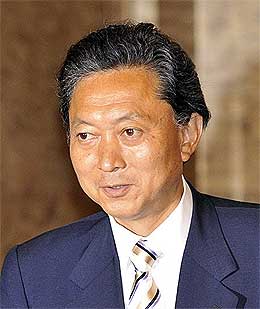 Japan's new Prime Minister, Yukio Hatoyama (
right
), says Japan will make massive cuts in green house emissions. But money must be on the table emphasises the Institute for Envionment and Development to achieve a reasonable agreement on climate change responsibilities.
Japan's new Prime Minister, Yukio Hatoyama (
right
), says Japan will make massive cuts in green house emissions. But money must be on the table emphasises the Institute for Envionment and Development to achieve a reasonable agreement on climate change responsibilities.
Africa is demanding compensation for the effects of global warming suffered by countries of the African Union. India and China signed an agreement in October this year, rejecting legally binding restrictions on their output of greenhouse gases.
UN member states are looking at Washington for some directions to achieving a climate deal at the conference billed as the most important to save Earth from an apocalyptic catastrophe caused by the effects of climate change.
The US made a strategic announcement recently when its Environmental Protection Agency acknowledged that green house gases are responsible for global warming. Republicans responded immediately and said the EPA pronouncement would stall economic recovery.
Todd Stern, the US special envoy for climate change said: "The time for denial, delay and dispute is over."
But without Republican support, can President Obama promise the billions of dollars needed to reduce greenhouse gases and assist developing countries to adopt low carbon economic growth?
Development organisations like Oxfam stress that "large-scale regular payments to developing countries is the glue that will hold together a successful deal.
"The centre piece of the deal presented in Copenhagen thus far gives no guarantee that it will deliver action."
A climate deal in Copenhagen must not only meet the sustainability needs of Mother Earth through significant cuts in emissions, but must reflect justice for those who are victims not because of their actions, and provide financial incentives for alternative models of economic growth to alleviate poverty.
South African Nobel Peace winner, Archbishop Desmond Tutu warned last Sunday that no one can escape the consequences of global warming.


