




The Bhopal Syndrome is all around us
"And we ran-150,000 of us -eyes burning, choking breathless, vomiting, leaving even our children behind."
On Monday June 7, 2010, the Indian courts sentenced seven men, former executives of Union Carbide, to two years jail and a fine for negligence in the worst industrial accident in human history.
"And we ran-150,000 of us -eyes burning, choking breathless, vomiting, leaving even our children behind."
On Monday June 7, 2010, the Indian courts sentenced seven men, former executives of Union Carbide, to two years jail and a fine for negligence in the worst industrial accident in human history.
"Too little, too late", said victims and critics of the court decision on the Bhopal tragedy that stunned the world 25 years ago.
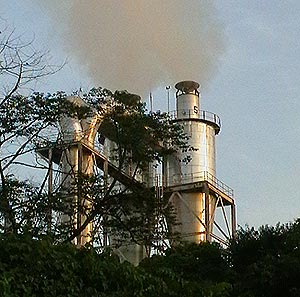 Time has dimmed the catastrophic effects of the Bhopal disaster that began in the early morning hours of December 3, 1984. A violent chemical reaction occurred in a large storage tank at the Union Carbide pesticide plant in Bhopal, India.
A large amount of methyl iscocyanate (MIC) escaped from the tank into the cool winter morning. Hundreds of thousands of people were awakened from their sleep - coughing, vomiting and wheezing.
People were running, gasping for breath, foaming at the mouth, choking on their own vomit and drowning in their fluids. People ran until they dropped.
More than 25,000 people have died and many continue to suffer the lingering effects of the highly hazardous chemical, MIC, including the next generation.
Activists and journalists who have been since 1984, been part of the struggle for justice for victims of the Bhopal tragedy, now wonder if there is going to be justice at all in the courts.
Politically connected
The powerful and politically connected decided 25 years ago the outcome of the cases filed in the courts, say activists who have fought for justice for the Bhopal victims.
Pierre-Joseph Proudhon, the 18th century French philosopher rightly said, "Laws are spider webs for the rich, and chains for the poor."
However, the Bhopal tragedy did provide the impetus for writers, some governments, citizen groups, communities and individuals to raise questions on how to prevent a Bhopal tragedy from happening again.
David Weir, a former investigative journalist who campaigned against pesticides warned in his book ‘The Bhopal Syndrome' that concerned citizens must act to stop further Bhopals.
But the chemical race has not stopped . "It is a lost cause," said a WHO official years after the Bhopal tragedy.
The proliferation of hazardous chemical plants, particularly in the developing world without adequate national and international regulations, continue to raise concerns.
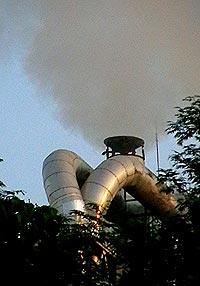 Many accidents at manufacturing plants that handle extremely hazardous chemicals receive scant attention in the media as people are not falling dead in large numbers. Many consider the Bhopal tragedy as an isolated case.
However, there are others who know and believe that there is no risk free technology. I am one of them. No chemical is safe. No technology is risk free.
Many years ago, Charles Forman of the American Institute of Chemical Engineers pointed out, "As long as there are human beings on earth designing , building, and operating equipment, the possibility of disaster always exists. There is no such thing as zero-risk society."
The Malaysian landscape is dotted with hundreds of chemical plants and storage facilities including sheds in rural households where paraquat and other highly hazardous agro-chemicals are stored. Do we as communities or as residents have any idea of the chemicals plants within say a 20 mile radius of our homes?
Technological decisions
The proximity of residential areas and schools to chemical plants including their storage facilities demands immediate action from our local authorities who are responsible for the approval of all development plans.
Technological decisions that affect communities should be discussed and debated with the communities.
Informed public debate is important before industries are located near human settlements. But such debate is only possible when transparency and accountability are embedded in the governance systems of local authorities.
The absence of a Freedom of Information Act in Malaysia creates barriers for communities and individuals to obtain relevant data about chemical issues, manufacturing plants and information on accidents as well as health and safety issues from government and company records.
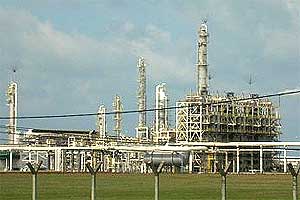 Health and safety information as well as the emergency actions to be taken in case of accidents should be provided to all households.
The government should provide details of studies it has undertaken on chemical manufacturing plants in the country.
Such information will enable citizens to decide if they should permit chemical plants to operated within their residential areas.
Trade secrets
Sometimes, governments treat results of studies on chemical producing plants as trade secrets.
The health and safety of citizens cannot be trade secrets. If information from government studies are stamped as OSA (Official Secrets Act), citizens must then assume that the government or local authority is permitting the construction of high risk industrial facilities. Citizen mobilisation against such facilities is necessary.
The Bhopal Syndrome is all around us including supermarkets, retail outlets and eateries. The storage of household chemicals and pesticides for home gardens need to be regulated as these hazardous substances are stored close to food items.
In rural sundry shops, consumer groups have documented evidence of chemicals from aerosol-cans dripping on to food such as onions, dhall, etc. Government health inspectors obviously do not check grocery shops in rural areas including plantation sundry shops.
And why are restaurants allowed to operate right next to car repair ‘shops' which use hazardous chemicals? Consumers should demand the highest safety and health standards from food outlets and avoid those eateries close to car repair places or where chemicals are stored.
As citizens and consumers, we can take measures to break the Bhopal Syndrome. The chemical industry is powerful because we have allowed our politicians and policy makers to be influenced by this industry. We can begin by supporting non-chemical alternatives, stop dependence on chemicals for food production and the spread of agrochemicals, create no-chemical homes and demand information on hazardous facilities in residential areas and if necessary mobilise for their closure.
It is our obligation to break the Bhopal Syndrome for future generations who will assume stewardship of this planet.
JOSIE M FERNANDEZ is currently an Asian Public Intellectual Fellow, director of Philanthropy Asia, researcher and engages with Transparency International Malaysia in anti-corruption measures.
. She holds a masters degree in development management from the Asian Institute of Management, Philippines. Working on sustainability, philanthropy and anti-corruption actions are some of her current passions besides writing.


Are you sure you want to delete this comment?
This action cannot be undone.