




Social good: The new business edge
On Nov 1st the International Organisation for Standardisation (ISO) published ISO 26000: 2010, Guidance on Social Responsibility.
The use of ‘social responsibility' rather than the commonly used ‘corporate social responsibility' (CSR) will be welcomed by all who have an interest in the activities of corporations vis-à-vis sustainable development.
On Nov 1st the International Organisation for Standardisation (ISO) published ISO 26000: 2010, Guidance on Social Responsibility.
The use of ‘social responsibility' rather than the commonly used ‘corporate social responsibility' (CSR) will be welcomed by all who have an interest in the activities of corporations vis-à-vis sustainable development.
The implementation of ISO 26000, which has taken about six years of work, will be monitored by communities and civil society organisations. However, it is not a certification standard like ISO 9001 and 1400 standards on quality and environmental management.
The six core areas of ISO 26000 embrace potentially controversial issues like human rights, labour practices, the environment, fair operating practices, consumer issues, and community involvement and development.
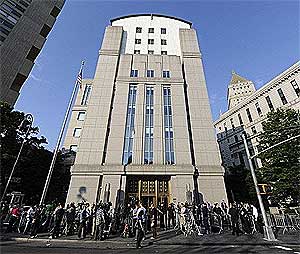 ISO 26000 is an ISO International Standard providing guidance on social responsibility. It is intended for use by both public and private sectors, in developed and developing countries, as well as in economies in transition.
It will assist them in their efforts to operate in socially responsible ways that society has increasingly demanded for more than 100 years.
The early 20th Century saw the growth and power of corporations. The growing corporate power and domination without social responsibility have had serious consequences for people and the planet.
Many social protests against unethical corporate behaviour led to some business executives using their power not merely to garner profits but also to achieve greater social purposes. The automaker Henry Ford, for example, developed programs to support the recreational and health needs of his employees while wealthy American businessmen, Andrew Carnegie and Rockefeller, contributed heavily to the field of education.
Foundation of prosperity
A historical example from the East is illuminating. The founder of the Tata Group of Companies, Jamsetji Tata, said in "The Creation of Wealth", 1895: "We do not claim to be more unselfish, more generous or more philanthropic than other people. But we think we started on sound and straightforward business principles, considering the interests of the shareholders our own, and the health and welfare of the employees the sure foundation of our prosperity."
Some Tata firsts in welfare and year of implementation are: eight-hour working days (1912), free medical aid (1915), leave with pay (1920), technical training institute (1921), maternity benefits (1928), profit sharing bonuses (1934) and retiring gratuities (1937).
The evolution of a more concrete concept of corporate social responsibility, however, began around the middle of the 20th century, where the question ‘what responsibilities to society can business people be reasonably expected to assume' was posed in the publication of Howard Bowen's "Social Responsibility of Businessmen".
In that same publication, Bowen coined the phrase Corporate Social Responsibility (CSR) which he defined as "the obligations of businessmen to pursue those policies, to make those decisions, or to follow those lines of action which are desirable in terms of the objectives and values of our society." ( Ref: Corporatewatch.org ).
Since then, discussions surrounding CSR grew but they were primarily academic in nature. The turning point for CSR grew out of the anti-corporate activism movement led by environmental, human rights, labour and consumer activists.
One example comes to mind. Nestlé's aggressive campaigns to sell their infant formulas to poor communities without addressing the conditions of usage such as clean water, for instance, launched a movement to boycott Nestle and push corporations to uphold their responsibility to understand the effects of their products on people in the different realities they exist.
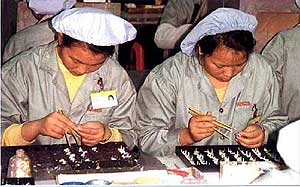 The workers' rights campaigns were also strong driving forces of corporate social responsibility. Many big corporations relocated their production factories to developing countries such as Bangladesh, India, the Philippines, Indonesia, Malaysia, South Africa, Sri Lanka.
It was found that the workers, in some of these countries, were being paid less than US$1 per day, and often worked in highly exploitative conditions.
The rise in anti-corporate activism led corporations to reevaluate their attitudes towards labour, social, environmental and human rights issues. As a result of this, many organisations in the North launched campaigns to boycott goods made by corporations whose workers toiled in very exploitative conditions.
Another boycott campaign by consumer organisations in Europe was launched, with the focus on the textile industry. This was the ‘Clean Clothes Campaign'. Consumer actions were the strong push factors that moved corporations to address their social responsibility to their workers and the communities where their businesses were located.
The idea call of this movement was that although the corporations themselves were often ‘distant' from their workers in supplier factories, they still had a responsibility towards them and they still had to address the social dimension in which they operated.
These movements began to look at corporate social responsibility at different levels of operations and functions of businesses.
PR disaster
In 1995, a critical point in the anti-corporate backlash was reached when Shell was accused of involvement in the execution of Nigerian activists in its decision to sink the Brent Spar oil platform which received severe criticism from Greenpeace ( ref. corporatedwatch.org).
It was a PR disaster for Shell. The company responded by investing £20 million on a strong public relations counterattack as it sought to bring a more human face to Shell.
It published a statement of business principles outlining its core values, among which was ‘honesty, integrity and respect for people', and it set up avenues such as Tell Shell in order to open the lines of communication between the company and the larger community.
The growth of CSR therefore spurred out of anti-corporate campaigns, for which the direct response from corporations has primarily been to repair their image in the eyes of the public, enhance the company's reputation and gain more leverage in society.
Anita Roddick, founder of Body Shop and a pioneer in CSR has criticised the manner in which CSR is thought of, and implemented today.
In an interview with CorporateWatch, Roddick states that "corporate social responsibility, I don't think it's working. I think it's been taken over by the big management houses, marketing houses...it's a huge money-building operation now. I think maybe it's the word ‘corporate'..."
Moving beyond public relations practices, corporate social responsibility needs to be understood beyond the surface notion of merely ‘contributing back' to community.
Social and environmental concerns
The European Commission defines CSR as "a concept whereby companies integrate social and environmental concerns in their business operations and in their interaction with their stakeholders on a voluntary basis".
In Malaysia, multinational companies seem to understand and practise corporate social responsibility as they are driven to do so by their headquarters overseas.
Among locally-owned companies, government-linked companies (GLCs) tend to be better informed on CSR issues since they are guided by the Putrajaya Committee on GLC High Performance (PCG) guidelines.
 Malaysian PLCs lag behind international trends and practices on CSR. According to the CSR in Malaysian PLCs 2007 Status Report commissioned by Bursa Malaysia, less than half of the 200 companies surveyed complied with Bursa's requirement to report on CSR activities.
Companies that submitted reports often did not include objectives, targets and performance data against CSR issues. Many equated CSR reporting with only one aspect of CR namely, community investment.
Malaysian companies are reluctant even to use the word "social", for example, the Institute of Corporate Responsibility has resisted the use of the term social. Corporate responsibility without emphasising the social facet has a hollow ring to it.
Why are Malaysian companies averse to social responsibility? How long can Malaysian companies isolate themselves from global trends in social responsibility when doing good gives companies the business edge?
JOSIE M FERNANDEZ is currently an Asian Public Intellectual Fellow, director of Philanthropy Asia, and researcher. Working on sustainability, philanthropy and anti-corruption actions are some of her current passions besides writing.


Are you sure you want to delete this comment?
This action cannot be undone.