




Child abuse cases poorly handled
This country is losing the plot over law and order. If we were to delve into the cases of child sexual abuse, it would make difficult and disturbing reading. There are many instances of failure on the part of both the state and the forces of law and order to protect the victims.
This country is losing the plot over law and order.
 If we were to delve into the cases of child sexual abuse, it would make difficult and disturbing reading. There are many instances of failure on the part of both the state and the forces of law and order to protect the victims.
Around five years ago in Perak, two seven-year-old Malay girls were molested by a Malay man who was known by the girls' families. This man had forced the girls to fondle him and had then attempted to rape them. He was charged under the Section 354 of the Penal Code which carries a maximum sentence of 10 years jail and/or RM20,000 fine.
The prolonged trial ended recently. The offender had initially been found guilty and sentenced to two months jail. He immediately lodged an appeal to the High Court, was freed on bail, pending appeal and two years later, walked away scot free.
The Director of Public Prosecutions had ‘lost' the evidence and had failed to cross-examine the main witness, the psychiatrist who had examined the children.
According to a family member, "The law can no longer protect the rights of the victims. The girl is devastated. Her mother does not want to subject her daughter to an appeal in which she would suffer yet more trauma. Justice is non-existent in Perak."
One doctor who is familiar with cases of sexual abuse in children said: "Sometimes it looks like the judge has more sympathy with the sex offender than the victim."
Pornographic videos
In another case of sexual abuse, also in Perak, a seven-year-old Malay girl had been fed a diet of pornographic videos by her step-father who had also tried to rape her on at least, three occasions.
He was also charged under Section 354 of the Penal Code. After four years of delays and postponements, he pleaded guilty just as the hearing was about to start.
Having changed his plea to ‘guilty', it was seen by the court as evidence of remorse and he was given a ‘lighter sentence' of ten months in jail from the date of the charge (2007) and fined RM1,500 for each rape attempt.
As he had failed to post bail at the time of his arrest, and was placed on remand, he had only to pay the fine this time, before walking free.
The devastated mother of the victim is reluctant to appeal because she does not think it will make any difference.
Her child is still undergoing long-term psychotherapy and counselling in the Child Psychiatric Unit in Ipoh, because she has developed a craving for sex. Her mother is also receiving counseling.
Observers of these child abuse cases say that the long delay between the charges and the court hearing has shifted the feelings of sympathy from the victim to the offender.
The child's memory of the incidents fades because of the long wait before a hearing. This wait is, on average, three to five years.
Moreover, many children blank out the painful memories of abuse. The emotional response and psychology of a seven-year-old is very different from a 12 year-old. The latter would have been embarrassed and psychologically disturbed.
In many cases, the judge did not go through the evidence, was not aware of the serious offences committed by the offender, nor understood the long term effects on the victim.
Disorganised and inefficient
Apart from the long trial period which is dogged by absence of members of the judiciary or the offender, the DPP appears disorganised, inefficient and not at all familiar with child sexual abuse cases.
Whilst victims have to depend on the police and the DPP to secure a conviction, the offenders are able to hire the best lawyers in town.
Many parents are reluctant to appeal to the attorney general to review the sentences. One said, "It might take years before we get any reply, that is if the AG wants to reply."
Non-governmental organisations in Malaysia realise that children who are sexually abused know the perpetrators - fathers, stepfathers, relatives, grandparents, tuition teachers, friends and neighbours.
Their field work shows that only 10 percent of total cases are likely to be reported as most of the victims and their families were afraid or were ashamed. The conviction rate for rape and sexual offences in Malaysia, is less than five percent.
In 2005, the number of reported cases was 2,236 and the monthly average was 186.
In 2006, the Malaysian police statistics showed that 89 percent of the child sexual abuse perpetrators are people known to the victims, of which, 53 percent were their parents.
By 2008, the total number of cases had risen to 5,744 with a monthly average of 479 cases.
For the first six months of 2009 (January to July), there were 2,193 reported cases, and the monthly average was 313 cases.
Suicidal tendencies
Studies have shown that children who are abused grow up with suicidal tendencies, low self-worth, addictions, panic attacks, eati
 ng disorders, workaholism, dysfunctional relationships, promiscuity and other behavioural problems.
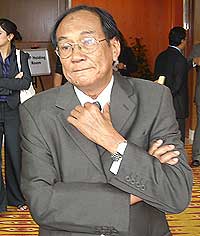
At the opening of the "2011 Legal Year" at the Putrajaya International Convention Centre, Malaysia's Chief Justice Zaki Azmi (r ight ) warned that the public might take the law into their hands if they lost confidence in the courts and law enforcement agencies.
His remarks are timely. There is revulsion at the horrible evil acts committed against the three girls in Perak and anger at how they were dealt with, especially when the offenders appear to be left free to abuse again.
The three victims sought assistance but did not receive the level of response or protection which any citizen in trouble is entitled to expect from the forces of law and order in Malaysia.
Will they, and any other children like them, be able to move on in their lives? Will our judiciary finally come to their senses and help these vulnerable children?
MARIAM MOKHTAR is a non-conformist traditionalist from Perak, a bucket chemist and an armchair eco-warrior. In ‘real-speak’, this translates into that she comes from Ipoh, values change but respects culture, is a petroleum chemist and also an environmental pollution-control scientist.


Are you sure you want to delete this comment?
This action cannot be undone.