




Post-Bersih 4, no sleeping easy!
The fight for the five demands of Bersih 4 continues.
At a forum called ‘After Bersih 4, where is Malaysia heading?’ held in London on Oct 3, both Maria Chin Abdullah of Bersih 2.0, and Noor Farida Ariffin of the Group of 25 Eminent Malays (G25) scrutinised the Malaysian socio-political landscape, post Bersih 4.
The fight for the five demands of Bersih 4 continues.
At a forum called ‘After Bersih 4, where is Malaysia heading?’ held in London on Oct 3, both Maria Chin Abdullah of Bersih 2.0, and Noor Farida Ariffin of the Group of 25 Eminent Malays (G25) scrutinised the Malaysian socio-political landscape, post Bersih 4.
Despite selective persecution and oppression of Malaysians, the speakers concluded that Bersih 4 had positive outcomes; civil society has become more active. People dare to speak-up. The Malays no longer believe Najib Abdul Razak and his government’s divisive rhetoric.
Najib, and his supporters, will not be sleeping easily, from now.
1. Was Bersih 4 a success... or failure?
Maria: Bersih 4 was an unprecedented success. Bersih 4 is supported by all the races in Malaysia. People were angry, and the attendance, of Malays, exceeded that of Bersih 1, 2 and 3.
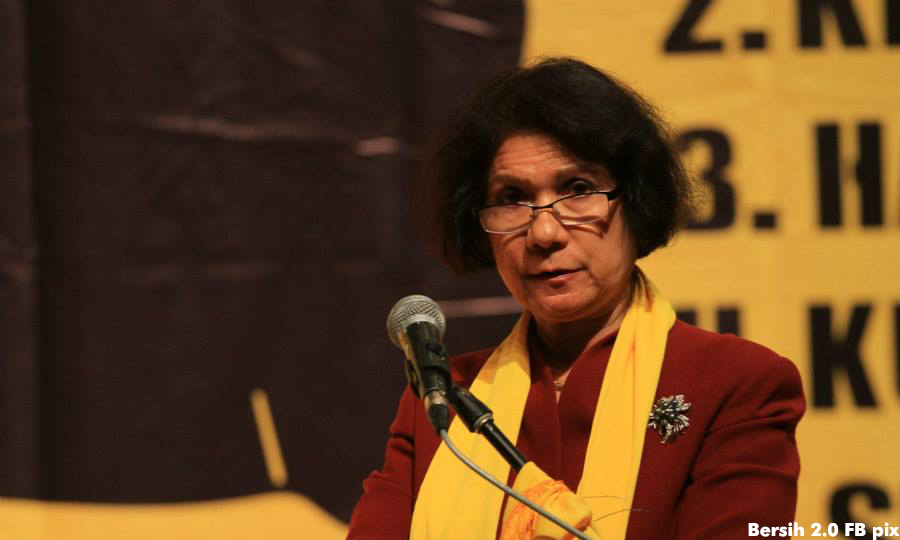 Farida:
It was an enormous success, despite the efforts of certain quarters, who dismissed it as a Chinese-dominated and DAP-led rally. Malays comprised 50 percent of the crowd at the launch. The Chinese predominated on the first day of the rally, whilst the Malays were in full force on the second day.
Farida:
It was an enormous success, despite the efforts of certain quarters, who dismissed it as a Chinese-dominated and DAP-led rally. Malays comprised 50 percent of the crowd at the launch. The Chinese predominated on the first day of the rally, whilst the Malays were in full force on the second day.
2. Can Bersih ensure clean elections for GE14?
M: Bersih’s demand for clean and fair elections, is already proving too ‘demanding’ for the current government. We discussed recommendations about parliamentary democracy, with MPs from both sides of the political divide. Institutional reforms will not happen, overnight.
F: Most of our institutions are on the verge of collapse. The G25 and 80 NGOs and Civil Society Organisations (CSOs) issued a statement about regulating political financing. Political parties must declare their sources of funding and reject funding from foreigners to protect our sovereignty and prevent the possibility of interference of our elections.
3. What was the feeling, on the ground after Bersih 4 about Najib’s refusal to step down, despite an urging for his resignation?
M: Apart from Najib’s resignation, our demands include institutional reform, and controls on political financing to enable the country to be run, properly. We are challenging the MPs, who have done nothing, and told them that the people will now set the agenda for change.
4. In the west, a prime minister with a whiff of scandal attached to him will be required to resign. In Malaysia, it is proving difficult to unseat Najib.
M: Malaysia boleh!
F: The dominant party, in the ruling coalition, twisted facts to say that the Bersih 4 march was an insult to Malay dignity. They are prepared to foment another racial riot to cling onto power.
Jekyll and Hyde character
5. Under what conditions will there be a ‘Bersih 5' march?
M: Najib, being a Jekyll and Hyde character, presents a moderate and tolerant face when he is overseas. At home, he uses gangsters and the hudud bill to threaten others. Let us not lose the power to effect change. Bersih 5 will be a celebration of people power.
6. In the absence of a united, effective opposition coalition, what is the role of Bersih?
M: We put a lot of eggs in the baskets of the political parties. When they don’t perform, we become disillusioned. The opposition is in a transient stage. It is time we did something ourselves to improve governance of the country. We should not underestimate the power of the people and take this opportunity to galvanise this power.
F: Both Bersih and the CSOs fulfil that role.
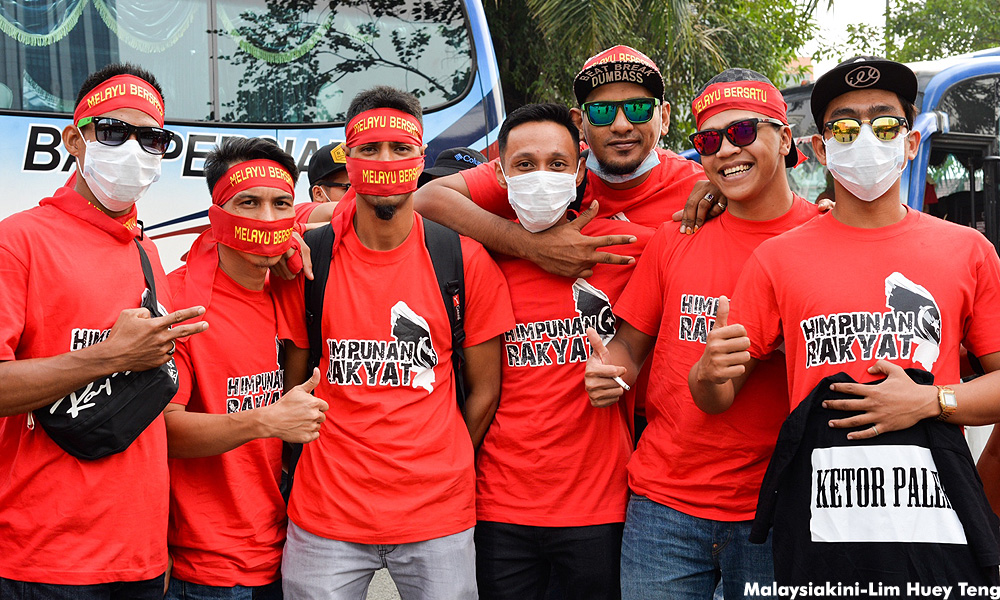
7.What action should be taken against the ‘red shirts’?
 F:
‘Red-shirts’ do not represent the voice of the Malay Muslims. Certain quarters twisted Bersih’s demands to create racial strife and divisions, so they can remain in power. Around 60 Malay Muslim groups, including G25 condemned the ‘red shirt’ rally as racist and un-Islamic. We need to counter this by making the grassroots aware of these attempts at division.
F:
‘Red-shirts’ do not represent the voice of the Malay Muslims. Certain quarters twisted Bersih’s demands to create racial strife and divisions, so they can remain in power. Around 60 Malay Muslim groups, including G25 condemned the ‘red shirt’ rally as racist and un-Islamic. We need to counter this by making the grassroots aware of these attempts at division.
8. Dr Mahathir Mohamad attended the Bersih 4 rally twice. He said he did not support Bersih, but he came for the rakyat and “to have a look”. What do you make of that statement?
M: Mahathir wants Najib to resign, but he does not support our demands. His presence focused attention on our rally. We did not go to the streets merely to install a replacement leader, who would continue the corrupt system.
9. Significant numbers of Malays have joined the brain drain. How can we persuade these Malays, especially the students and professionals to take an interest in their country?
M: They must decide if they are willing to play a role. Some students who have returned have engaged with the NGOs, to make a contribution.
F: Apart from the political situation, the aggressive stance of the Islamic authorities and the moral police alienates ordinary Malays. They may decide to leave, or stay away, if they are already overseas. Bersih and the CSOs are trying their best to give them hope, especially if they feel that things are changing.
10. There was a significant police presence in Bersih 1, 2 and 3, with water cannons firing chemically-laced water, tear gas, agents provocateur, and razor wire around Dataran Merdeka. How do you explain the low profile policing in Bersih 4. Are they scared of you, Maria, or are they scared of worldwide public opinion?
M: The split in Umno has changed police attitudes. The Dang Wangi police are in charge of the city, whereas the inspector-general of police (IGP) is against Bersih. The first meeting with Dang Wangi police was tense, but the second was cordial, and tea was served with kueh-mueh!
In Bersih 3, the mayor had been aggressive, regardless of our explanations. The turning point came after a meeting with the town council and the mayor. By Bersih 4, civil servants were more aware of justice and the negotiations were good.
F: We must congratulate the police and the people for their good behaviour. There are divisions within the police force and the civil service because of what happened to the people investigating the 1MDB scandal and some members of the Special Branch. Civil servants are concerned about the repercussions, of doing their jobs. One marcher heard her name being called, and fearing the worst, turned around to see a policeman from her village say, “We are with you.”
MARIAM MOKHTAR is a defender of the truth, the admiral-general of the Green Bean Army and president of the Perak Liberation Organisation (PLO).


Are you sure you want to delete this comment?
This action cannot be undone.