



Without reforms, Bangsa M’sia will be just a dream
A lot of urban Malaysians want a complete overhaul of our democratic system. We want transparency, justice, equity and unity. Yet, until today, these concepts are mere illusions or slogans which occasionally appear during the campaign trail, but goes missing once the government takes office.
The unfortunate reality in Malaysia is that the rural-urban divide is exceptionally clear. Despite the now defunct Pakatan Rakyat’s gain in the last election, Umno as a race-based party won nine additional seats, despite BN as a collective, losing seven more seats if compared to the 2008 general election. Umno is still able to defend its forts in the rural heartlands, while making gains elsewhere.
Race-based politics is a critical feature of Malaysian democracy. From the time of independence until today, a race-based party has dominated the Parliament. Umno on its own with 88 seats can almost match the total number of seats the opposition parties hold as a collective (89 seats). It signals the prominence of identity based politics. The fact that DAP is often made the boogeyman towards the Malay electorate is indicative of that.
A lot of urban Malaysians want a complete overhaul of our democratic system. We want transparency, justice, equity and unity. Yet, until today, these concepts are mere illusions or slogans which occasionally appear during the campaign trail, but goes missing once the government takes office.
The unfortunate reality in Malaysia is that the rural-urban divide is exceptionally clear. Despite the now defunct Pakatan Rakyat’s gain in the last election, Umno as a race-based party won nine additional seats, despite BN as a collective, losing seven more seats if compared to the 2008 general election. Umno is still able to defend its forts in the rural heartlands, while making gains elsewhere.
Race-based politics is a critical feature of Malaysian democracy. From the time of independence until today, a race-based party has dominated the Parliament. Umno on its own with 88 seats can almost match the total number of seats the opposition parties hold as a collective (89 seats). It signals the prominence of identity based politics. The fact that DAP is often made the boogeyman towards the Malay electorate is indicative of that.
This begs the question, why is race-based politics so popular?
Race-based politics in a fully functioning democracy isn’t an inherent evil. Identity politics is a legitimate form of representation. There are those who identify with a specific religion and want political representation to be based on that platform. There are those who identify as democrats, liberals, conservatives and many more.
As long as the platform is fair and just, anyone can translate their belief into the creation of a political platform. This maximises choice while allowing others to compete on a fair platform. If a particular party injects extremism, the law will step in. If a party injects racism, the free media will hold them accountable. If a party flouts the law, the organs of the state will use the law against them.
These checks and balances are the founding principles of democracy. Without them, bigotry, extremism and injustice will run rampant.
Umno in the 1970s was radically different from Umno today. You’ll rarely here the term ‘pendatang’ being uttered by a top Umno official, yet today it has become a common feature in Malaysian politics. Back then, a race won’t be used to justify corruption while deflecting blame.
The tables have turned due to the power hoarding which takes place at the higher echelons of governance. It’s much easier to spew racism when there’s no free press to report it to the communities which form the largest voting bloc. It’s much easier to spew racism when gerrymandering strengthens one’s support base at the expense of genuine representation. It’s much easier to spew racism when the organs of democracy have been co-opted by the ruling party.
In a true democracy, race-based parties will have to buckle up to succeed. When they are found to be corrupted, this will be widely reported by the media. They will be painted as the traitors of the Malay cause. They will be shunned by the rural communities. No matter how much they try to spice up the Malay sentiment, they wouldn’t be able to do so due to the lack of influence. Due to the lack of money, machinery and media to run their indoctrination camps.
Restoring the integrity of our institutions
It is therefore our prerogative to restore the integrity of our institutions before we can fully liberate the elusive Malaysian identity. Time is not by our side. In less than a year, Najib Abdul Razak has backtracked on almost all the democratic reforms he had made before. From press freedom to quashing student activism. From misusing laws intended for terrorists, to interfering in the organs of democracy.
The longer we wait, the harder it gets to save Malaysia. The longer we wait, the easier it is to stack the cards against us. At this rate, especially with the opposition disunited and the prevalence of money politics, BN is poised to win the two-thirds majority.
Let’s also not ignore the growing political apathy which plagues society. The deputy prime minister has signalled in his speech that new parliamentary seats will be allotted to areas which are pro-BN if a two-third majority is obtained. This will set us back for another two decades. Race-based politics will go unchecked even more.
New formulas must be tried, no matter how unconventional it may be. We are dealing with an unconventional government. Unconventional means must be used to achieve a greater end. If we don’t, the end for Malaysia is near.
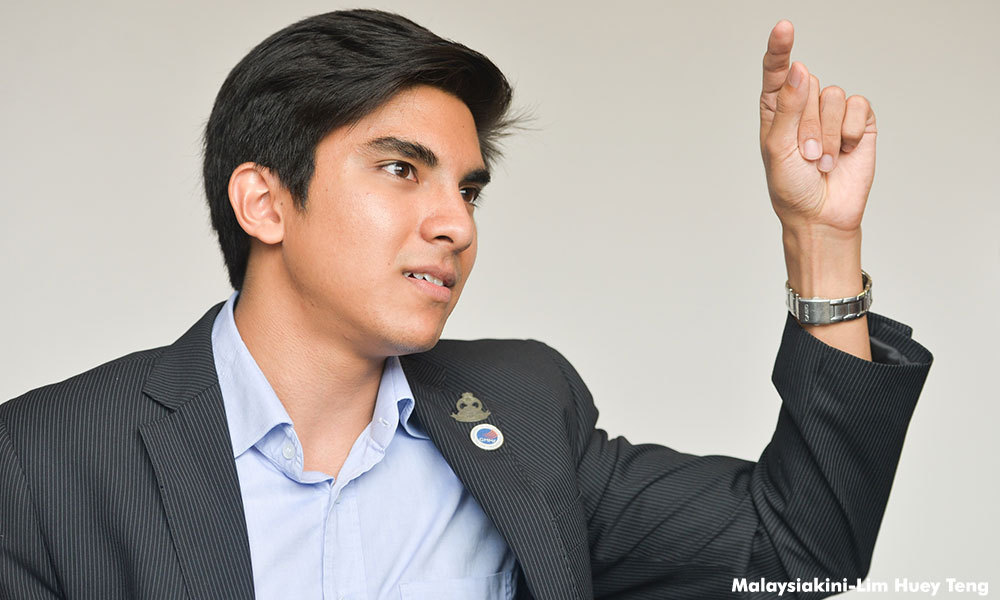
SYED SADDIQ SYED ABDUL RAHMAN is a part-time lecturer at Universiti Islam Antarabangsa (UIA) Malaysia and is Asia’s best debater, winning the United Asia Debate Championship in May 2015.


Are you sure you want to delete this comment?
This action cannot be undone.