


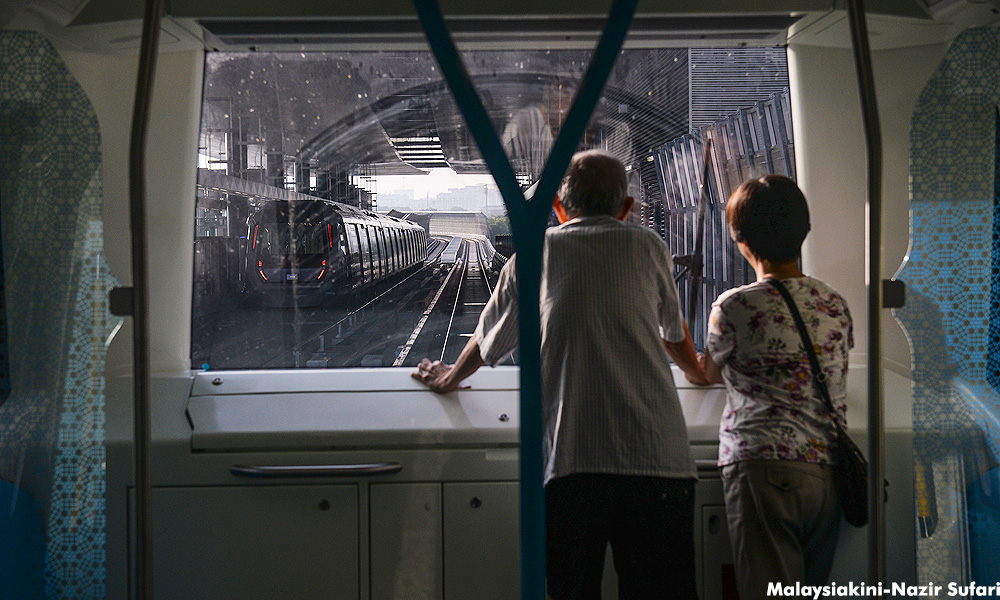

RM40-RM50b MRT3 heavily tilted in favour of China
A QUESTION OF BUSINESS | Unheard of major changes to the tender conditions for the RM40-RM50 billion third phase of the Klang Valley Mass Rapid Transit (KVMRT) project, such as a financing package of 90 percent of the project cost, a 30-year term and an eight-year moratorium, indicates the tender is heavily weighted to China contractors.
Also, other technical qualifying requirements for the tenderers, such as experience and the size of contracts undertaken, puts it beyond the capacity of local players.
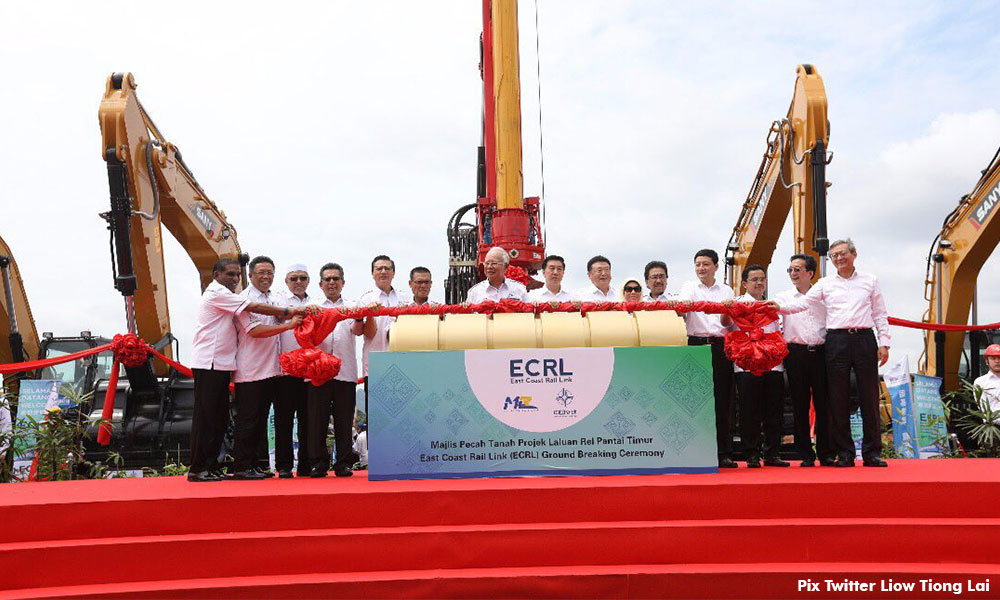
The financing terms are reminiscent of the seven-year moratorium and 20-year financing for the RM55 billion East Coast Rail Link (ECRL) to be undertaken by a China state-owned company, which provides 85 percent financing at an interest rate of 3.25 percent.
The mass rapid transit lines are going full swing with MRT1 (Sungai Buloh-Kajang) already completed for RM23 billion and MRT2 (Sungai Buloh-Serdang-Putrajaya) costing RM32 billion under construction.
But now, Mass Rapid Transit Corporation, or MRT Corp, 100 percent owned by the Minister of Finance Incorporated and the developer and asset owner of the KVMRT project, is calling for tenders for MRT3, which industry people estimate may cost RM40-RM50 billion. MRT3 is also known as the Circle Line.
That takes the total construction cost of KVMRT to more than RM100 billion, if the top end of estimates is used. That in itself is not alarming - MRT3 was in the plan anyway. But significantly, the completion target for MRT3 was moved two years forward to 2025 from 2027, with the announcement being made by Prime Minister and Finance Minister Najib Abdul Razak in his Budget speech on Oct 27. MRT Corp called for the tender shortly after, on Nov 6.
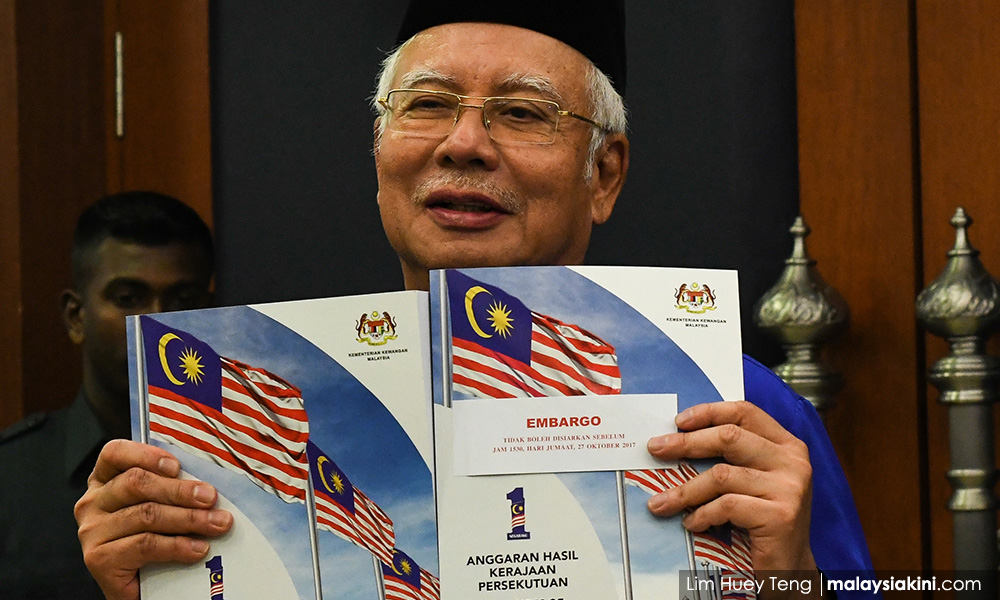
Even that may not be considered out of the ordinary but the tender terms are. No longer are project delivery partners (PDP) in place - instead it’s a turnkey contract. The previous PDPs for the earlier phases, Malaysian companies, took responsibility for on-time delivery and were on paper responsible for appointing other contractors, although in practice these were politically influenced as well.
But what is truly amazing are the financing terms - contractors have to provide minimum 90 percent financing, minimum eight-year moratorium period during which no repayment of principal and interest will be made, and a long minimum 30-year repayment period. Also, financing only in ringgit, US dollars, renminbi, yen or euro is allowed. Additionally, the financing shall be in a single currency only, which must match the currency of contract price payments.
Now, who can provide these terms? US companies will not be able to arrange financing for 30 years on a commercial basis for a project which is likely to be unprofitable, neither will the Japanese or the Europeans, for their tenders will have to be made on a commercial basis. And how is the interest rate going to be determined? Will it be a fixed rate? Most likely it will float, for no one can guarantee a fixed rate for 30 years - you can’t even hedge for that long.
Giving an eight-year moratorium will take the term to 38 years, making it unviable for all commercial proposals. That leaves only the proposals with government backing left - the China state-owned companies with renminbi loans...
A QUESTION OF BUSINESS | Unheard of major changes to the tender conditions for the RM40-RM50 billion third phase of the Klang Valley Mass Rapid Transit (KVMRT) project, such as a financing package of 90 percent of the project cost, a 30-year term and an eight-year moratorium, indicates the tender is heavily weighted to China contractors.
Also, other technical qualifying requirements for the tenderers, such as experience and the size of contracts undertaken, puts it beyond the capacity of local players.
The financing terms are reminiscent of the seven-year moratorium and 20-year financing for the RM55 billion East Coast Rail Link (ECRL) to be undertaken by a China state-owned company, which provides 85 percent financing at an interest rate of 3.25 percent.
The mass rapid transit lines are going full swing with MRT1 (Sungai Buloh-Kajang) already completed for RM23 billion and MRT2 (Sungai Buloh-Serdang-Putrajaya) costing RM32 billion under construction.
But now, Mass Rapid Transit Corporation or MRT Corp, 100 percent owned by the Minister of Finance Incorporated and the developer and asset owner of the KVMRT project, is calling for tenders for MRT3, which industry people estimate may cost RM40-RM50 billion. MRT3 is also known as the Circle Line.
That takes the total construction cost of KVMRT to more than RM100 billion, if the top end of estimates is used. That in itself is not alarming - MRT3 was in the plan anyway. But significantly, the completion target for MRT3 was moved two years forward to 2025 from 2027, with the announcement being made by Prime Minister and Finance Minister Najib Abdul Razak in his Budget speech on Oct 27. MRT Corp called for the tender shortly after, on Nov 6.
Even that may not be considered out of the ordinary but the tender terms are. No longer are project delivery partners (PDP) in place - instead it’s a turnkey contract. The previous PDPs for the earlier phases, Malaysian companies, took responsibility for on-time delivery and were on paper responsible for appointing other contractors, although in practice these were politically influenced as well.
But what is truly amazing are the financing terms - contractors have to provide minimum 90 percent financing, minimum eight-year moratorium period during which no repayment of principal and interest will be made, and a long minimum 30-year repayment period. Also, financing only in ringgit, US dollars, renminbi, yen or euro is allowed. Additionally, the financing shall be in a single currency only, which must match the currency of contract price payments.
Now, who can provide these terms? US companies will not be able to arrange financing for 30 years on a commercial basis for a project which is likely to be unprofitable, neither will the Japanese or the Europeans, for their tenders will have to be made on a commercial basis. And how is the interest rate going to be determined? Will it be a fixed rate? Most likely it will float, for no one can guarantee a fixed rate for 30 years - you can’t even hedge for that long.
Giving an eight-year moratorium will take the term to 38 years, making it unviable for all commercial proposals. That leaves only the proposals with government backing left - the China state-owned companies with renminbi loans.
Technical requirements
On top of that, technical requirements seem almost designed to keep local companies out. Some of the conditions specified include the following:
- RM10 billion contract value, in each case the works being let out on a design & build or turnkey basis;
- Two urban tunnelling projects utilising Slurry/Mixed Shield and Earth Pressure Balance (EPB);
- Tunnel Boring Machines (TBMs) greater than 6m diametre in rock and mixed face conditions, including at least a single project with a minimum tunnelling of 8km (twin bored);
- Five underground rail transit stations in a single project;
- Five elevated rail transit stations with 10km of viaducts in a single project;
- One rail transit depot, with heavy maintenance facilities; and
- System works of either two urban metro projects of at least RM2 billion contract value each or one urban metro project of at least RM4 billion contract value, in each case the works being let out on a design & build or turnkey basis.
No local contractor is likely to fulfil these terms, again tilting the balance very heavily in favour of the China contractors who have used this modus operandi to extend their influence through third world countries - an open-tender tailor-made for China companies to succeed.
MRT Corp says the KVMRT system will be the backbone of the Klang Valley’s Integrated Rail Network to improve the public transportation system and includes tunnels, viaducts, stations, depots, trackworks, rolling stock, signalling, power supply and other structures and services.

It adds that the successful tenderer will be responsible for the engineering, procurement, construction, testing and commissioning of the project on a turnkey basis and to provide financing in accordance with the requirement of the financing proposal.
“A tenderer may participate in the tender subject to their financial capacities, technical capabilities, track records and financing proposals. The general scope of works shall include inter-alia the following: 1) 40km of MRT Railway, 32km of Twin Bored Tunnels and 8km of Elevated Viaducts, including ancillary buildings, escape shafts, intervention shafts, electrical supply substations, traction supply substations, etc,” it adds.
That implies the turnkey contractor will be responsible for everything and that Malaysian companies will benefit only to the extent that they form a joint venture with China companies that get the contract and from subcontracts the successful tenderer gives out. For the ECRL project, the China company undertook to give 30 percent of contracts to local companies.
Why the needless rush?
The project is being tendered in a great deal of hurry too. Why the needless hurry for this project? Why bring it forward by two years? Is it to have the tender process done now, before the general election, which has to be held in about nine months from now?
If the China companies get the project, it will make us even more in debt to China and put in peril the future financial state of the country, considering that the term of the financing is a massive 38 years - most of those who initiate this project will no longer be around.
Calculations show that if 90 percent of the project cost of RM50 billion is financed, or RM45 billion, it will balloon to some RM58 billion by the end of the eight-year moratorium period. For RM58 billion of principal over 30 years at an interest rate of 3.25 percent, the yearly repayment is about RM3 billion, total repayment is some RM92 billion, of which interest is about RM34 billion.
This is assuming that the interest rate remains at 3.25 percent, the same as that for the ECRL project. If the interest rate increases to say 10 percent - the situation is perilous - repayment per year is RM6.4 billion, total payment is RM192 billion (nearly four times the project cost of RM50 billion) while interest alone is RM134 billion, over two-and-a-half times the present cost.
These figures illustrate the kind of financial risk that is imposed on the country through such a high level of borrowings and over such a long tenure, and truly reflects a situation where the country is literally pawning its future to China!
Good for China, but terribly bad for us, especially when we consider that this may be just one of many projects in China which may be similarly undertaken. With the ECRL already signed and others, such as the high-speed rail to Singapore in the pipeline, and numerous port and other projects, we need to be concerned, extremely concerned.
P GUNASEGARAM is at a loss for words to describe this colossal fiasco, which may mark the beginning of the end for this country of ours and the eventual surrender of our precious sovereignty to China. Email: t.p.guna@gmail.com.
The views expressed here are those of the author/contributor and do not necessarily represent the views of Malaysiakini.


Report this comment
Are you sure you want to delete this comment?
This action cannot be undone.