




Maria Chin, Wan Saiful joining the opposition a terrible idea
“The only real radicalism in our time will come as it always has - from people who insist on thinking for themselves and who reject party-mindedness.”
- Christopher Hitchens, ‘Christopher Hitchens and His Critics: Terror, Iraq, and the Left’
COMMENT | The last time I used the above quote was when I was writing about Zaid Ibrahim and the perils of speaking one’s mind. I use it now as a reminder that we will always need people not bound by party dogma to shine a light where politicians fear to tread.
At the time of writing, Bersih chairperson Maria Chin is in discussion to run as an opposition candidate and Wan Saiful Wan Jan, who led the “conservative” think tank Institute for Democracy and Economic Affairs (Ideas) - which is one of the better and much-needed think tanks in this country - has joined Bersatu. I think these two public personalities joining the opposition is a terrible idea.
I hope Wan Saiful writes a piece about why he is joining Bersatu and what he hopes to achieve but if conservatism in the Barry Goldwater sense (which I am a proponent of) is what is needed in the Malaysian political landscape - “The Conservative approach is nothing more or less than an attempt to apply the wisdom and experience and the revealed truths of the past to the problems of today. The challenge is not to find new or different truths, but to learn how to apply established truths to the problems of the contemporary world” - it would be interesting to read how Wan Saiful justifies his participation in the Bersatu agenda.
In an interview he gave Malaysiakini, he sounded all the right notes about changing the Malay mindset but isn't this what the "intellectual" wing of the political parties like Umno and Bersatu claim they wish to do? While conservatives - and I identify as one - believe in small government and the free market, both which Wan Saiful alludes to, how does this fit into the overall ideology of a political organisation like Bersatu, which at its core is made up of Najib refuseniks and not because of any ideological separation?
Put it this way, on good days people can acknowledge the difference between PAS and Amanah on an ideological level. However, not taking into account the corruption of the present Umno regime, how is Bersatu different on any level from Umno? To take it a step further, if we take into account the numerous corruption scandals of which the leadership of Bersatu have been participants in, it becomes more difficult to sustain the argument that these people who have experience in power, want to change the system in any meaningful way.
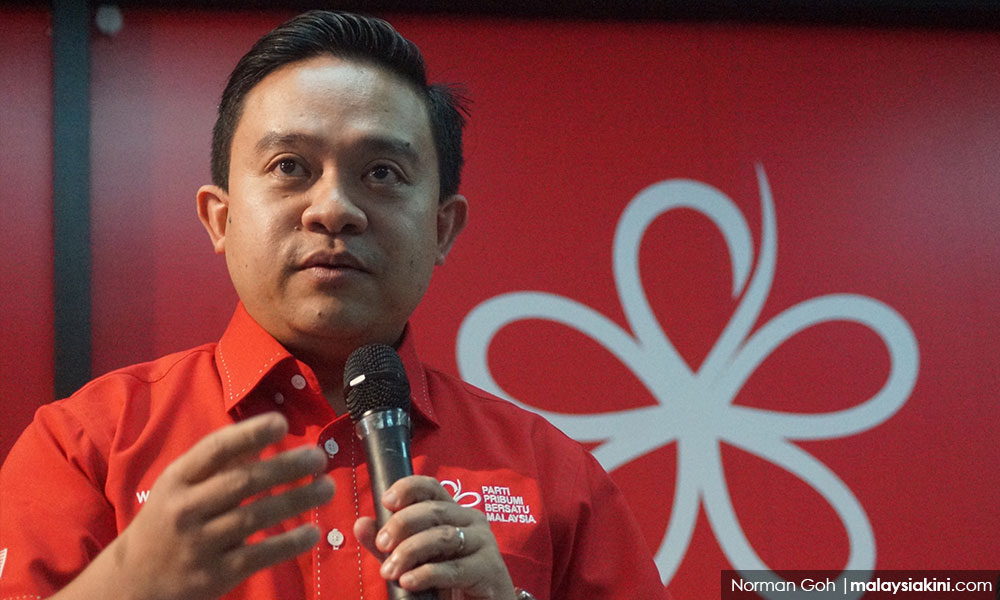
These are the issues, the fundamental issues that face an intelligent man like Wan Saiful. Honestly, I get the reason why joining Bersatu is a strategic step, but actually carrying out a reform agenda in a party which knows exactly what attracts and sustains the Malay vote, both of which are rooted in racial and religious politics, seems fanciful when both strategies (racial and religious politics), we are constantly told, will be the keys to Putrajaya.
Meanwhile, I have no idea how Ideas will react - and they should - to this new development. Ideas as a think-tank is an interesting experiment because it was not about “progressive” ideas but rooted in the kind of traditional conservative (Asian) ideas voiced through the lens of “Western” conservatism. Bersatu, like Umno, no matter how some local ideologues attempt to portray them, are not “conservative” enterprises. Neither are their policies.
Wan Saiful, after all, is the person who argued that affirmative action was morally wrong - “To add to the complication, looking at the situation in our country today, I also feel that only a Malay can talk about abolishing affirmative action in Malaysia. Things will only become worse if a non-Malay were to champion this issue.”
How joining a party whose raison d'être is championing the cause of a fail(ing) policy and regressive interpretation of Islam conforms to values he championed with Ideas remains to be...
“The only real radicalism in our time will come as it always has - from people who insist on thinking for themselves and who reject party-mindedness.”
- Christopher Hitchens, ‘Christopher Hitchens and His Critics: Terror, Iraq, and the Left’
COMMENT | The last time I used the above quote was when I was writing about Zaid Ibrahim and the perils of speaking one’s mind. I use it now as a reminder that we will always need people not bound by party dogma to shine a light where politicians fear to tread.
At the time of writing, Bersih chairperson Maria Chin is in discussion to run as an opposition candidate and Wan Saiful Wan Jan, who led the “conservative” think tank Ideas - which is one of the better and much-needed think tanks in this country - has joined Bersatu. I think these two public personalities joining the opposition is a terrible idea.
I hope Wan Saiful writes a piece about why he is joining Bersatu and what he hopes to achieve but if conservatism in the Barry Goldwater sense (which I am a proponent of) is what is needed in the Malaysian political landscape - “The Conservative approach is nothing more or less than an attempt to apply the wisdom and experience and the revealed truths of the past to the problems of today. The challenge is not to find new or different truths, but to learn how to apply established truths to the problems of the contemporary world” - it would be interesting to read how Wan Saiful justifies his participation in the Bersatu agenda.
In an interview he gave Malaysiakini, he sounded all the right notes about changing the Malay mindset but isn't this what the "intellectual" wing of the political parties like Umno and Bersatu claim they wish to do? While conservatives - and I identify as one - believe in small government and the free market, both which Wan Saiful alludes to, how does this fit into the overall ideology of a political organisation like Bersatu, which at its core is made up of Najib refuseniks and not because of any ideological separation?
Put it this way, on good days people can acknowledge the difference between PAS and Amanah on an ideological level. However, not taking into account the corruption of the present Umno regime, how is Bersatu different on any level from Umno? To take it a step further, if we take into account the numerous corruption scandals of which the leadership of Bersatu have been participants in, it becomes more difficult to sustain the argument that these people who have experience in power, want to change the system in any meaningful way.
These are the issues, the fundamental issues that face an intelligent man like Wan Saiful. Honestly, I get the reason why joining Bersatu is a strategic step, but actually carrying out a reform agenda in a party which knows exactly what attracts and sustains the Malay vote, both of which are rooted in racial and religious politics, seems fanciful when both strategies (racial and religious politics), we are constantly told, will be the keys to Putrajaya.
Meanwhile, I have no idea how Ideas will react - and they should - to this new development. Ideas as a think-tank is an interesting experiment because it was not about “progressive” ideas but rooted in the kind of traditional conservative (Asian) ideas voiced through the lens of “Western” conservatism. Bersatu, like Umno, no matter how some local ideologues attempt to portray them, are not “conservative” enterprises. Neither are their policies.
Wan Saiful, after all, is the person who argued that affirmative action was morally wrong - “To add to the complication, looking at the situation in our country today, I also feel that only a Malay can talk about abolishing affirmative action in Malaysia. Things will only become worse if a non-Malay were to champion this issue.”
How joining a party whose raison d'être is championing the cause of a fail(ing) policy and regressive interpretation of Islam conforms to values he championed with Ideas remains to be seen.
Tools of the opposition
As someone who has never had a problem conceding when he was wrong, my article on the non-issue of Bersih being partisan, was misguided. Thankfully there has never been a shortage of independent minds who have never had a problem writing long emails telling me when I am wrong. While I did attempt to feebly claim that credibility trumps partisanship, the reality is that credibility is intrinsically linked to non-partisanship when it comes to social activism and raging against the establishment.
Maria Chin claims that she hopes to be a bridge between civil society and the political process but the opposition has a history of fielding “social activists” and their voices eventually either (eventually) conform to party dogma or are muted by political operatives whose agendas are different from activists who believe that they are on the same team.
The Bersih chairperson also unintentionally highlights the failure of the opposition in addressing issues such as “justice, freedom, good governance, free and fair elections and human rights straight to Parliament” which they claim to champion, and this reinforces my point (see below) that the opposition has lost touch with the movements and agendas that at one time was their platform for social and democratic change in this country.
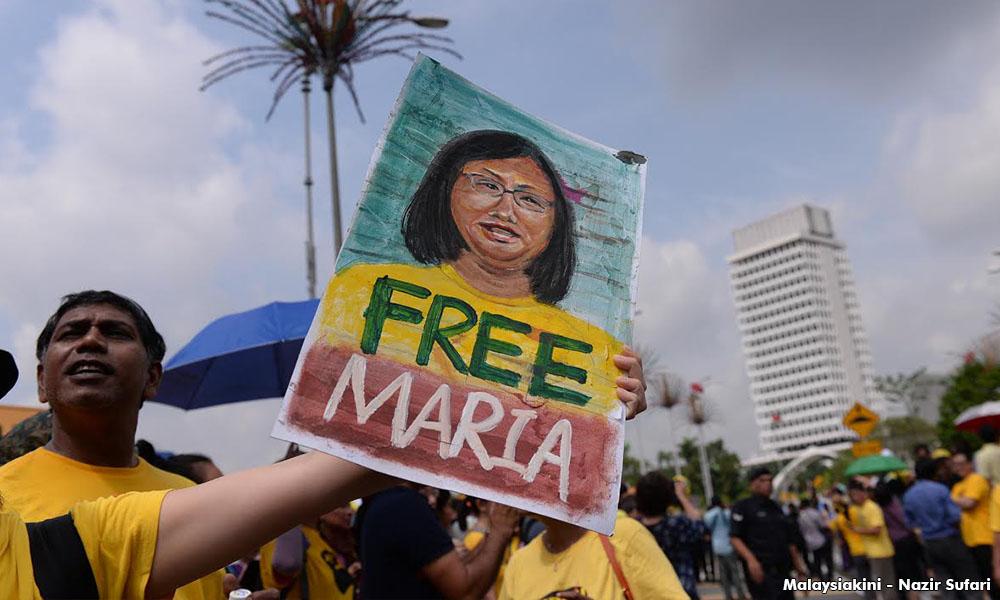
Just last month I addressed this issue – “Many long-time activists infused with fresh talent, who assumed that Harapan state governments would be more conducive to change, tell me that most times getting the ‘meeting’ is easier than it is with the BN regime, but actually getting things done, is more or less the same. Often, they are admonished to not ‘bite the hand that feeds them’, which seems like a common rejoinder these days.”
It also gives credence to the Umno/BN narratives that NGOs like Bersih are tools of the opposition, but more importantly, it also destroys avenues for Malaysians who need non-partisan voices as credible alternatives to political parties to voice their dissatisfaction of establishment politics.
Bersih often claims that they are always fighting this (pro-opposition) perception, but it does not help when one of their most prominent personalities joins the opposition. It will result in the legitimacy of the movement being questioned, not only by BN loyalists but also members of the public who do not necessarily vote opposition but who understand the value of independent institutions.
The scuttlebutt of the Bersih chairperson being fielded in a "safe" seat makes this even more unsavoury as if the merits of the candidates was not important only that the candidate who represented an electoral watchdog movement - perhaps the most successful in modern times - wins a seat.
A prominent social activist joining the opposition, which has in the past attacked not only social activists as “do-gooders” but also hijacked rallies while conforming to established policies and rhetoric (which is supposed to be anathema to the ideas Bersih espouses), would result in the idea of social activism independent of political parties becoming blurred, which can only benefit Umno/BN.
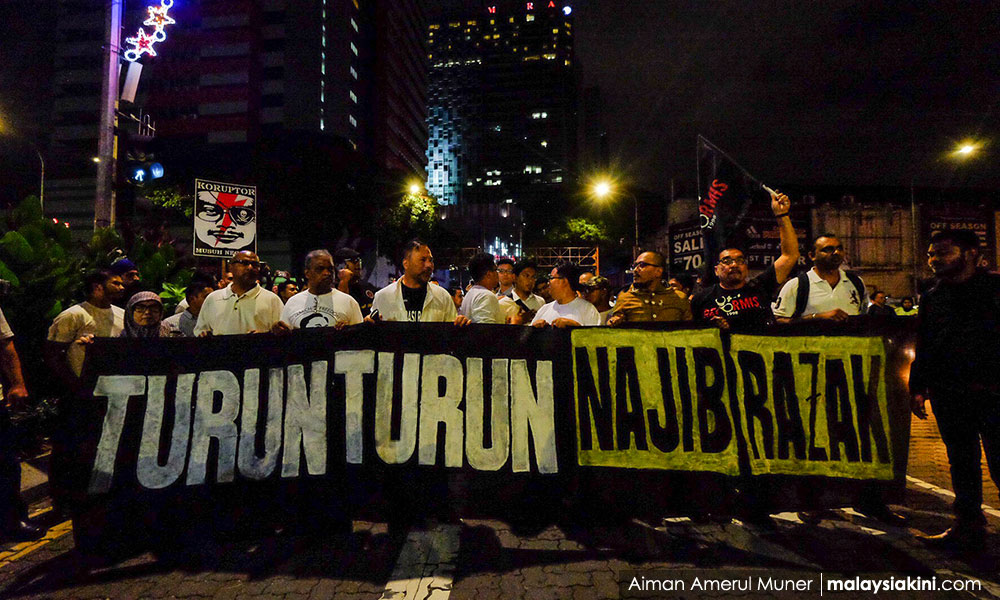
The diminishing returns of street rallies could be because of many factors but one of them is the perception held by many that they were participating in opposition rallies instead of truly independent enterprises. Like I said, this is the fault of partisans (myself included) but also because social activists aligned themselves with the opposition forces in this country instead of keeping a respectable, and skeptical, distance.
If Maria Chin joins the opposition, it would spell the end of Bersih. No matter who takes over, there will be this albatross around the neck of the new chairperson, and his or her motives will always be suspect. Not only will Umno/BN view Bersih with suspicion, by trying to be independent (after a former chairperson joined the opposition), the new chairperson will receive no love from a highly partisan opposition base.
There is enough empirical evidence to demonstrate that online opposition supporters brook no dissent when it comes to their politics or politicians. Attempting to be independent after the fact, will not endear this electoral watchdog to anyone.
All I can say is, that you cannot offer solutions when you become part of the problem.
S THAYAPARAN is Commander (Rtd) of the Royal Malaysian Navy.


Are you sure you want to delete this comment?
This action cannot be undone.