




Merdeka history in new light
The recently published memoirs of Communist Party of Malaya (CPM) chairperson Abdullah CD and central committee member Rashid Maidin throw new light on the real history of the struggle for Merdeka (independence) in Malaya.
Both debunk the myth that the armed struggles against the Japanese during World War II and British re-colonisation were inspired by the Soviets or Chinese, or even a one-man show by CPM secretary-general Chin Peng.
The recently published memoirs of Communist Party of Malaya (CPM) chairperson Abdullah CD and central committee member Rashid Maidin throw new light on the real history of the struggle for Merdeka (independence) in Malaya.
Both debunk the myth that the armed struggles against the Japanese during World War II and British re-colonisation were inspired by the Soviets or Chinese, or even a one-man show by CPM secretary-general Chin Peng.
The two grand old men, who fought against the occupation of Malaya by the Japanese and re-colonisation by the British after the war, have decided to tell almost all about their lives and the struggles, both peaceful as well as armed, for the real independence of Malaya.
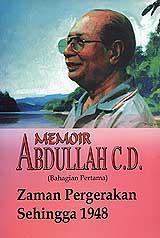 The stories of Abdullah CD, now 81, and Rashid, 87, had been denied to the public for many years because they were labeled first as 'bandits' and then 'terrorists'.
At the same time, though, books, monographs, academic papers, news items, press commentaries and letters to newspapers have been written against them by both local and foreign 'counter-insurgency experts', 'historians', 'journalists' and 'patriots' quoting only declassified files of the police Special Branch, Britain's Foreign Office, War Office or Colonial Office.
The views of one-sided right-wing agitprops were challenged by Chin Peng's Alias Chin Peng: My Side of History (Singapore, Media Masters, 2003). Still, there are pockets of desperate resistance attempting to resort to racial imagery and sophistries to sensationalise petty points to cover up the larger truth.
 So,
Memoir Abdullah CD (Bahagian Pertama) Zaman Pergerakan Sehingga 1948
(Kuala Lumpur, SIRD, 2005) and
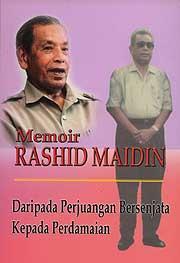
Memoir Rashid Maidin Daripada Perjuangan Bersenjata Kepada Perdamaian
(Kuala Lumpur, SIRD, 2005) should indeed be welcomed by all who are interested in a multi-dimensional truth or reality in history, as another antidote to the black propaganda of the Cold War.
So,
Memoir Abdullah CD (Bahagian Pertama) Zaman Pergerakan Sehingga 1948
(Kuala Lumpur, SIRD, 2005) and
Memoir Rashid Maidin Daripada Perjuangan Bersenjata Kepada Perdamaian
(Kuala Lumpur, SIRD, 2005) should indeed be welcomed by all who are interested in a multi-dimensional truth or reality in history, as another antidote to the black propaganda of the Cold War.
Although the authors are still labeled by some opponents and critics as 'terrorists', they have not retorted by calling them Japanese 'quislings' or British 'running dogs' or 'mercenaries'.
Their self-restraint testifies to the magnanimity of their spirit and sense of honour because they know that they signed a peace treaty with the government of Malaysia on Dec 2, 1989 which includes a clause that commits both sides not to humiliate or to use derogatory language against one another.
And, as in all civilised dealings in the modern world, treaties and contracts have to be honoured in word and deed, if not gentlemanly spirit.
Colleagues remembered
Abdullah CD reveals that he was formally admitted into the CPM together with his friend Seman in Lambor Kiri, Parit, Perak in May 1945. By then, there were other Malay members and anti-Japan partisans in Perak like Rashid, Baharuddin Tahir from Kati, Osman from Manong, Mokhtaruddin from Bidor, Zulkifli Auni and Arshad Ashaari.
Even before he became a party member, Abdullah CD had already organised and operated a 100-member Malay armed youth group against Japanese occupation, along the Perak River. His elder sister Kamariah worked for the anti-Japanese united front during the Occupation.
 His group worked closely with the Kinta Valley-based 5th Independent Regiment of the Malayan People's Anti-Japanese Army (MPAJA). A fellow member, Eng Ming Ching, later became his wife Suriani Abdullah (
photo
). They have a daughter Karimas @ Xiao Hong and a granddaughter, Meiliza.
His group worked closely with the Kinta Valley-based 5th Independent Regiment of the Malayan People's Anti-Japanese Army (MPAJA). A fellow member, Eng Ming Ching, later became his wife Suriani Abdullah (
photo
). They have a daughter Karimas @ Xiao Hong and a granddaughter, Meiliza.
In Abdullah CD's recollection, Rashid was probably the first Malay to join the CPM. According to Rashid's memoirs, he joined the party not long before the troops of Imperial Japan began to swarm and rampage Malaya from Dec 8, 1941.
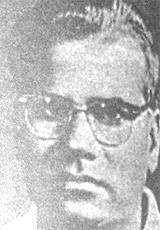 Both men also write about their Indian comrade RG Balan who operated underground in the Tapah-Kampar area as a Tamil publicist, publishing and distributing anti-Japan Tamil publications during the Occupation. After the liberation of Malaya, Balan and Abdullah CD joined the Perak CPM publicity team led by Eng.
Balan was later appointed a member of the party's three-man delegation to the 1947 British Empire Communist Parties' Conference which gathered to explore the post-war future of British colonies like Malaya. On May 30, 1948, Balan was detained without trial by the colonial authorities for 12 years until 1961.
Abdullah CD further remembers his other Indian comrades and fellow trade unionists in the 1945-1948 period like SA Ganapathy, P Veerasenan and RH Nathan. While Ganapathy was later hanged by the colonial authorities for illegal possession of firearms, Veerasenan was shot dead in the jungle warfare during the early years of the 'Emergency'. Nathan was banished to India.
Inter-ethnic riots
The period between August 1945 and June 1948 has been characterised by official propaganda, including propaganda disguised as respectable academic dissertations, as one of 'Chinese communists killing innocent Malays'.
This has been repeated over many years as the foundational myth of Malaysia's ruling elite and its anti-communist stance. However, Abdullah CD says the situation was more complex as there were incidents of defeated Japanese troops and British agents acting as agent provocateurs to stir up inter-ethnic riots either for revenge on the parts of some defeated Japanese troops or providing a pretext for the return of British colonialists as the "protectors" and "restorers of law and order".
 On this issue, Abdullah CD does not just assert but presents facts and analyses of specific incidents and causes as well as the
modus operandi
of the
agent provocateurs
, including naming the Indian Muslim troops transferred to Malaya from India by the British authorities as one of chief instigators of inter-ethnic riots in post-war Malaya. He also says the riots targeted the communists, including Malay communists.
On this issue, Abdullah CD does not just assert but presents facts and analyses of specific incidents and causes as well as the
modus operandi
of the
agent provocateurs
, including naming the Indian Muslim troops transferred to Malaya from India by the British authorities as one of chief instigators of inter-ethnic riots in post-war Malaya. He also says the riots targeted the communists, including Malay communists.
Both the memoirs make it clear that, when Umno was inaugurated on May 11, 1946 in Johor Baru, its slogan was Hidup Melayu (Long Live the Malays), and not a call for Merdeka . That slogan originated from Parti Kebangsaan Melayu Malaya (PKMM) or Malayan Malay National Party, formed on Oct 17, 1945 in Ipoh by Abdullah CD, Rashid and other progressive Malays like Dr Burhanuddin Al-Helmy and Ahmad Boestamam.
Umno only changed its slogan to Merdeka after its first very pro-British and anti-independence president Onn Jaafar quit the party in 1951 and after popular pressure by PKMM, CPM and other more progressive groupings in the Malay, Chinese and Indian communities, they say. In both memoirs, Onn is remembered as a negative figure.
The memoirs recall the widespread anger against the British colonial authorities from mid-1947. Many had already prepared to take up arms against the colonial master in line with similar struggles then being waged in Indonesia and Vietnam, even before the CPM made any call.
After the declaration of the so-called 'Emergency' on June 18, 1948 and mass arrests two days later, hundreds of Malays, especially in Pahang, joined the CPM and its armed groups. It culminated in the inauguration of the all-Malay 10th Regiment of CPM's Malayan National Liberation Army in Kerdau, Temerloh, Pahang on May 21, 1949.
 This Malay dimension of the 'Emergency' has been suppressed in public narratives and discourses for a long time. It is also not well documented in Chin Peng's memoirs.
Abdullah CD and Rashid have attempted to fill the gap. This critical dimension of the anti-colonial struggle is best read in conjunction with two earlier books, Suriani Abdullah's Regimen Ke-10 Dan Kemerdekaan (Hong Kong, Nan Dao, 1999) and Abu Samah Mohamad Kassim's Sejarah Dan Perjuangan Kemerdekaan (Hong Kong, Nan Dao, 1996)
It is time to see the history of Merdeka in newer light and be prepared to debate with right-wing agitprops like Professor Khoo Kay Kim with newer facts, sounder reasoning and better self-confidence.
But, before debating, everyone has to first read the books page by page and line by line. This is the only way to upgrade the standard and quality of intellectual discourse after the drop in world ranking of our public universities.


Are you sure you want to delete this comment?
This action cannot be undone.