


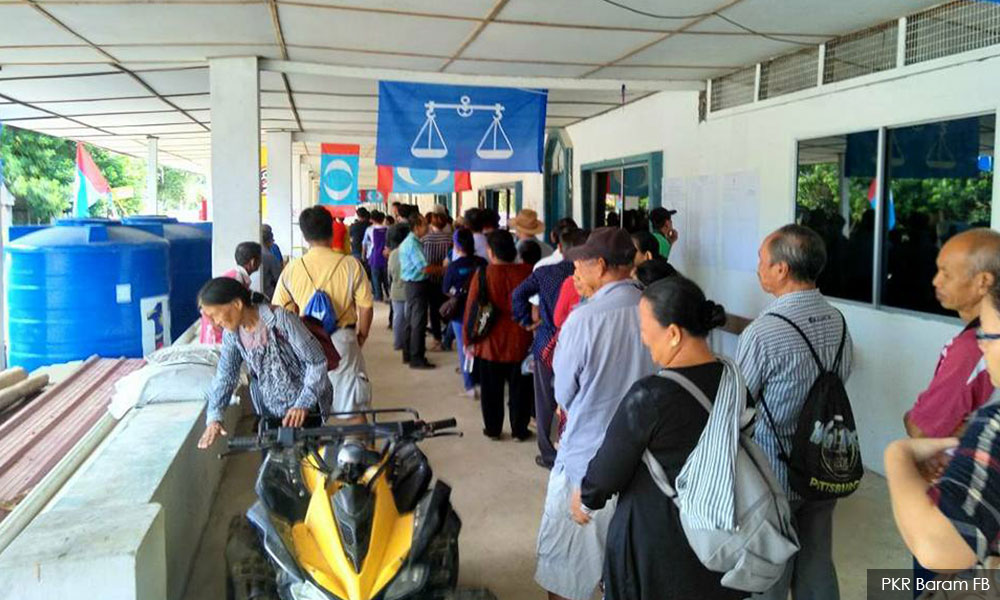

Will my generation serve M'sia or themselves?
COMMENT | What I am going to say may surprise you. Or it may be of little concern to you because it is too far away. Or it may be unimportant to you, for I may appear an alarmist for saying it.
I worry my generation is the generation that knows how to defeat monsters, but doesn’t know how monsters are made.
You must know this: My generation was born in a time of possibilities. People aged between 18 and 35 were born from 1988 to 2000. That means when this generation came of age, the only elections that they knew of were the three political tsunamis of 2008, 2013, and 2018.
The 2008 general election denied the BN-Umno government a two-thirds majority for the first time in history; 2013 denied BN-Umno the popular vote for the first time in history; 2018 eventually brought down the 60-year-old government.
Every vote cast by my generation has created history.
But these events are only known as historic if we have an appreciation of how far we’ve come.
If you are from my generation, you wouldn’t appreciate how difficult it is to change the government. In fact, most people my age voted for the first time in 2018 - and we brought down a corrupt regime on our first try.
A generation of possibilities
On the one hand, this generation of hope and possibility is of course a good thing. We are not burdened with a fear of changing the government, like the previous generations. My generation takes courage from democracy because change has always been within our radar of possibilities.
A recent study by think tank Iman Research is also reassuring. It found that young people are ready to switch political allegiance if the Pakatan Harapan government isn’t up to par.
This is very good on paper, but the reality I see seems more uninviting...
COMMENT | What I am going to say may surprise you. Or it may be of little concern to you because it is too far away. Or it may be unimportant to you, for I may appear an alarmist for saying it.
I worry my generation is the generation that knows how to defeat monsters, but doesn’t know how monsters are made.
You must know this: My generation was born in a time of possibilities. People aged between 18 and 35 were born from 1988 to 2000. That means when this generation came of age, the only elections that they knew of were the three political tsunamis of 2008, 2013, and 2018.
The 2008 general election denied the BN-Umno government a two-thirds majority for the first time in history; 2013 denied BN-Umno the popular vote for the first time in history; 2018 eventually brought down the 60-year-old government.
Every vote cast by my generation has created history.
But these events are only known as historic if we have an appreciation of how far we’ve come.
If you are from my generation, you wouldn’t appreciate how difficult it is to change the government. In fact, most people my age voted for the first time in 2018 - and we brought down a corrupt regime on our first try.
A generation of possibilities
On the one hand, this generation of hope and possibility is of course a good thing. We are not burdened with a fear of changing the government, like the previous generations. My generation takes courage from democracy because change has always been within our radar of possibilities.
A recent study by think tank Iman Research is also reassuring. It found that young people are ready to switch political allegiance if the Pakatan Harapan government isn’t up to par.
This is very good on paper, but the reality I see seems more uninviting.
I see more and more people of my generation entering politics without knowing the notion of “service”. It seems that the pursuit of quick political glory with its fame and fortune is their raison d'être. These people are found in BN, and more and more are found in Harapan.
To enter politics without any notion of service and only for personal gain is the perfect ingredient for the makings of a monster. The biggest differentiator between a monster and a hero in politics is intention.
Let’s compare. Najib Abdul Razak cared only for the glory of being an all-powerful prime minister and a man of enormous wealth.
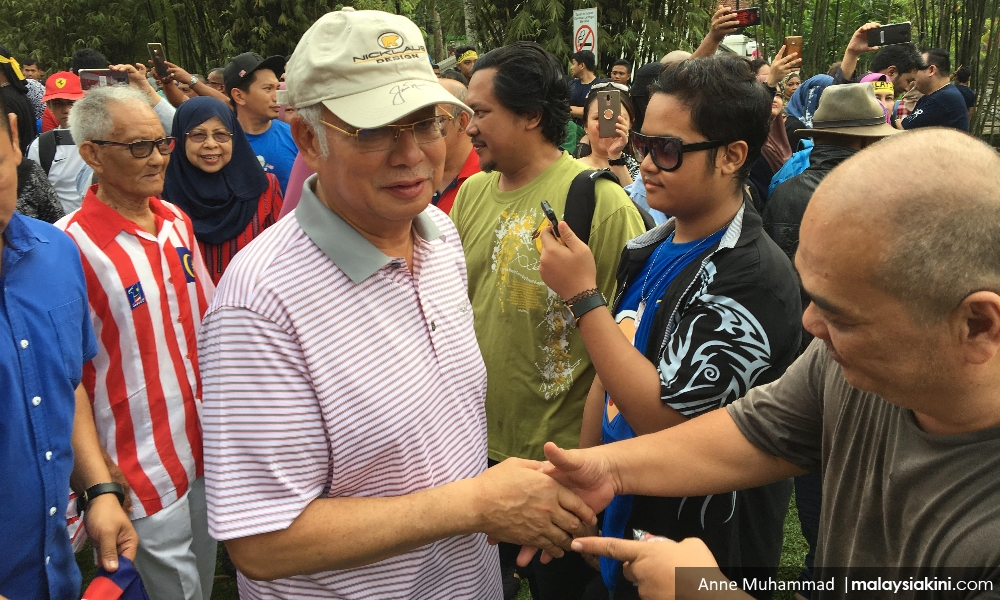
Former deputy prime minister Dr Ismail Abdul Rahman is a hero. He saw his job as a heavy obligation to improve the livelihoods of poor Malaysians, and would carry this burden with integrity even when he was about to die.
Both men entered politics: Najib, for himself; Ismail, for service.
Is your intention of entering politics to serve the people, or are you more intent on satisfying your ego?
A struggle without a cause
Too many of my peers have already figured out how to dress, act and present themselves as politicians before even knowing the notion of service.
They want people to know their name; they are eager for you to bow down to them; and they will do whatever it takes to climb the political ladder.
I don’t fully blame them because part of this is inevitable. There is no visceral memory of 1998, only an academic one. Most people in my generation do not even know what happened in 1998, owing to the scant history we learnt at school.
Politics in those days had an emotive quality. There was anger and disgust towards corruption and abuse of power; there was keenness and patience to repair our broken institutions; there was pain, and there was suffering.
I hear about how an opposition supporter would travel the distance to attend every ceramah by the opposition since the sacking of Anwar Ibrahim. I hear about a former government official who had to sell nasi lemak at a pasar malam to make ends meet in pursuit of a cause he believes in. I hear stories of poor men who sold their kampung houses to contribute to the cause.
But these stories belong to yesteryear. It’s different now.
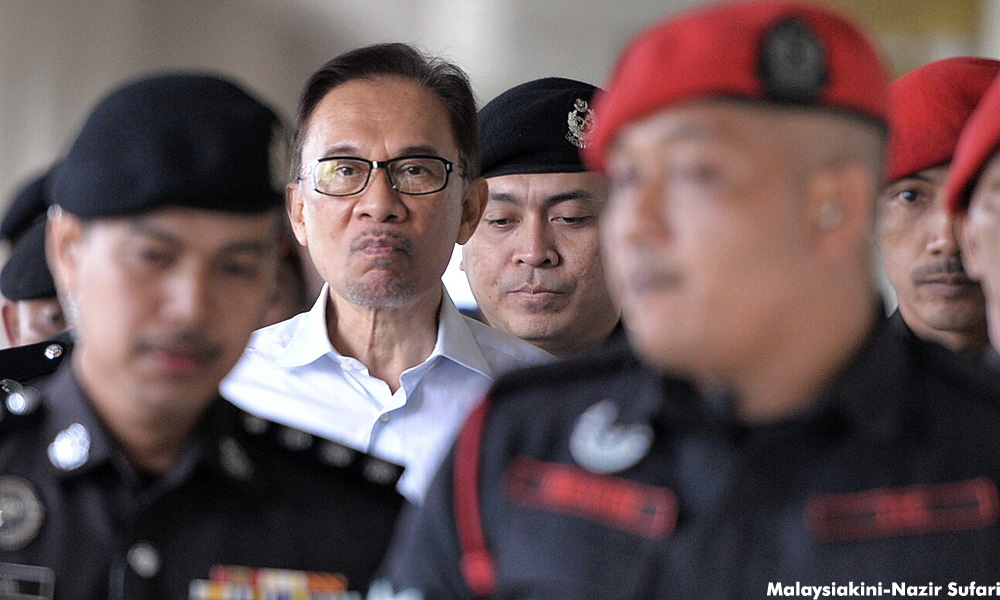
I guess that is why the second imprisonment of Harapan de facto leader Anwar Ibrahim in 2015 failed to spark the same emotive outrage among the young as the first imprisonment did in 1998.
They were probably aware of the monster that is Najib, but failed to appreciate that the monster was created by politicians who enter the realm to serve themselves ahead of other people.
Lessons from the French Revolution
In 1789, the young people who led the French Revolution were exuberant because they became the first civilians in Europe to overthrow their monarch. However, its messy aftermath invited many young people of that generation to wear tricolour bands and seek power.
They didn’t care who and what cause they were fighting for - they would kill as long as someone stood in their way to power. First they killed the monarchists, aristocracy, and the Old Guards, then they killed their own men for power’s sake.
First, the revolution was a well-intentioned shift of power from the elites to the commoners, then it became a childish playground for power.
Politics without right intentions is worthless.
We may be creating a generation that is always willing to fight but does not know what it is fighting for. I worry for my generation because my generation is the generation that knows how to defeat monsters, but doesn’t know how monsters are made.
They don’t know, so they become. Aren’t you worried too?
JAMES CHAI works at a law firm. His voyage in life is made less lonely with a family of deep love, friends of good humour and teachers of selfless giving. This affirms his conviction in the common good of people: the better angels of our nature. He tweets at @JamesJSChai.
The views expressed here are those of the author/contributor and do not necessarily represent the views of Malaysiakini.


Are you sure you want to delete this comment?
This action cannot be undone.