


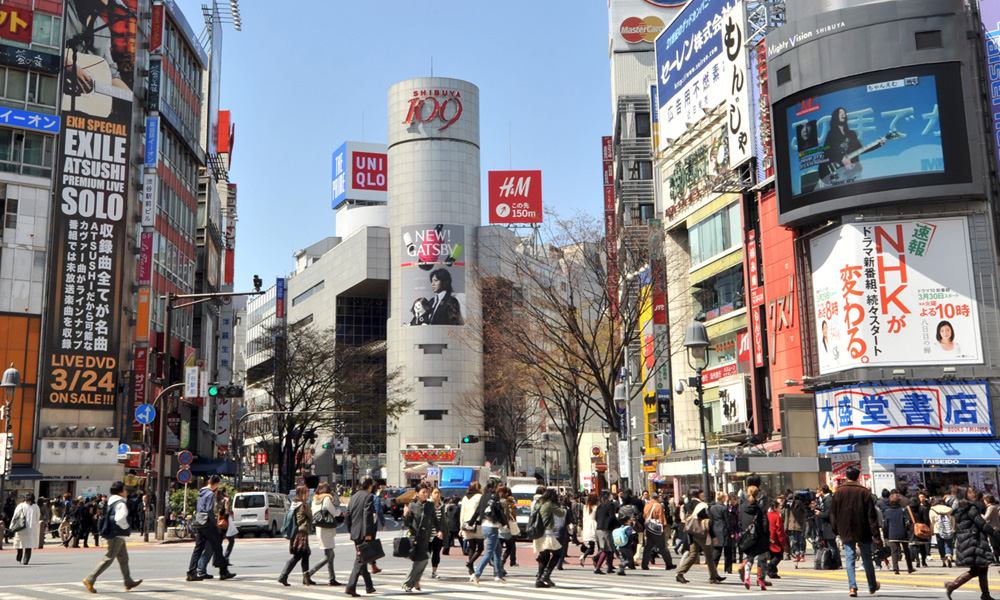

Be ready to work in Japan next year
COMMENT | In recent news reports, it was affirmed that by April 2019, Japan would be in need of 500,000 workers to plug the various labour shortages in the country.
With the impending Tokyo Olympics in the summer of 2020, Japan has to go full steam ahead to complete all the stadiums and dormitories.
It is also likely to be the last Olympics in Japan for many generations to come as the country begins to age. But more on that later.
As things are, the first draft of the labour policy reform has been passed in the Japanese parliament session last week, according to the Nikkei Asian Review.
In the next two weeks, the Japanese parliament is about to approve these laws. The aim is to permit more foreign workers to operate and work in Japan - side by side with Japanese workers. More of these foreign workers' family members would be allowed into Japan to join their spouses too, potentially after five years.
According to Japanese employment laws, their wages would have to be the same with Japanese workers. Thus, there would not be any discrimination.
An international student in Japan, as of now, can work up to a maximum of 28 hours a week. In a month, the 72 hours can translate into a part-time salary of US$1600-1800 a month...
COMMENT | In recent news reports, it was affirmed that by April 2019, Japan would be in need of 500,000 workers to plug the various labour shortages in the country.
With the impending Tokyo Olympics in the summer of 2020, Japan has to go full steam ahead to complete all the stadiums and dormitories.
It is also likely to be the last Olympics in Japan for many generations to come as the country begins to age. But more on that later.
As things are, the first draft of the labour policy reform has been passed in the Japanese parliament session last week, according to the Nikkei Asian Review.
In the next two weeks, the Japanese parliament is about to approve these laws. The aim is to permit more foreign workers to operate and work in Japan - side by side with Japanese workers. More of these foreign workers' family members would be allowed into Japan to join their spouses too, potentially after five years.
According to Japanese employment laws, their wages would have to be the same with Japanese workers. Thus, there would not be any discrimination.
An international student in Japan, as of now, can work up to a maximum of 28 hours a week. In a month, the 72 hours can translate into a part-time salary of US$1600-1800 a month.
This would be enough to pay for one's housing and food, including Internet charges and utilities, and for the rent of a modest one-room apartment.
And if the students know how to scrimp and save, she or he would probably have US$200-300 to send home each month.
If Malaysian students are selected by the Malaysian government to be Japanese government scholars - known as monbukagosho - they would get a scholarship of US$1,600 each month. Not much, but enough to allow them to hold another job to earn a separate income.
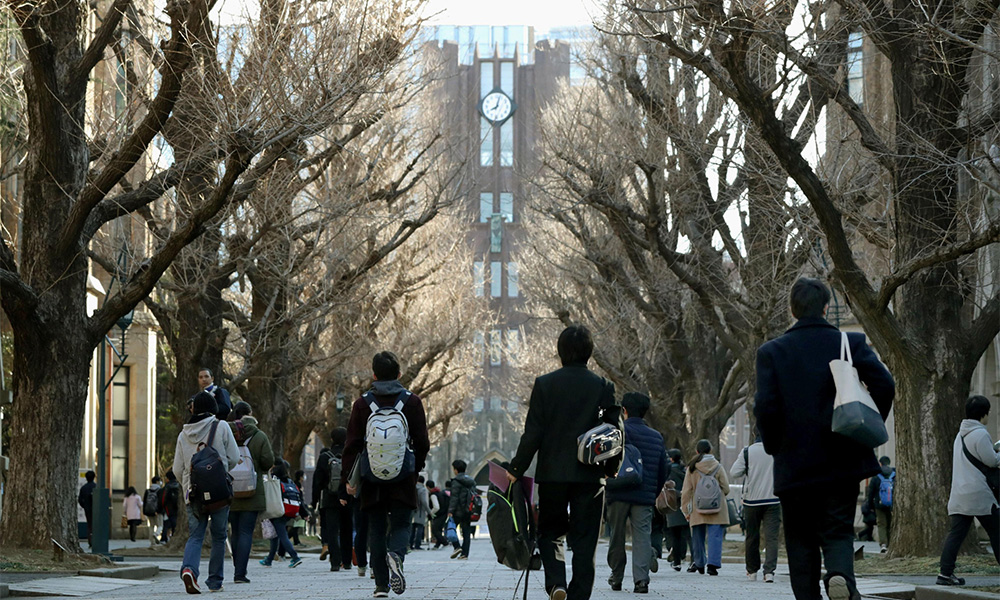
Malaysian students who do go through this process often come back but some remain in Japan as tough employees, equivalent to the Japanese samurai workers who can work long hours.
At RM2 billion, the budget of Mara can send some of it's best students to study and work in Japan by April next year. They can work and study at the same time without burdening Mara any further.
Upon the completion of their degrees in Japan, ideally, in four years, the students would have gained one or more vital skills from one of the industries in Japan either hospitals, hospices, small and medium factories and perhaps even at their own universities.
The Malaysian Education Ministry, according to the latest 2019 budget, has also set aside RM70 million for its Future Leaders Programme.
If Malaysia truly wants to Look East, invariably to make it a success, a better portion of this fund must be used to place our students in Japan. Why?
While they may go to Japan as Mara scholars, Prime Minister Dr Mahathir Mohammad's efforts to train the next generation of Mara and Malaysian scholars to be self-reliant would be contingent on these students becoming resilient too.
In another 15 years, according to Dr Muhammad Khalid, the economic advisor to Mahathir, Malaysia would begin the process of ageing too.
Housemen and nurses
Malaysian students, in other words, must learn how to handle this process in Japan in order to adapt themselves to the ageing process of their own parents in Malaysia one day without which they would have to place them in various hospices.
By 2025 alone, Japan would be in need of one million nurses and care workers to address the ageing effects of society.
By 2055, 40 percent of the Japanese population would be aged over 65, shrinking the current population of Japan from 130 million to 90 million people.
The ageing meteor that hits Japan in 2055 will hit Malaysia one day too if we do not reform or take modernisation and robotics seriously.
The University of Tsukuba on the outskirts of Tokyo has a globally renowned MA and PhD programme in International Political Economy and its top students come from Central Asia many of whom are sponsored by the World Bank and the Asia Development Bank. Tsukuba has a city ward dedicated to robotic research too.
Next to it, Saitama University in Japan has one of the most exceptional robotic and toughest engineering programmes in the world, comparable to MIT's and Caltech's in the US and Carnegie Mellon University too, if not with the top aeronautical engineering programmes at Purdue University in Indiana.
Although Malaysia has a Look East Policy, not all of its needed 500,000 skilled and unskilled labour needs to come from Malaysia alone.
But given the level of unemployment among local TVET graduates, which is three times the national average for those between the age of 25-35, solutions have to be found to place them in Japanese employment.
There are also 1,500 housemen each year in Malaysia hospitals. These are Malaysian doctors. They cannot find immediate employment in government hospitals each year.
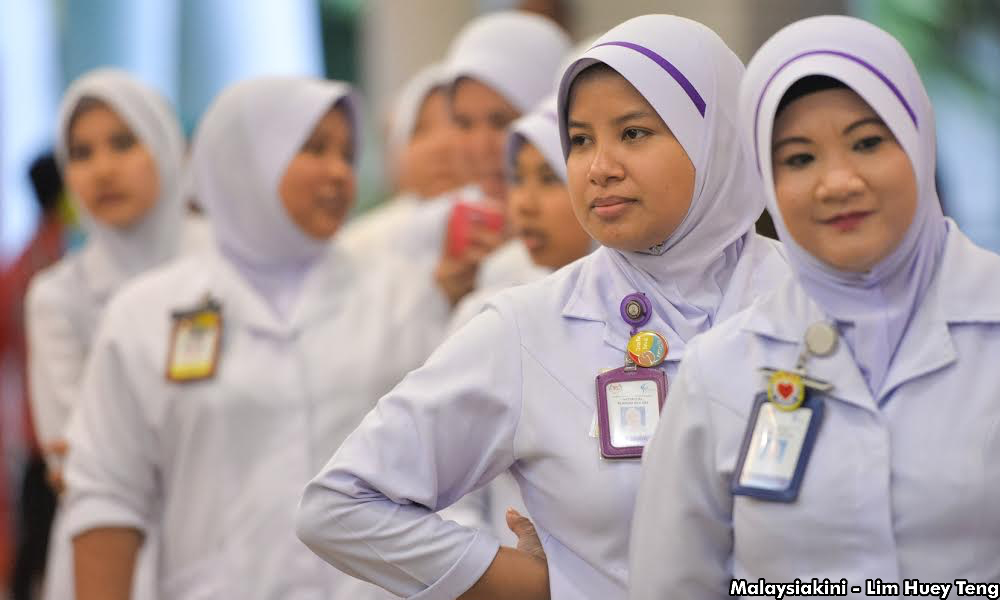
Mahsa University, KPJ and Sunway University have their own nurses' training programmes too. Malaysian hospitals are bound to face a future shortage of nurses too.
But these nurses must be stationed in Japan at least once to allow them to understand the rigours and science of taking care of ageing Japanese and Malaysians too one day.
As for the students, Kyoto University itself has 10 Nobel Prize medallists and four Field medallists. The medal is given to brilliant mathematicians under the age of 40.
Kyoto University itself is surrounded by close to 120 universities and colleges. Kyoto University has faculty members from 57 countries while their international student population are of 110 nationalities.
Close to 200 English courses are offered in the International Liberal Arts Seminars programme at Kyoto University. And one has not even included top institutions like Doshisha University and Ritsumeikan University in Kyoto yet.
If the Malaysian Education Minister Maszlee Malik, who is now in Japan, does not enhance the MOU between Doshisha University and IIUM that is still active, the trip would be a waste.
If Foreign Minister Saifuddin Abdullah, who is also part of the Malaysian delegation visiting Japan, does not see the importance of Tokyo Gaidai, the Japanese University of Foreign Studies which trains Japanese diplomats to be conversant in various languages, then that's another wasted opportunity.
But regardless of which visits the ministers were to make, the key lies in sending tens of thousands of TVET graduates or skilled housemen and nurses to learn from the various industries in Japan and, ideally, form the master crafters in Japan, too.
PHAR KIM BENG is a multiple award-winning head teaching fellow on China and the Cultural Revolution at Harvard University.
The views expressed here are those of the author/contributor and do not necessarily represent the views of Malaysiakini.


Report this comment
Are you sure you want to delete this comment?
This action cannot be undone.