


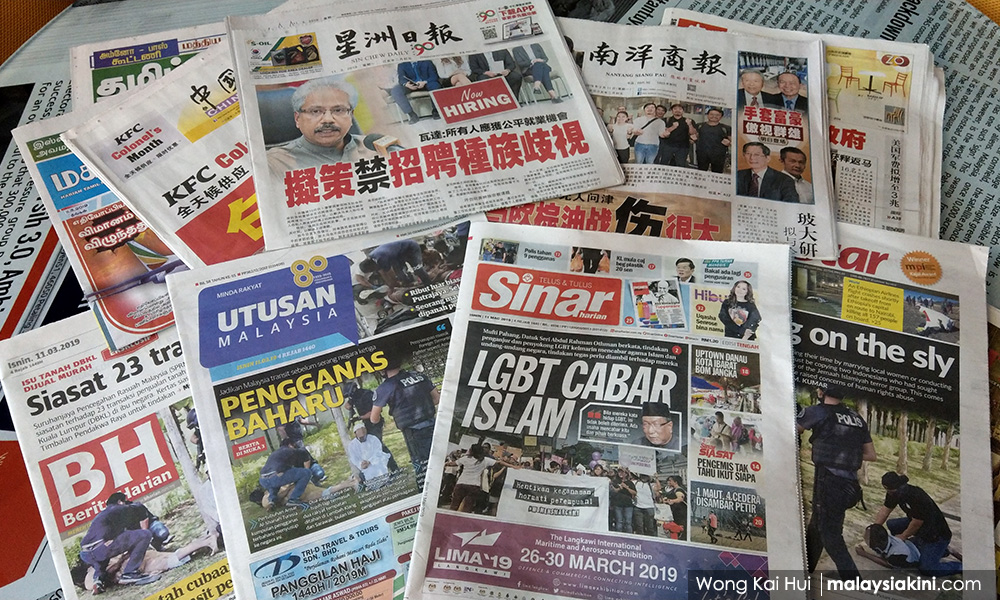

What journalists can do to change things
COMMENT | In a parting shot to a journalist friend who had to rush for the Sydney train to work in one of Murdoch’s papers, I said: “Make the world a better place through your work, buddy.”
He replied in text: “Making the world a better place is not the aim of my work – nor can it be an acceptable aim of anyone... deluded by their own capabilities and self-importance. I must make a humbler proposition that I work because I want to keep my skills in good shape… and make a little money if I can as well.”
I hope some of us are not that cynical. That journalism was a career choice for some shows a conviction that through the written word, one can make a difference, no matter how small, to conditions in Malaysia...
COMMENT | In a parting shot to a journalist friend who had to rush for the Sydney train to work in one of Murdoch’s papers, I said: “Make the world a better place through your work, buddy.”
He replied in text: “Making the world a better place is not the aim of my work – nor can it be an acceptable aim of anyone... deluded by their own capabilities and self-importance. I must make a humbler proposition that I work because I want to keep my skills in good shape… and make a little money if I can as well.”
I hope some of us are not that cynical. That journalism was a career choice for some shows a conviction that through the written word, one can make a difference, no matter how small, to conditions in Malaysia.
Aaah, those days of sweet idealism during my undergraduate studies. Under the tutelage of a visiting American professor, our case study of journalism methods throughout the term was The Washington Post’s exposé of the Nixon administration’s hand in the burglary of the Democratic National Committee’s Watergate office in Washington DC. Our role models were Bob Woodward and Carl Bernstein.
My journalistic ideals, however, took a bad knock when I started my internship. I remember the news editor who spiked my environmental story on unregulated sand mining by a developer in Penang, a major advertiser in the paper.
When I went full-time in the big city, an editor rejected my story pitch on Merdeka University, an initiative of the Chinese educationist circle. Weeks of research and speaking to sources came to naught because the controversy was deemed potentially fractious and overly racial.
Journalists, in the 70s, had few choices when story pitches were deemed ‘not newsworthy’ simply because they fell outside the paper’s editorial values and politics. Protocol journalism trumped investigative reporting. Serving the powerful topped the newspaper’s duty to serve the readers.
Editors I had worked with in the 70s varied in their professional and cultural creed. First were the respectable veterans who had walked the streets, paced the corridors of power, broke significant stories and wrote editorials that were cited in public lectures. Stories were rejected for they lacked deep research. Or the contents were weak, inadequately sourced and badly written.
Second were those editors who had few years of experience, but were subsequently promoted as mouthpieces of the politically connected media owners. These editors were in some minister’s good books – and consequently awarded with honorifics for their ‘public service’.
Third were those editors placed in the newsroom as government lapdogs. They were the problematic ones who undermined staff morale in the newsroom. Reporters who began their profession with much zeal left, disillusioned that journalism was dead.

Has Malaysian journalism taken on a more robust investigative streak over the last few years? Yes it has, relatively, judging by the numerous news portals’ coverage of the 1MDB scandal, and knowingly pushing the boundaries of critical reporting.
However, journalists in the digital environment can, and should, do more in weighing their source’s right to speak and critically scrutinising what the source had said, his motivations for saying it, the anticipated sociopolitical consequences of what was said, and the audience’s inherent right to hear.
Journalists wield the power of words, sound and images. Different texts and news frames, story angles and sources can bridge or divide, build or destroy. Journalists have a choice to include or exclude, to highlight or refrain, to lead or follow. In the words of veteran American broadcaster Dan Rather, journalists can use their work to ‘heal, unite and hope’ for improvements in the human condition.
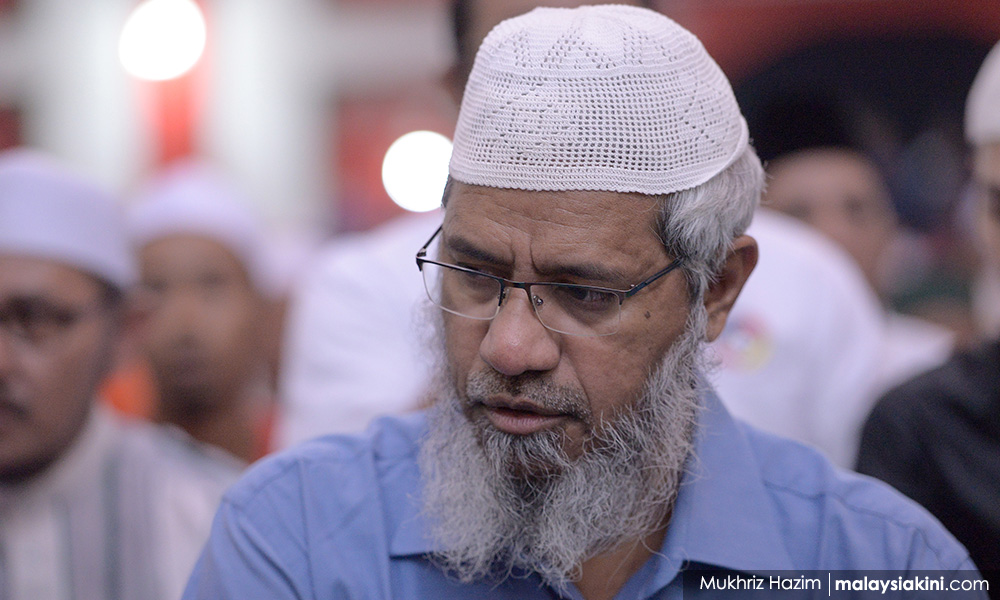
The fact is journalists know more than what they are able to report. For instance, Malaysian journalists would surely know from critical research the background of that Indian Islamic tele-Islamicist preacher, who calls Malaysia home, but is banned from delivering public speeches in certain states after his racialised lecture in Kota Bharu.
We should be concerned at the continuation of his permanent residency, the media attention he has exploited and his cultish status revered by Umno and PAS supporters.
Media economics, unfortunately, have an insatiable appetite for controversies that cut into race, religion and sexuality, issues that the preacher has judged and framed through his Salafist-Islamic window.
This should challenge socially conscious journalists to not merely report the preacher’s evident popularity with the Umno-PAS Malay base, but to scrutinise his past speeches and fundamental beliefs for evidence of what media in the West have portrayed him to be – a xenophobic demagogue, an instigator of Salafist jihadism, a manipulator of gullible Muslim youths, and a cherry-picking proselytiser of the Salafist brand of Islam.
How we view an articulate Salafist preacher, a right-wing Christian televangelist, a firebrand Hindu priest or a nationalist Buddhist monk is framed by our own secular or religious and political stance. Confirmation bias is real. It happens often in our conversations and mental scans of our environment.
For what we know and understand, we should not rely exclusively on what journalists report. Doing our own research, asking the critical questions that journalists should have asked, but did not, and reading across different media platforms for counter views will paint a more complete picture of the ‘truth’, albeit its fluidity.
That having said, until our journalists are able to unpack ethno-religious controversies and cultivate a more critical understanding of the ramifications of unbridled hate speeches, until we take the initiative to read what ‘the other side’ says and feels, we will be shirking our moral duty to minimise harm, to inform and educate ourselves.
Journalists are limited in what they can do in re-presenting what actually was said by controversial figures, and clarifying the context of statements made.
Many of our journalists, like my friend, may not believe that it is their aim to make the world a better place through their journalism. But, occasionally, some of us do.
ERIC LOO is a Senior Fellow (Journalism) at the School of the Arts, English & Media, Faculty of Law, Humanities & Arts, University of Wollongong. He is also the founding editor of Asia Pacific Media Educator.
The views expressed here are those of the author/contributor and do not necessarily represent the views of Malaysiakini.


Are you sure you want to delete this comment?
This action cannot be undone.