




MIC polls: What does the future hold?
It appears that the contest for the MIC deputy president post scheduled for June 24 is heating up. Both candidates, incumbent S Subramaniam and challenger vice-president G Palanivel are not taking things for granted.
 While Subramaniam expects some kind of intervention from Umno leaders to stop the contest, Palanivel is working hard among the grassroots to ensure that he would be recognised as a leader capable of delivering the goods and not be seen as merely the president's man.
For the Indian community, the contest would be keenly watched as they would want to know the candidate who will head the MIC in time to come. In certain circles, it is a foregone conclusion that Palanivel with the endorsement of the president - S Samy Vellu - will win.
But it is certainly not going to be a walkover.
It appears that the contest for the MIC deputy president post scheduled for June 24 is heating up. Both candidates, incumbent S Subramaniam and challenger vice-president G Palanivel are not taking things for granted.
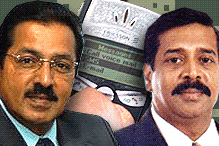 While Subramaniam expects some kind of intervention from Umno leaders to stop the contest, Palanivel is working hard among the grassroots to ensure that he would be recognised as a leader capable of delivering the goods and not be seen as merely the president's man.
For the Indian community, the contest would be keenly watched as they would want to know the candidate who will head the MIC in time to come. In certain circles, it is a foregone conclusion that Palanivel with the endorsement of the president - S Samy Vellu - will win.
But it is certainly not going to be a walkover.
Subramaniam has to some extent strategised carefully - a kind of last ditch effort to retain the deputy president post, a passport to the coveted office of president.
Wrong strategy
Unfortunately, he employed the wrong strategy right from the beginning. For a long time, he waited patiently believing that someday he would be able to make the transition to the number one post. But such a patience has not delivered any dividends. On the contrary, it has dented his chances further.
In the last few months or so, he has changed his strategy somewhat. Rather than openly campaigning among the grassroots, he has sought to present his case to some senior ministers in Umno including the prime minister, hoping that some kind of 'intervention' would stop the contest.
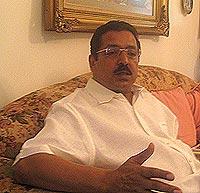 The problem with Subramaniam from the beginning is that he has not sustained a bold attitude towards politics. In this respect, unlike Samy Vellu he is not a politician in the true sense of the word. Rather than challenging Samy Vellu by public mobilisation, he has merely sought to take a feeble approach.
This has not endeared him to the Indian Malaysians who expect aggressive and emotional leaders, even if they don't do anything for the welfare of the community. Subramaniam lacks emotions, anger and aggression to talk about the future well-being of the community.
For a long time he had to rely on the patronage of Umno leaders in general and Dr Mahathir Mohamad for his continued stay as deputy president. By leaning on Umno leaders, he not only neglected building strong ties with the community, but also exposed himself as a politician only interested in furthering his own personal career.
With Mahathir gone, he has lost a powerful patron. His old friends who stood by him those days have gone. His good friend Athi Kumanan - in the Tamil media - has gone. His once famous ally MG Pandithan is no more in MIC to help him. In fact, Pandithan is of the opinion that he would not have been ousted from MIC had it not been for Subramaniam and the late vice-president K Pathmanaban.
Really, Subramaniam can count upon very few Indian Malaysians in the party or outside to back him. Given this, he tried his best in recent months to project an image that if the contest took place, the MIC would be fragmented. Such a self-serving prognosis has found no takers in Umno.
Determined leader
Samy Vellu has waited long to oust Subramaniam. His rivalry with Subramaniam remained submerged during the Mahathir era, but has now resurfaced.
The contest in June also suggests that Samy Vellu is making way for his eventual departure from MIC politics, which he has dominated and shaped for more than two decades. This is the precise reason why he is openly backing Palanivel to contest the number two post.
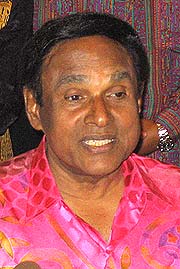 Once Palanivel wins, it would only be matter of time before Samy Vellu makes his formal departure from the arena of Malaysian politics. According to well-informed sources, this could happen over the next few months.
In comparison to MIC leaders of the past, Samy Vellu probably stands out as a strong and determined leader. While he subdued the dissenting forces within the party, he however, failed to put forward bold programmes for the upliftment of the Indian Malaysian community. More often than not, he went along with the dictates of Umno leaders.
Under Samy Vellu, the Indian community suffered tremendously from the racist policies of the Barisan Nasional (BN) government. The MIC along with the other non-Malay parties in the BN failed to mount a strong united-front opposition to the racist politicians in Umno.
Moreover, since the MIC was part of the larger state apparatus, it was not in a position to operate beyond the parameters of the state. Indian underdevelopment cannot be merely equated with the malaise of the MIC, but the party has certainly played a role in the slackening of the community in many areas.
Given up
While it is more or less certain that Palanivel will win the deputy president post, it is unclear wether he would make a good president.
Will he outperform Samy Vellu? Will he democratise the party? Will he provide effective representation for the community?
 Many Indian Malaysians have given up on MIC. They have come to the conclusion that the party can do little or nothing for the community.
Be that as it may, as the sole representative of the community in the government, there are also expectations from different segments of the Indian community of MIC. The poor and underclass expect the party to address and resolve a range of issues for their betterment. So, whoever takes over the helm, the going will be tough, challenging and not the least alienating.
Since there is slightly more than a month left for the MIC election, it is not asking too much if the two candidates vying for the post come out with their respective agendas on how they are going to address the problems and challenges of the community.
It is not enough for Subramaniam to ask for the intervention of Umno leaders or for Palanivel to get the endorsement of Samy Vellu. Let the Indian Malaysian community judge the merits and demerits of the two respective candidates.
P RAMASAMY is a former professor of political science with Universiti Kebangsaan Malaysia. He is currently researching the impact of the rise of India on
Indian communities in East Asia and Malaysian politics.


Are you sure you want to delete this comment?
This action cannot be undone.