



MP SPEAKS | Wage subsidy programme not enough to save jobs
MP SPEAKS | The Perikatan Nasional (PN) government proudly states that 2.6 million jobs have been "saved" through the Wage Subsidy Programme (WSP) which has paid out RM8.97 billion to 311,191 companies as of July 24.
While this programme has assisted many SMEs in the form of the RM1200 in wage subsidies for three months for companies with fewer than 76 workers, a closer examination of the labour force statistics indicates that the number of wage subsidies given was not attractive enough for many SMEs.
This programme could have saved more jobs if the amount of subsidies given are higher, like the amount given in Singapore...
MP SPEAKS | The Perikatan Nasional (PN) government proudly states that 2.75 million jobs have been 'saved' through the Wage Subsidy Programme (WSP) which has paid out RM8.97 billion to 311,191 companies as of July 24.
While this programme has assisted many SMEs in the form of the RM1200 in wage subsidies for three months for companies with fewer than 76 workers, a closer examination of the labour force statistics indicates that the number of wage subsidies given was not attractive enough for many SMEs.
This programme could have saved more jobs if the amount of subsidies given are higher, like the amount given in Singapore.
The total number of companies registered under the Companies Commission of Malaysia was 1.361 million as of June 30, 2020.
Since only 311,191 companies successfully applied for the WSP1, this means that only 22.3 percent of companies benefitted from the WSP. For the majority that did not apply for the WSP, their main reason was probably that the subsidy was insufficient for them to pay the wages of their workers during the movement control order (MCO).
It is highly likely that the majority of companies which did not apply for the WSP probably did so because they had no choice but to reduce the number of their workers during the MCO period.
I will illustrate using the example of the hotel industry, which is one of the worst-hit sectors of the economy.
I went through the member listing of three hotel associations namely the Malaysian Association of Hotel Owners (Maho), Malaysian Association of Hotels (MAH) and Malaysia Budget Hotel Association (MyBHA) to check the number and percentage of these hotels that were recipients of the WSP.
For Maho, 49 out of 98 members (50 percent) received the WSP. For MAH, only 174 out of 844 members (21 percent) received the WSP. For the budget hotels, only 381 out of 1,542 members (25 percent) received the WSP.
This shows that a majority of hotels did not receive the WSP.
We can compare our WSP with the wage subsidy scheme in Singapore called the Jobs Support Scheme.
Under this scheme, 75 percent of wages were subsidised by the government during their lockdown or “Circuit Breaker” and this programme was extended to August 2020.
The total amount of wage subsidies paid out was SG$16 billion and this benefitted two million workers.
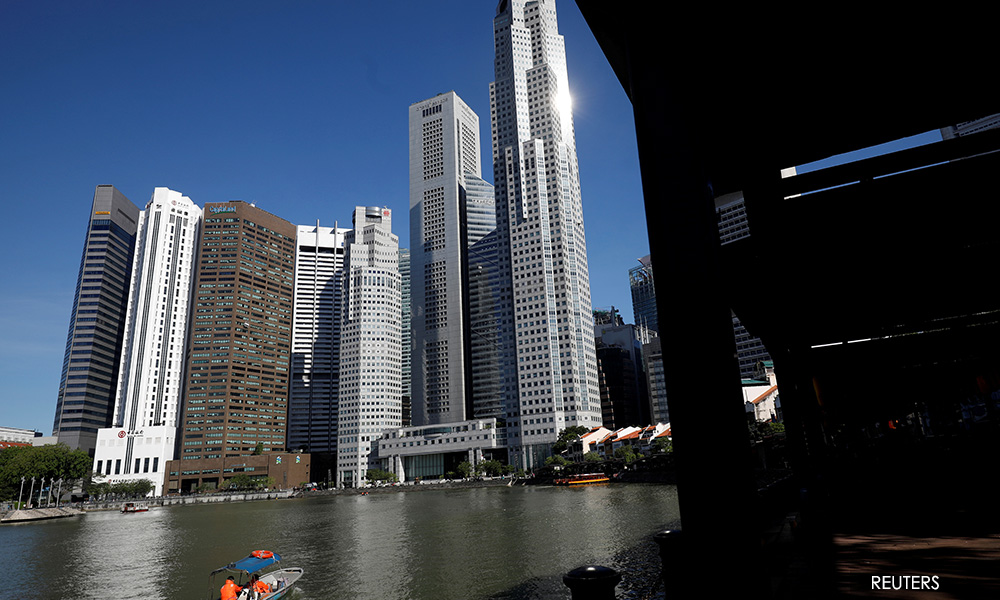
Singapore has a workforce of approximately 3.8 million, which is a quarter of Malaysia’s workforce.
But 53 percent of Singapore’s workforce received wage subsidies. In comparison, only 2.6 million out of a total workforce of 15.2 million (or 25 percent) received the wage subsidy in Malaysia.
As a result, the unemployment rate in Singapore went up only marginally, from 3.3 percent in the first quarter of 2020 to 3.9 percent in the second quarter of 2020. In comparison, Malaysia’s unemployment rate went up from 3.5 percent in Q1 2020 to 5.1 percent in Q2 2020.
Recently, the Singapore Finance Minister announced that their Jobs Support Scheme would be extended to March 2021 with a wage subsidy of between 10 percent and 75 percent, depending on the industry.
In comparison, Malaysia’s WSP is scheduled to expire in December 2020.
Other than the insufficiency of Malaysia’s WSP, the policies to help the tourism industry in Malaysia have also fallen short.
For example, the RM1 billion worth of “Penjana Tourism Financing” (PTF) comes in the form of a loan to companies (at a 3.5 percent interest rate) with a maximum limit of RM300,000 for SMEs and RM75,000 for micro-enterprises.
These loans will take time to process and disburse and assuming an average loan of RM100,000, it will only benefit approximately 10,000 companies.
By contrast, in Pakatan Harapan’s Economic Stimulus Package, which was announced by then-acting prime minister Dr Mahahtir Mohamad on Feb 27, an e-voucher worth RM100 per person to be used for domestic tourism purposes (air tickets, train tickets and accommodation) would have put money into the pockets of the tourism sector directly and would also have other helpful spending multipliers for the local economy.
The budget for this programme was set at RM500 million under Harapan. This amount could be doubled to RM1 billion and would have a far bigger stimulus effect than the PTF scheme.
I have made these points in my parliamentary speech on the bill to increase the debt ceiling to 60 percent of GDP and to approve RM45 billion worth of Covid-related spending.
Harapan is asking for the spending amount to be doubled to RM90 billion in order to save the flagging economy.
We hope that the finance minister will respond positively to these proposals.
ONG KIAN MING is the Bangi MP and assistant political education director of the DAP.
The views expressed here are those of the author/contributor and do not necessarily represent the views of Malaysiakini.


Are you sure you want to delete this comment?
This action cannot be undone.