



COMMENT | More to 'cultural appropriation' debate than meets the eye
COMMENT | By now, every Malaysian on social media is aware of the controversy surrounding Mira Filzah’s Instagram photoshoot. Mira, a Malay model and social media influencer, has since explained that she chose her clothing — lehnga, Indian jewellery, henna on her hands — in homage to the Bollywood films and music she loves.
But the images made several young Indian Malaysians uneasy, and in articulating their unease, they invoked that deeply polarising term: cultural appropriation.
Instantly, Malaysians of all races, across the political spectrum, loudly objected to this accusation. It’s not difficult to imagine how the ethnonationalists responded to Indian discomfort, even for those of us who did not read these particular Tweets: when you’ve seen one “balik India,” you’ve seen them all.
But even progressive Malaysians generally felt that the “cultural appropriation” charge was unfair and irrelevant in the Malaysian context. After all, in Malaysia, haven’t all our cultures always borrowed from...
COMMENT | By now, every Malaysian on social media is aware of the controversy surrounding Mira Filzah’s Instagram photoshoot. Mira, a Malay model and social media influencer, has since explained that she chose her clothing — lehnga, Indian jewellery, and henna on her hands — in homage to the Bollywood films and music she loves.
But the images made several young Indian Malaysians uneasy, and in articulating their unease, they invoked that deeply polarising term: cultural appropriation.
Instantly, Malaysians of all races, across the political spectrum, loudly objected to this accusation. It’s not difficult to imagine how the ethnonationalists responded to Indian discomfort, even for those of us who did not read those particular Tweets: when you’ve seen one “balik India", you’ve seen them all.
But even progressive Malaysians generally felt that the “cultural appropriation” charge was unfair and irrelevant in the Malaysian context. After all, in Malaysia, haven’t all our cultures always borrowed from one another?
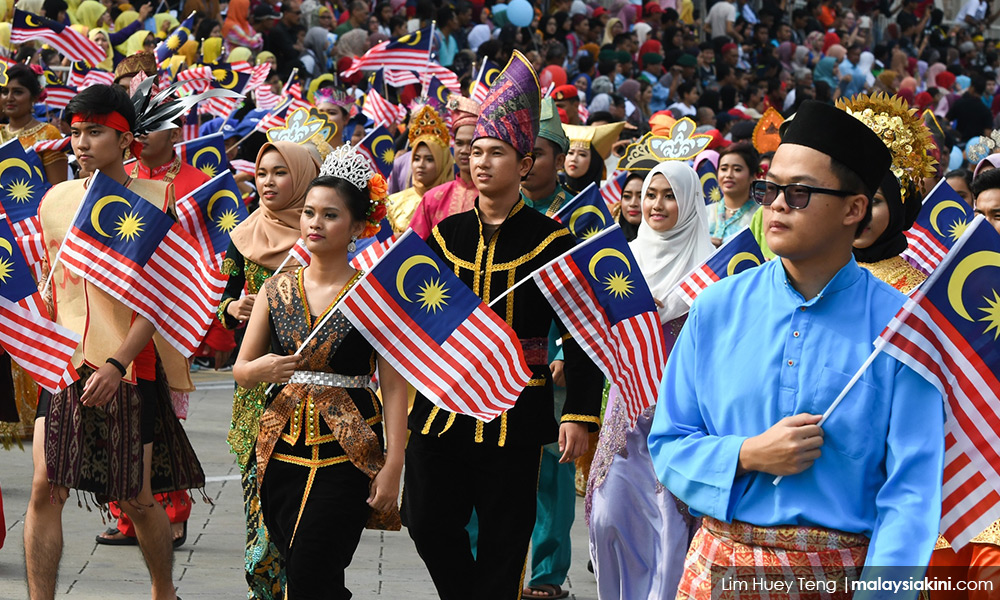
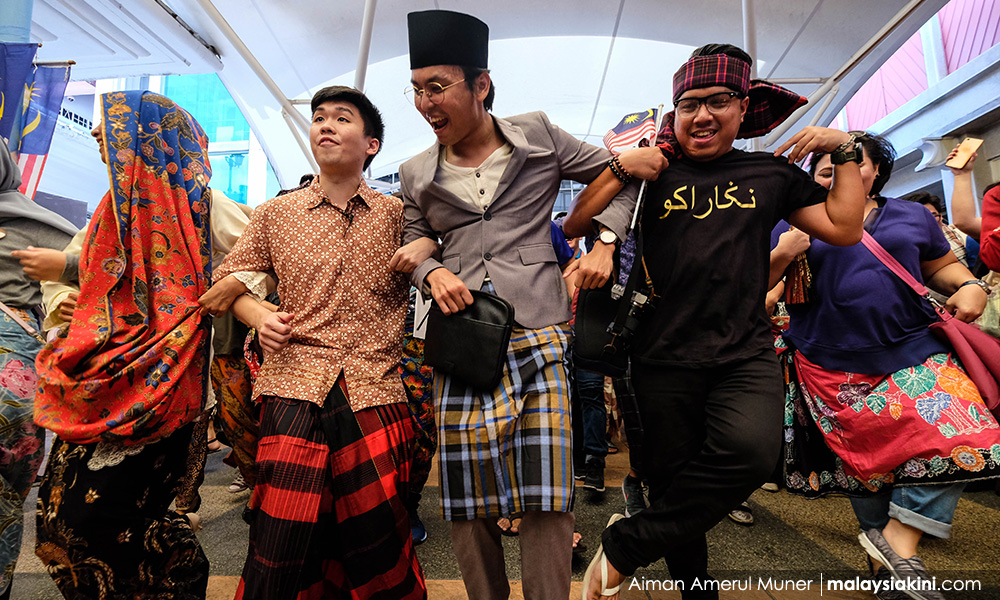
Isn’t the Nusantara region known for its syncretism, its hybrid tongues, cuisines, and religious practices? Who has ever objected when Malaysians have worn each other’s traditional clothing to weddings and festivals? Isn’t this one of the best things about Malaysia, that we share our cultures? Isn’t this what makes Malaysia Malaysia?
In all this outrage, few people stopped to analyse the misgivings these young Indians had tried to express.
This is the problem with labels and buzzwords like “cultural appropriation”: soon after our earliest exposure to them, we decide what our position is; thereafter, every time we hear them, we produce our prefabricated responses, never bothering to determine what, specifically, is meant in each new instance.
But what if the term had never been used? What if it were possible simply to ask the Indians who didn’t like those photos of Mira: what do you feel when you look at these photos? Why do you think you feel that?
And — even more crucially — what if it were possible for all of us, Indian or not, to listen to those answers?
In a country where the largest Indian communities are South Indian, the Malay majority has had a long fascination with what some still call “Hindustani” culture: the glamour of North Indian cinema, the Hindi language, the music, and, let’s face it, the fair skin.
If Indian beauty is possible in Malaysia, it’s North Indian beauty; if you grow up South Indian, especially if you have dark skin, you grow up keenly aware of this. South Indian Malaysians grow up never seeing themselves mirrored, reflected, or desired in the wider world, and so, yes, some of us looked at Mira’s photos and felt, once again, erased.
Along with the familiar feeling of erasure, we felt something else: the sting of seeing others reap all the benefits of “Indian” culture with none of the social cost we pay if we choose to wear our own clothing, eat our own food, speak our own languages, or perform Hindu religious rituals.
We know that cost because we grow up seeing our grandparents and parents negotiate it before we learned to negotiate it ourselves: appear too Indian — the wrong kind of Indian, the dark kind, the estate kind — and everything will be even harder for you than your face and name already make it.
These are the risks of excessive Indianness for your parents and grandparents: not getting past the “No Indians” rental ads; not landing the decent jobs; being assumed to be unprofessional, uneducated, uncultured; dishonest; drunken; insolvent.
These are the risks of excessive Indianness for you: not having anyone to sit next to on the school bus; being asked engga poringge? by the playground wit who specialises in head waggling and fake Tamil accents; being accused of body odour and headlice.

These are not new risks or new fears; they’ve been with us far longer than the notion of “cultural appropriation.” If you’re Indian, these risks and fears are also what makes Malaysia Malaysia.
When we wear our clothing in Malaysia — and by “our clothing” I don’t mean Mira’s “Bollywood” lehnga, but our sarees, our veshtis — we know we have to do the work of compensation to prove our intelligence, our education level, and our culture.
We’re always anticipating the compensation, always calculating it. You knew about risks and compensation, even if you weren’t able to verbalise them, if you were ever an Indian child watching your friends observe your parents and grandparents in order to be able to categorise them: were they That Type of Indian or The Other Type?
Was the saree going to count against your mother? The pottu? The vibhuti? The coconut oil? How many of these markers would they be allowed before you would all be categorised as That Type?
You did this work every day, every time you were out in the wider world, the calculations, the compensation, and then you turned around and saw Malay, Chinese, and white women in sarees on the covers of magazines, on billboards, on TV. Yes, it’s hard to see others showered with adulation for wearing your clothing when what you get for wearing it is so often prejudice and negative stereotyping.
It’s hard to see praise lavished on a Malay woman who wears Indian clothing when, only three years ago, a school informed its students that all traditional clothing except sarees would be welcome at their Aidilfitri gathering, because “last year… some of the other students started laughing at the girls who wore sarees.”
As though to illustrate colourism and beauty standards, racists on Twitter defended Mira by telling the Indian women who’d objected to her photos: “You’re just jealous because you could never look as good as she does.” “You’re just jealous because she looks 700 light-years better than you would in those clothes with your ugly black skin.”
If we are jealous — if we do want something Mira has — it’s not that.
What we want is the power and visibility that make everything feel like “sharing.” Everything would feel like sharing if the Malaysian playing field were level. But it isn’t.
Some of us have racial privilege, and some of us don’t. How many dark-skinned Indian women have we seen on the covers of our magazines in the last twenty years?
How many leading roles in our films and TV shows are given to dark-skinned Indian actors? Who, in our society, has the power, the visibility, and the glory?
In the real Malaysia, Mira’s photoshoot is not a compliment to the culture of most Malaysian Indians. We might have been so hungry for any recognition at all that some of us felt vicariously seen by her so-called homage, the glow of her four hundred thousand Instagram likes reflected off us.
Our country has conditioned us well: this is good enough for us, this second-hand visibility of something close enough to our Indianness without being too Indian for Mira’s fan base.
We don't need to be allowed actual limelight, surely; when something close enough to our clothing, our culture, our food is made cool and hip by those in whose power it is to make things cool and hip (since we ourselves don't have that power, what to do), shouldn't we rejoice?
Or should we? Does Mira’s photoshoot belong in the same category as a beloved non-Indian friend wearing a saree to a wedding to which we’ve invited her?
Is Mira wearing North Indian clothing to flog contact lenses and fake eyelashes equivalent to a non-Indian woman wearing Indian clothing because she's married into an Indian family and committed to the work of raising mixed-race children? Or are we willing to forego all nuance in our eagerness for this crumb of visibility?
PREETA SAMARASAN is the author of the novel "Evening is the Whole Day". She has also published numerous short stories and a recent essay about racial dynamics in Peninsular Malaysia, "The Race Ladder".
The views expressed here are those of the author/contributor and do not necessarily represent the views of Malaysiakini.



Report this comment
Are you sure you want to delete this comment?
This action cannot be undone.