



COMMENT | Umno's progressive caucus
“At the moment, Umno is perceived to be so conservative, an Islamist party, a party that propagates propaganda, this is what is clouding the party now, but Umno is not like that.”
- Umno Pulai Youth wing member Muhammad Shaqib Shahrilnizam
COMMENT | An old Umno hand wanted to know what I thought of the nascent “progressive” caucus by young leaders within the party.
One of the movement’s founders gave an interview in the press where he claimed that a “silent majority” felt left out from the policymaking process in Umno.
Muhammad Shaqib said: “The idea of the caucus is to bring a new narrative that is more friendly towards the people.
"We need to find a new narrative so that people would appreciate Umno and they feel Umno is one of the places where they can express their ideas, concerns, and even a place where they can fight for."
The fact is that it is pointless to have a progressive caucus if it does not have a progressive voting base.
And what Umno, the state – which at one time was Pakatan Harapan – the vast religious bureaucracy, the various propaganda organs, the state security apparatus, the media – mainstream and alternative –, religious figures, political figures but most importantly mobs – online and off – have constrained our public spaces making it impossible...
“At the moment, Umno is perceived to be so conservative, an Islamist party, a party that propagates propaganda, this is what is clouding the party now, but Umno is not like that.”
- Umno Pulai Youth wing member Muhammad Shaqib Shahrilnizam
COMMENT | An old Umno hand wanted to know what I thought of the nascent “progressive” caucus by young leaders within the party.
One of the movement’s founders gave an interview in the press where he claimed that a "silent majority" felt left out from the policymaking process in Umno.
Muhammad Shaqib said: “The idea of the caucus is to bring a new narrative that is more friendly towards the people.
"We need to find a new narrative so that people would appreciate Umno and they feel Umno is one of the places where they can express their ideas, concerns and even a place where they can fight for."
The fact is that it is pointless to have a progressive caucus if it does not have a progressive voting base.
And what Umno, the state – which at one time was Pakatan Harapan – the vast religious bureaucracy, the various propaganda organs, the state security apparatus, the media – mainstream and alternative –, religious figures, political figures but most importantly mobs – online and off – have constrained our public spaces making it impossible for citizens but more importantly, for the Malays to express their progressive ideas.
Take Fadiah Nadwa Fikri for example: Make no mistake, what Fadiah wrote is but one side of the argument. A side which has been forcibly silenced over the long Umno watch and now it would seem attempted to be silenced by the nascent power brokers in Putrajaya.

“It is a side that many Malaysians subscribe to but who fear speaking up for a variety of reasons. It is a side which is a game-changer when it comes to how politics is perceived, practised and evolves in this country. This is the reason why some fear what she wrote.”
To be honest, even when the opposition claims to be a “progressive” force in this country, I am sceptical.
I have no idea what Malaysian political operatives mean by the term “progressive”, but I do know that political operatives are scrambling to find ways to attract the youth vote while denying them avenues of expression, especially ideas like speaking truth to power.
Say what you like about Muar MP Syed Saddiq Syed Abdul Rahman, but lowering the voting age to 18 and his determined efforts to put youths front and centre, are initiatives Malaysians should have been able to get behind. If it was not for the horrendous optics he created with his flirtation with Zakir Naik and his misguided defence of the old maverick by demonizing the DAP.
When defining what he believed was “progressive” politics, Muhammad Shaqib claimed it was “Malay politics, while at the same time pushing for equity and moving away from racial politics.”
Now, I do not mean to rag on the young man, but the way how you move away from racial politics is by proactively advocating for policy positions and institutional changes that move away from racial politics.
Understand now that as someone who has drawn politically incorrect lines in the racial sands of Malaysian politics, I am not sympathetic to the idea that racial preoccupations should be dismissed outright.
I do believe that there is a ‘Malay struggle' going on in the greater Malay polity but the struggle is a reaction against the dereliction of duty that a sizable fraction of the Malay community accuses Umno of.
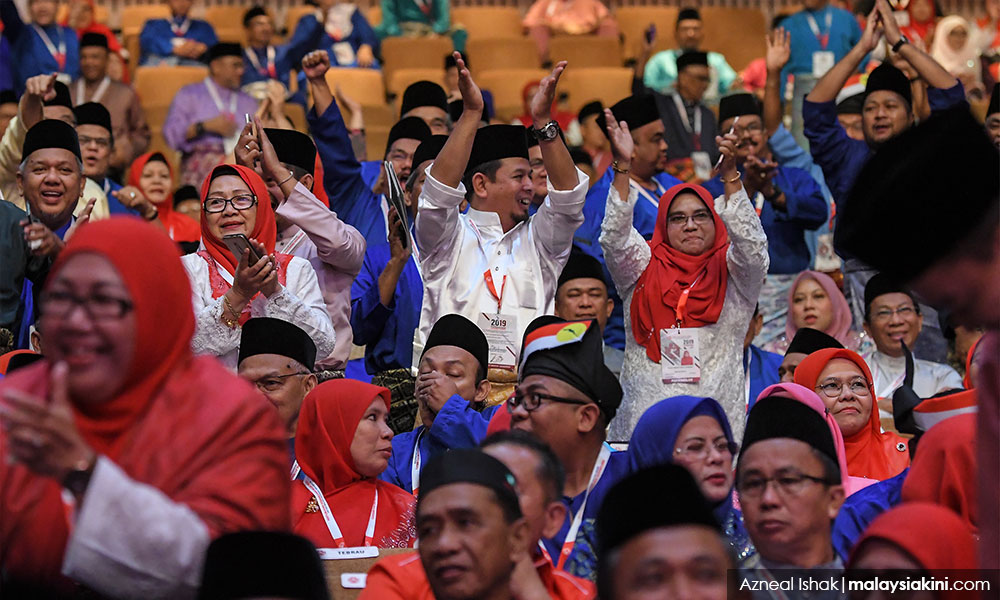
This dereliction of duty does not necessarily mean that these folks believe in “progressive” ideas, but rather they believe that what they are entitled to as citizens with special rights has been denied them, especially when they see how the non-Malay communities are “thriving” without any kind of or minimal state assistance.
You can see this idea crop up whenever the old maverick speaks of the “racial inequalities” in Malaysia and why Malay special rights are needed.
As usual, he uses non-Malays – read Chinese – as the economic and social scapegoat: "If we take out the Chinese and all that they have built and own, there will be no small or big towns in Malaysia, there will be no business and industry, there will be no funds for the subsidies, support and facilities for the Malays."
Now some folks, especially young Malay leaders, have this rose-tinted view of what Umno was as some sort of ideal when it came to race relations in this country, and somehow the “Malay struggle” was “pure” and unsullied by the racist policies and rhetoric that define Umno now.
This in itself is a kind of propaganda. While Umno may have slipped into a racial and religious quagmire and instituted a functioning kakistocracy, the reality is that, as long as the non-Malays held up their end of the social contract by voting for Umno surrogates and the Umno leadership was united, the political environment, although dysfunctional, was stable.
Young Umno Malays mistake this "stability" as some sort of equitable racial bargain. It was not.
The problem with politics in this country, and specifically with the kind of politics and policies which Umno advocates, is that it has created two classes of Malays. The first is the political class, to which most of the religious and racial dogma does not apply, and then there is the average Malay, who is not so lucky.
What I find interesting though is the response of the old school Umno men and women, who view the current class struggle with bewilderment.
Many of these men and women were present when Felda schemes (for example) were functional enterprises staffed by non-Malays and Malays who viewed such endeavours as essential in furthering the goals of the social contract and uplifting a disenfranchised community.
These Malaysians (Malays and non-Malays) viewed paternalistic laws as a safeguard against provocations by either side of the political divide. This does not hold true now and perhaps it never did.
I have no idea how this progressive caucus would work or what it would be interested in advocating, but as long as political coalitions continue encroaching into our public and private spaces and continue using state laws and mob mentalities to define and restrict discourse, there will never be a progressive base which would move this country forward.
This is truly a case of reaping what you sow.
S THAYAPARAN is Commander (Rtd) of the Royal Malaysian Navy. A retired barrister-at-law, he hopes young people will assume the mantle of leadership – if there is to be any hope for this country.
The views expressed here are those of the author/contributor and do not necessarily represent the views of Malaysiakini.


Report this comment
Are you sure you want to delete this comment?
This action cannot be undone.