




Gazas second-class Americans
Sometimes one is lucky - a friend who has to stay anonymous returns from the action with a story that must be told. In this case my old friend is a prominent American with high contacts throughout the Middle East, who just returned from Palestine.
It seems that an American citizen from Virginia was advising the Palestine Monetary Authority (PMA) in Gaza, heading back to Ramallah the capital. Suddenly he and his driver came under fire from an Israeli tank near the crossing into Israel - the only route between Gaza and the rest of Palestine.
 The gun fire lasted three hours during which he spoke by phone from the floor of the car to the Governor of the PMA and the US Embassy. The woman on the phone said that his name sounded Arabic and asked if he was of Palestinian descent. He said yes. She informed him that the Israeli government does not want Americans of Palestinian descent in Gaza and that the US government would not help him.
Sometimes one is lucky - a friend who has to stay anonymous returns from the action with a story that must be told. In this case my old friend is a prominent American with high contacts throughout the Middle East, who just returned from Palestine.
It seems that an American citizen from Virginia was advising the Palestine Monetary Authority (PMA) in Gaza, heading back to Ramallah the capital. Suddenly he and his driver came under fire from an Israeli tank near the crossing into Israel - the only route between Gaza and the rest of Palestine.
 The gun fire lasted three hours during which he spoke by phone from the floor of the car to the Governor of the PMA and the US Embassy. The woman on the phone said that his name sounded Arabic and asked if he was of Palestinian descent. He said yes. She informed him that the Israeli government does not want Americans of Palestinian descent in Gaza and that the US government would not help him.
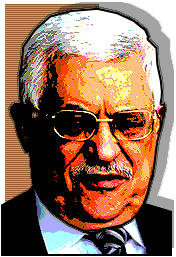
Guess what it took? A call to the PMA governor who called President Abbas 'who got the Israelis to call off their tank'.
So, my friend asked, how to we define terrorism? The American victim defined it by UN terms - intimidating, frightening, even murdering civilians to promote a political or ideological goal. Doesn't that pretty well define Israeli policy to Palestine, 'collective guilt' to force them to control their own terrorists, placing dozens of check points throughout the West Bank, or closing the border to day workers in Israel returning home if there's been a suicide bomb that day?
Or arresting and detaining Palestinians democratically-elected to their parliament, for the sin of representing Hamas, the ruling party? Or killing a thousand Lebanese women and children because Lebanon hasn't been tougher against Hezbollah? Or killing a PMA employee and her daughter walking down the street, in revenge for the detention of an Israeli soldier-hostage?
A safer neighbour
What should Israel be doing now with a Palestine-dominated by Hamas, a party that grew on its slogans of eliminating Israel? I suppose it's pretty much what the world should do with an Ireland whose IRA, a long-term terrorist organisation has now made peace with Britain.
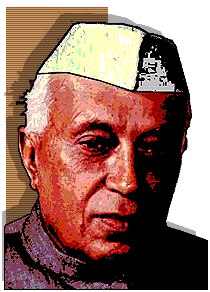
Or as with India, whose spiritual and political leader, Gandhi, Winston Churchill famously refused to receive. Later the last Viceroy (not to mention Vicereine), Lord Mountbatten, became so enamored with Nehru, the putative prime-minister to be, that India's independence was moved up a year leading to millions of casualties.
 It's the oldest truism - yesterday's terrorists are today's leaders, as every Israeli reading his own history books knows above all.
Like mostly all political movements anywhere, Hamas really simply wants to govern like any other political party and has separated itself from its militant wing. Doesn't Israel then have an interest in helping that government to succeed instead of cutting off the transfer of taxes it collects on Palestine's behalf?
A successful Palestine would be a safer neighbour for Israel. It is hard to focus on such seemingly obvious truisms when a UN resolution has authorised a ceasefire for Lebanon - and Israel has literally tripled the number of its occupying forces inside that country.
Of course that is an old ploy and tactic; the ceasefire hasn't legally come into force, and Israel wants as much leverage on the ground to apply against Hezbollah when the crucial moment comes. But it presents a pretty sorry picture for a country that should really want proper international standing and the respect of its potential friends.
Unpopular war
In fact, that's something I'd be concerned about were I affecting Israeli policy. The thousands gathering at the White House recently to protest the 'US-Israeli war' are harbingers of things to come.
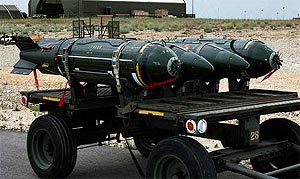
Hitherto, the American Israel Public Affairs Committee (Aipac) and its arms, so to speak, have made all the running within America. But this war has been so nakedly an American-Israeli affair on one side (with pictures daily of new American missiles and advanced cluster bombs being transferred to military bases for immediate use against Lebanon) that it has galvanised the sizeable Muslim-American community (in number almost as sizeable as that of Jews).
 Aipac and its friends can continue to pour vast sums into political campaigns (60 percent of soft funding in many key elections) and quietly continue to hold its hands on the levers of decision- making.
That might get more difficult with a war so unpopular. The election upset of Senator Lieberman -the most senior Jewish-American in office and a former vice-presidential running mate - wasn't an anti-Israeli affair (let alone an anti-Semitic one).
It was directed at his support for the vastly unpopular war in Iraq. But the fact that Aipac et al couldn't prevent it from happening is something new - and something to watch. More horror stories by Americans in Gaza, sitting in high places (or hiding on the car floor trying to get the protection they're due), also doesn't help.
And a self-respecting great power like the United States shouldn't permit a client state like Israel to dictate which of its citizens it can protect. Second class citizens indeed!
W SCOTT THOMPSON, presidential appointee in four American presidencies, is the author of 11 books on politics. He is adjunct professor at The Fletcher School of Law and Diplomacy, Massachusetts.


