



COMMENT | Dire need to address living conditions of migrant workers
COMMENT | The first confirmed Covid-19 case in Malaysia was on Jan 25, 2020. After several months of dedicated efforts, we flattened the curve, and on Jul 1, we witnessed one new case only, the lowest daily infection ever.
We were relieved and thought that the pandemic was over. However, due to the Sabah election, we found ourselves in an unfortunate situation of a new wave of Covid-19. Even after the decrease of new cases in Sabah, Peninsular Malaysia is witnessing a tremendous spike in Covid-19 cases and, this time around, it was found that migrant workers were the primary source of infection.
As affirmed by the World Health Organisation (WHO) and the International Labour Organisation (ILO), migrant workers are one of the highly vulnerable groups of people. Their vulnerability is exacerbated by their poor living conditions.
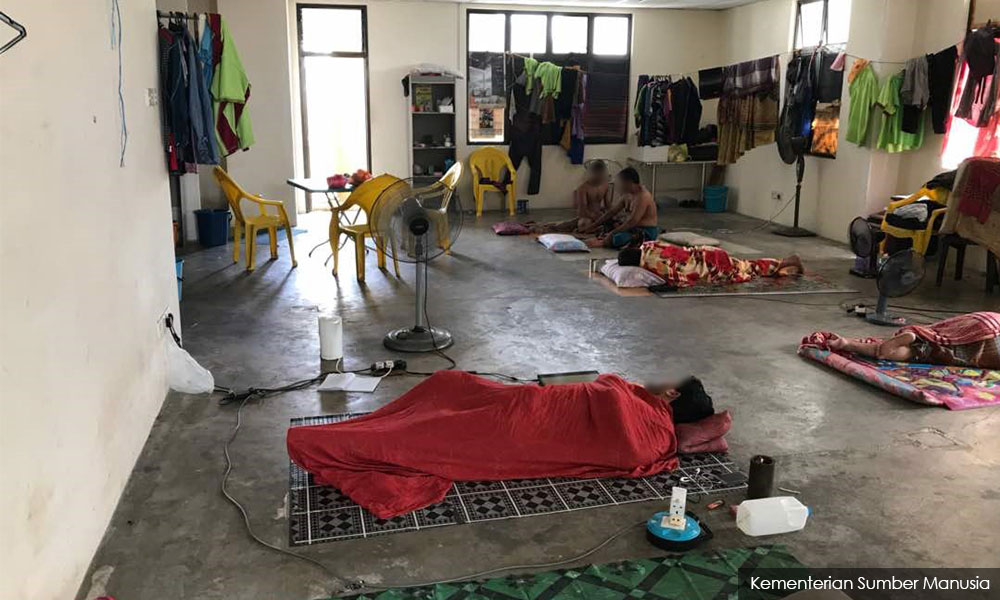
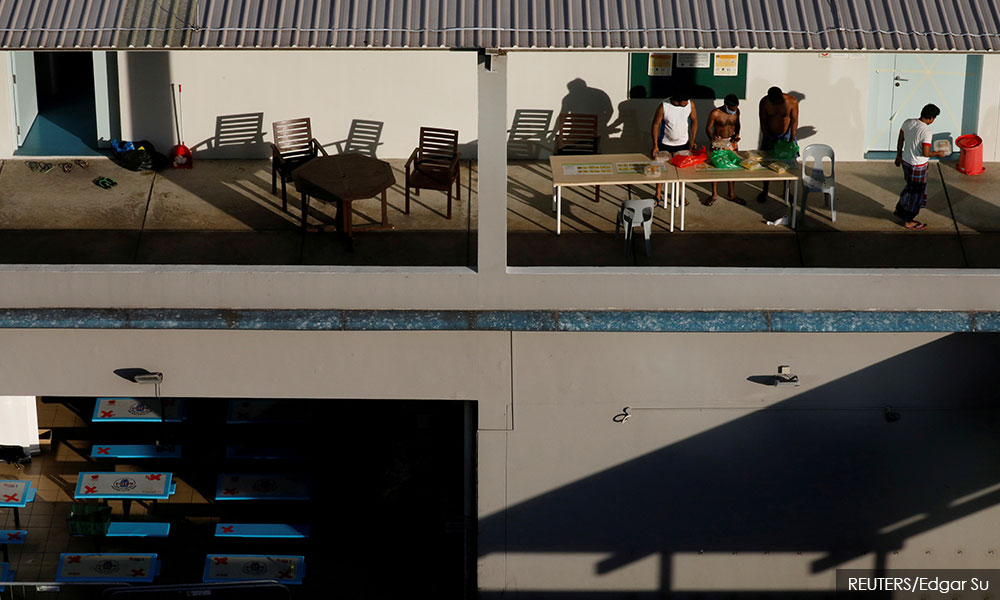
Migrant workers in huge industries normally live in dormitories which are cramped, with shared bathrooms and lack of basic sanitation. How can these dormitories guarantee hygiene standards and physical distancing that are required to prevent Covid-19?
This is actually not the worst-case scenario. They can be assumed to be lucky as they have at least proper accommodation for living.
For migrant workers in small industries, construction sites, or plantations, they would not even have proper accommodation. Many have to sleep on the upper floors of the factories or live in old warehouses or containers and other makeshift accommodations on work sites...
COMMENT | The first confirmed Covid-19 case in Malaysia was on Jan 25, 2020. After several months of dedicated efforts, we flattened the curve, and on Jul 1, we witnessed one new case only, the lowest daily infection ever.
We were relieved and thought that the pandemic was over. However, due to the Sabah election, we found ourselves in an unfortunate situation of a new wave of Covid-19. Even after the decrease of new cases in Sabah, Peninsular Malaysia is witnessing a tremendous spike in Covid-19 cases and, this time around, it was found that migrant workers were the primary source of infection.
As affirmed by the World Health Organisation (WHO) and the International Labour Organisation (ILO), migrant workers are one of the highly vulnerable groups of people. Their vulnerability is exacerbated by their poor living conditions.
Migrant workers in huge industries normally live in dormitories which are cramped, with shared bathrooms and lack of basic sanitation. How can these dormitories guarantee hygiene standards and physical distancing that are required to prevent Covid-19?
This is actually not the worst-case scenario. They can be assumed to be lucky as they have at least proper accommodation for living.
For migrant workers in small industries, construction sites, or plantations, they would not even have proper accommodation. Many have to sleep on the upper floors of the factories or live in old warehouses or containers and other makeshift accommodations on work sites.
The question that arises - is there any law applicable in Malaysia to address this issue? The answer is in the affirmative. The Universal Declaration of Human Rights (UDHR) recognises that “everyone has the right to a standard of living adequate for the health and well-being of himself and of his family, including housing and medical care.”
In furtherance to this basic human right, the ILO adopted Recommendation 115 (Workers Housing Recommendation, 1961).
Malaysia is a member state of the ILO. To materialise the objective of Recommendation 115, the Workers’ Minimum Standards of Housing and Amenities Act 1990 (Act 446) was enacted and it came into operation on Dec 1, 1990.
The objectives of the act are to prescribe the minimum standards of housing and nurseries for workers and their dependents and to require employers to provide health, medical, and social amenities.
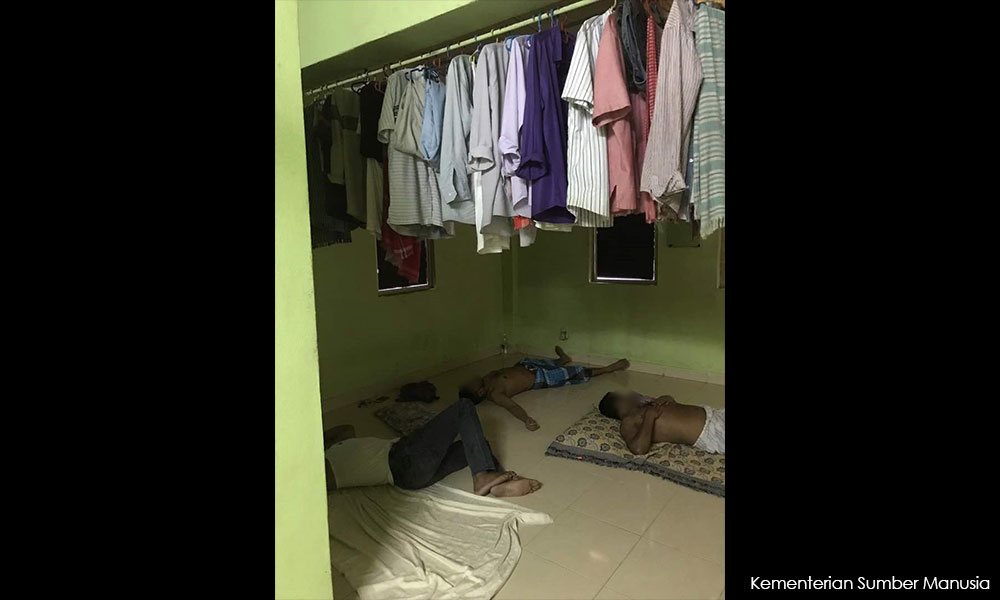
The following are, among others, the minimum standards of accommodation as required by the Department of Labour, Peninsular Malaysia:
- Sleeping space size or personal space of not less than three square metres per employee.
- Minimum of one toilet and one bathroom for 15 employees in a dormitory.
- Providing non-shareable items, e.g. bed, mattress, pillow, and locker.
- Providing common-use areas, i.e. kitchen, living room, toilet, and bathroom.
Under Act 446, any employer who fails to comply with the law may be liable for a maximum fine of RM5,000, depending on the offence, and a further daily fine of RM100 during which the offence continues.
It appears that the fine is too low and definitely not in a position to force employers to comply with the law. Just neglecting the law, many companies force their migrant workers to live in cramped and dirty conditions for years.
It is not enough that we have laws. What is more important is enforcement. Who has to enforce the law? According to Act 446, the responsible ministry is the Ministry of Human Resources and the responsible department is the Department of Labour.
The director-general has been entrusted with the power to inspect, investigate, issue summons, and prosecute. However, one may ask a question: after 30 years of enacting the law, how often does the Department of Labour inspect factories throughout the country and prosecuted companies and employers for non-compliance with Act 446?
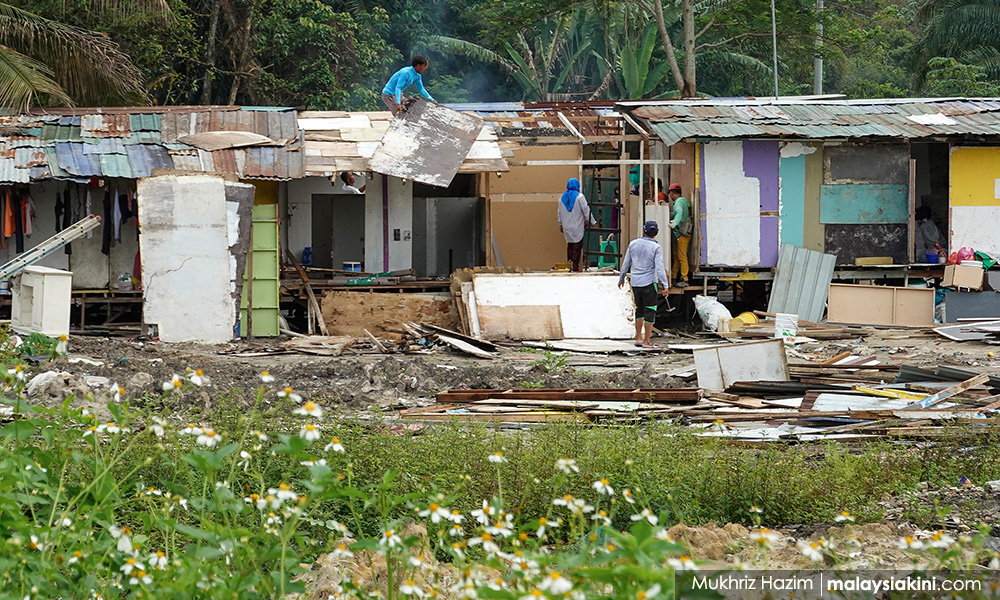
It is common knowledge that the enforcement of the law was barely minimal. It is also a clear indication that the inspections at workplaces are not adequate to be in compliance with the ILO Labour Inspection Convention, 1947 (Convention 81) to which Malaysia is a party.
Act 446 has recently been substantially amended by the “Workers’ Minimum Standards of Housing and Amenities (Amendment) Act 2019” (Act A1604).
Although Parliament has enacted the Amendment Act and it was gazetted on Sept 23, 2019, the respective ministry decided that the law would come into effect only on Jun 1, 2020.
Again the coming into force date has been extended to Sept 1, 2020, allowing for yet another three-month grace period for employers to make the necessary preparations and ensure compliance.
The 2019 amendment has narrowed down the territorial application of Act 446 from “throughout Malaysia” to “Peninsular Malaysia and the Federal Territory of Labuan.” Sabah and Sarawak are thus no longer included. It has been reported that Sabah and Sarawak will make corresponding laws in their respective Labour Ordinance.
The 2019 amendment has increased ‘10 times’ the amount of fine for all offences under Act 446. Even then, the maximum RM50,000 fine would be too low for a company like Top Glove.
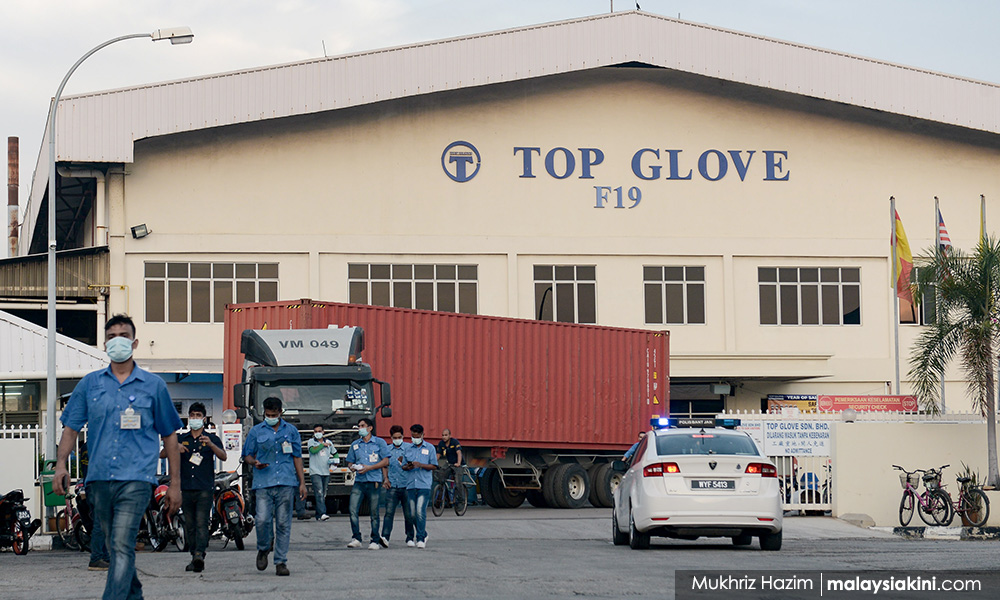
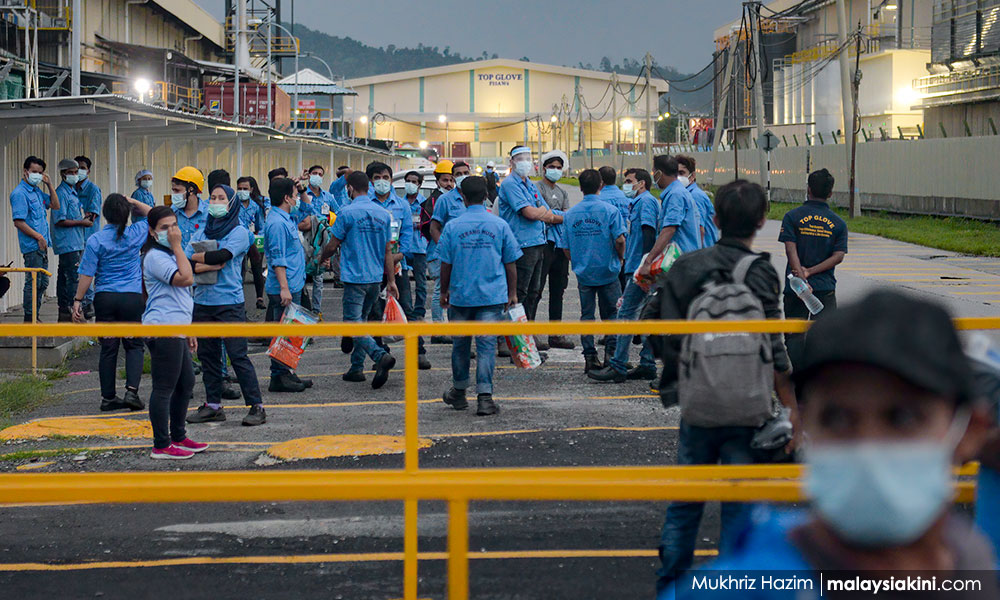
Top Glove is the world’s biggest latex glove manufacturer, which controls about a quarter of the world’s market, has an estimated 21,000 staff, and can produce 90 billion gloves a year.
The company recently announced its quarterly net profit as RM2.4 billion, a 20-fold jump. The primary reason for its rocket-high profit margin is the rush of many countries of the world to get gloves as protective gear against Covid-19.
There has been criticism that while on one hand, the company is profiting enormously, but on the other hand, the workers, the makers of the gloves, are suffering from poor living conditions that caused them to become victims of Covid-19 infections.
More than 5,000 Top Glove workers have tested positive so far. On Nov 24 alone 2,188 new Covid-19 cases were recorded, most linked to Top Glove.
As a consequence of the Top Glove scenario, the government has now been showing a green light to enforce the newly-amended Act 446. The human resources minister “announced 19 investigations into six Top Glove subsidiaries, mostly for failing to furnish migrant workers with proper housing, which could result in heavy fines.”
It was reported very recently that “the Ministry of Housing and Local Government had prepared a standard operating procedure (SOP) for construction firms applying to build temporary on-site housing for their workers following a spike in Covid-19 cases.” The main objective is to enhance the enforcement of Act 446 as amended in 2019.
The employers, however, appeal for more time, complaining that the law is a tough one to follow. They argue that “due to the pandemic their businesses are badly affected and they cannot afford to provide proper accommodation for their workers.”
On the other hand, labour law experts and the Malaysian Trades Union Congress (MTUC) hold a contrary view. They believe that “employers have had well over a year to get ready for those rules and urge the government not to succumb to any excuses from employers who do not comply as they have been given enough time to do so.”
MTUC strongly “calls on the Human Resources Ministry not to allow employers to cite financial drawbacks due to Covid-19 as a reason to delay the enforcement.”
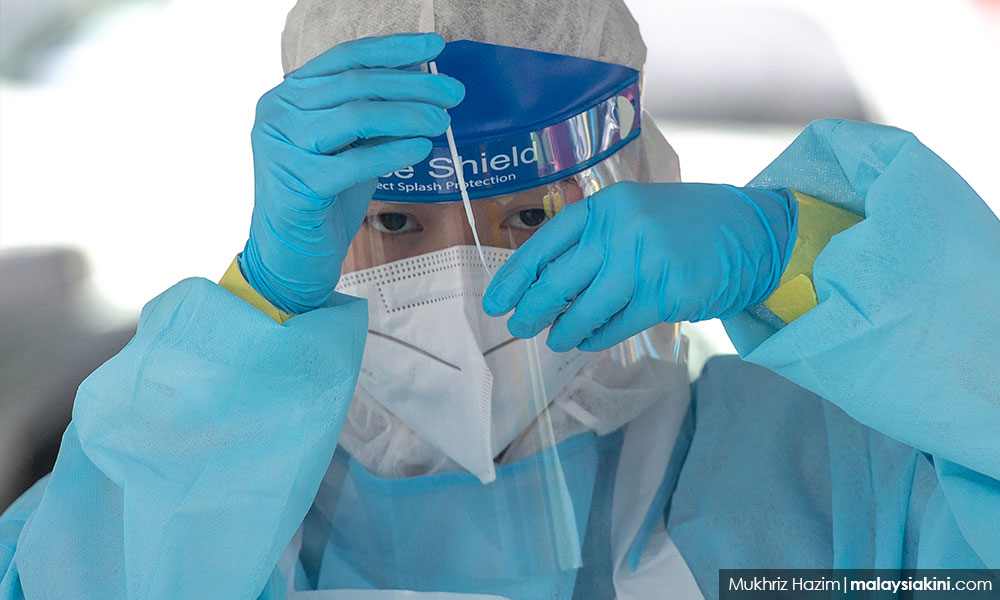
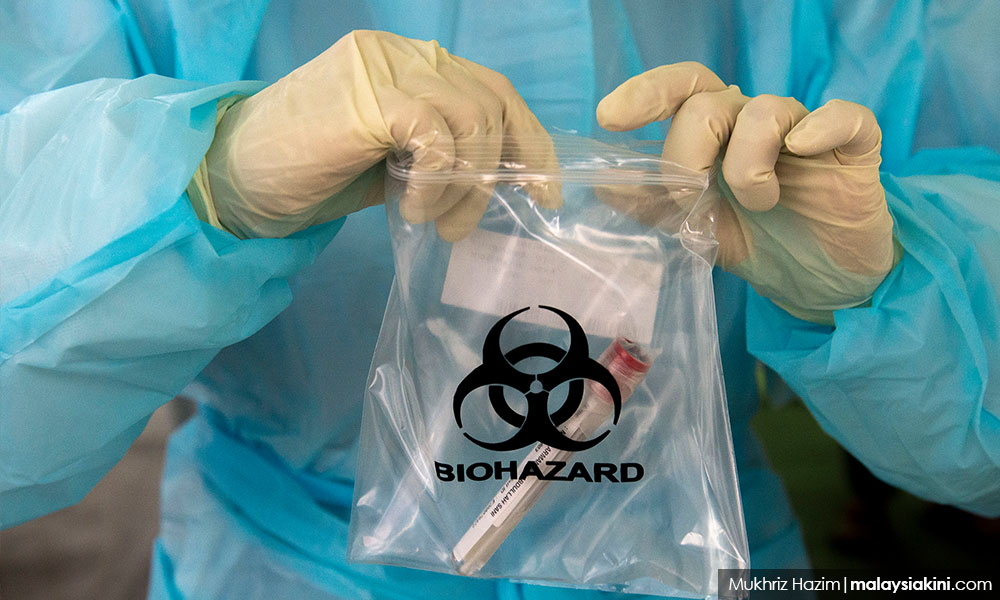
Health Ministry director-general Dr Noor Hisham Abdullah himself confirmed that “migrant workers' cramped and crowded living conditions were a major reason for transmission of Covid-19.”
The recent emergence of huge clusters among migrant worker dormitories is causing anxiety and we are concerned that these new infections will spread to our local community. Our concern is a valid one and at the same time, we cannot just neglect migrant workers merely because they are foreigners.
We can never win our battle against Covid-19 without flattening the curve of infections among migrant workers. We will need them during this pandemic and even after that as we need to rebuild our economy that has been severely affected. We will need them until the time when the local workforce can completely substitute them.
This is the time when the government needs to be resolute. Act 446 must be strictly enforced and if there are any genuine cases of employers who really cannot afford it, the government should use any appropriate funds from Budget 2021.
We have to resolve this issue once and for all and there cannot be any second chance because the rakyat does not want any more new waves of Covid-19.
We need the concerted efforts of the government, employers, workers, and of course the entire rakyat. With our unity, let us win the war against Covid-19!
ABDUL GHAFUR HAMID is a professor with the Ahmad Ibrahim Kulliyyah of Laws at the International Islamic University of Malaysia.
The views expressed here are those of the author/contributor and do not necessarily represent the views of Malaysiakini.


Report this comment
Are you sure you want to delete this comment?
This action cannot be undone.