



COMMENT | Fight against fake news starts with empowerment, not threats
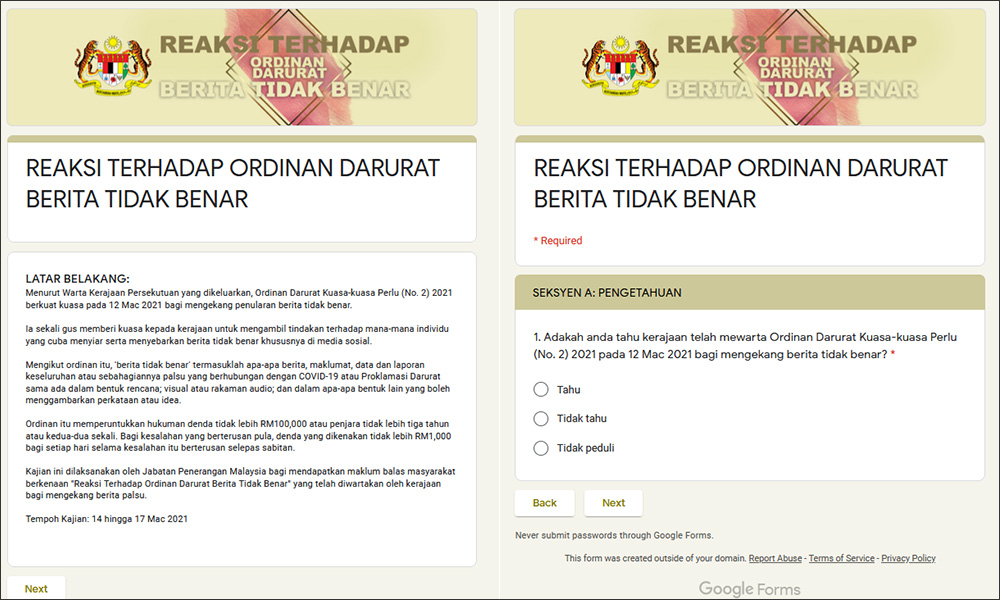
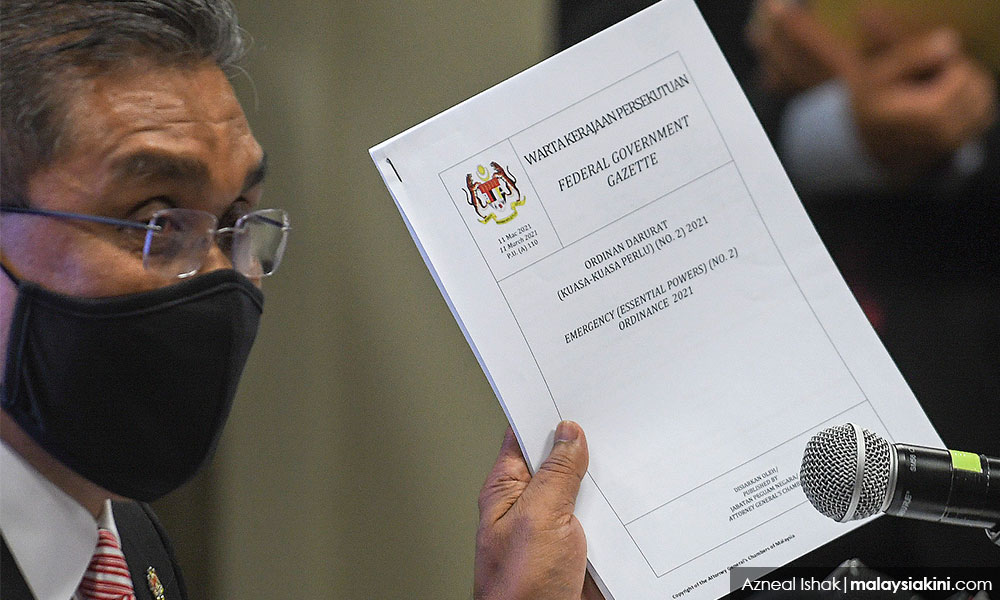
COMMENT | The government’s latest emergency ordinance to quell the spread of fake news regarding Covid-19 has sparked an outcry across Malaysia for its chilling effects on freedom of speech.
While using a very broad and arbitrary definition of fake news, the ordinance also includes wording that allows the government to “destroy” media outlets that host such fake news and seeks punitive actions against organisations that provide “funding”.
If the government were infallible and without reproach, then this could be seen as acceptable, but no government in the history of the world has had this status and in Malaysia’s case, even less so.
Regulations such as this are often deliberately worded in an abstract fashion to allow authorities to target individuals or organisations for punitive reasons. One need not look further than the recent contempt ruling against Malaysiakini (for the content they did not publish) to see how such a law can be used to target the media or anyone who is willing to keep the authorities accountable...
COMMENT | The government’s latest emergency ordinance to quell the spread of fake news regarding Covid-19 has sparked an outcry across Malaysia for its chilling effects on freedom of speech.
While using a very broad and arbitrary definition of fake news, the ordinance also includes wording that allows the government to “destroy” media outlets that host such fake news and seeks punitive actions against organisations that provide “funding”.
If the government were infallible and without reproach, then this could be seen as acceptable, but no government in the history of the world has had this status and in Malaysia’s case, even less so.
Regulations such as this are often deliberately worded in an abstract fashion to allow authorities to target individuals or organisations for punitive reasons. One need not look further than the recent contempt ruling against Malaysiakini (for the content they did not publish) to see how such a law can be used to target the media or anyone who is willing to keep the authorities accountable.
In 2021 alone, we have borne witness to clear indications of double standards between the Malaysian ruling elite and regular citizens: Federal ministers appear to ignore Covid-19 SOPs, with the most egregious being a deputy minister’s extended leave to travel abroad (that was sanctioned).
A whistleblower highlighting vaccine queue jumpers (including state administrators) resulted in a new ruling banning public servants from making public statements instead of guarantees to restore public confidence that queue-jumping will not happen.
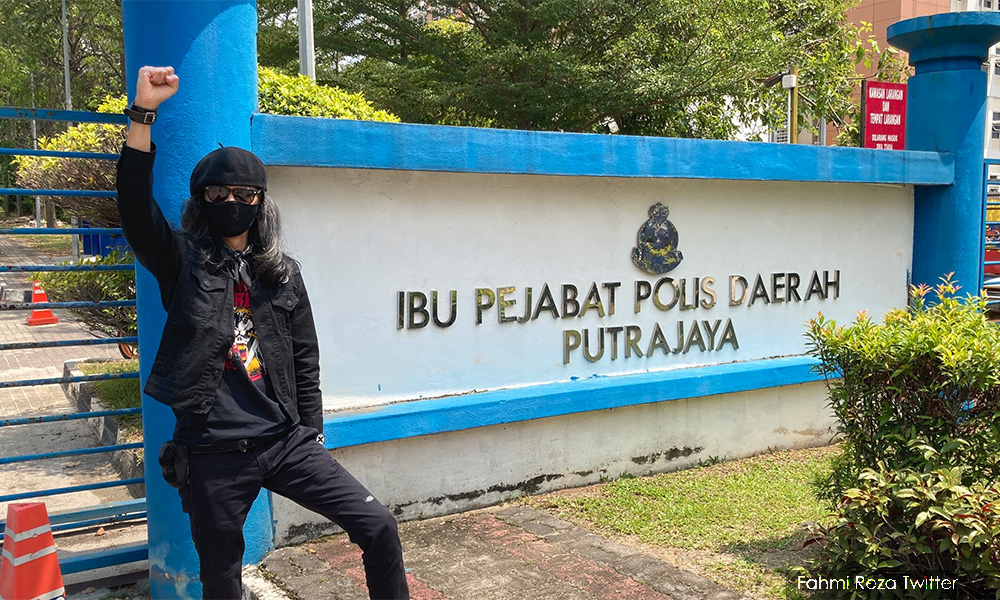
Finally, legal actions are being taken against famed cartoonist Fahmi Reza for exercising his freedom of speech to criticise politicians in satirical cartoons which raise questions about the fairness and objectivity of this government.
These actions do not instil strong confidence that the interpretation of “Covid-19 fake news” would be fair and not used to quell dissenting voices.
Instead of finding new ways to punish and persecute supposed offenders, efforts need to be made to empower Malaysians to become more resilient against fake news and political propaganda.
The assumption that the authorities are taking now is that members of the Malaysian public are akin to “sheep”, who are unable to discern fact from fiction and would blindly follow any exposure to information, no matter how absurd.
The Malaysian public instead needs to be given the right training, tools and individual capacity to determine for themselves the validity and accuracy of the news they are given. It should not be the government’s (nor any other organisation’s) role to tell you what is real or not, but people should be able to decide for themselves, given the proper training through media literacy.
Personal media literacy refers to an individual’s ability to critically assess and evaluate media information to determine if it is reliable or suspect. Sites like Sebenarnya.my shouldn’t be focused on “correcting” falsehoods - which perpetuates the idea that truth can only come from the government - but instead be an online resource to develop personal media literacy.
The trend of most organisations and political figures to dispute news by plastering the words “fake” or “palsu” on false information only adds to this idea that the eople don’t need to interrogate fake news, to understand why it was so believable, to begin with, and instead makes people only trust authority figures the moment they call something “fake”.
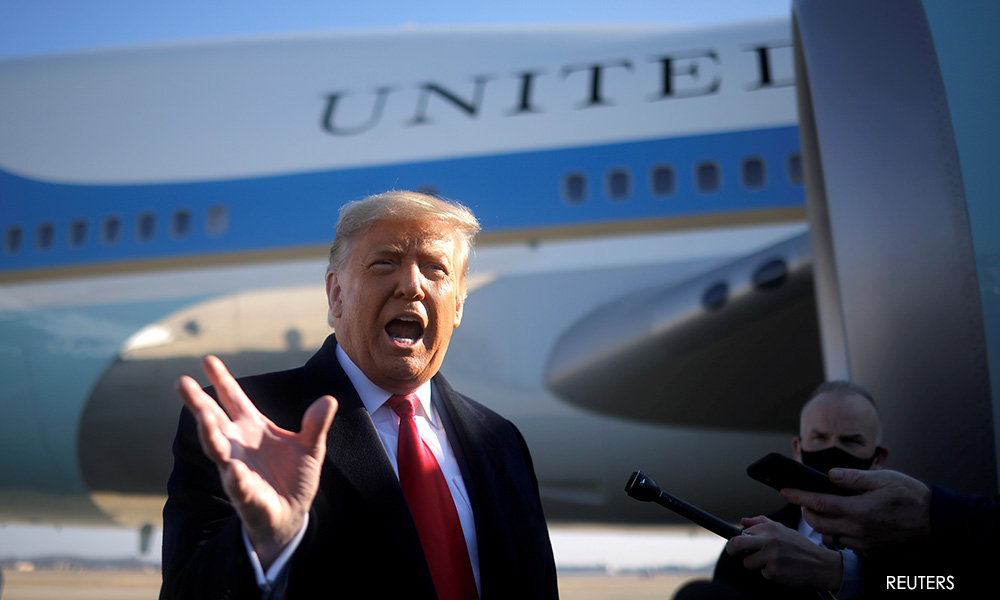
Former US president Donald Trump was incredibly effective at disenfranchising the media by simply calling news that was unfavourable to him fake, and it is a real shame to see similar practices here in Malaysia’s political space.
The current public discourse environment has become highly politicised, where truth is not judged based on facts but rather based on who delivers that information. News from politically congruent sources is always seen as trustworthy and everything else is seen with scepticism and paranoia.
This situation is further compounded by the influence of social media, where peer pressure and popular voices become amplified and further distort public perception.
The media as the fourth estate is currently under siege and is becoming too complex with numerous new entrants that have greatly compromised the space. The next step is for people to start becoming more independent and to be able to discern the quality of news on their own.
At the very least, this allows the people to engage with others in a healthy way as people can debate the merits of certain situations or information and not just disregard information or news simply because it was labelled as fake news or propaganda by non-objective parties.
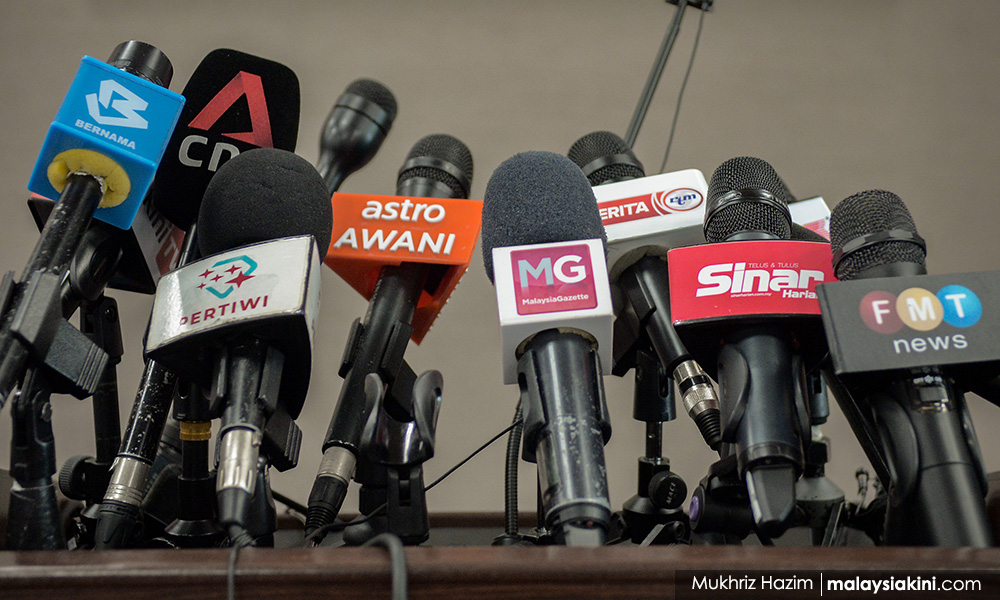
Malaysians across the board need to develop their own media literacy to protect themselves from being manipulated and to ensure they can be a constructive member of our democracy.
Simple things that everyone can easily adopt include stopping the habit of making snap judgments based on incendiary clickbait headlines or not naively trusting any infographic with bold claims. Articles need to be read properly first and critical thought needs to be exercised before blindly forwarding articles without interrogation.
The fight against fake news is a global pandemic in itself that many countries have lost. It is a highly complex problem, where some solutions can exacerbate rather than address it.
This emergency ordinance is a clear example of the former and the government instead needs to focus its efforts on developing critical thinking and deliberation among Malaysians instead.
Incorporate media literacy into our education curriculum, provide online resources for people to learn and understand how to verify fake news and empower the media themselves to protect against nefarious and insidious perpetrators of fake news.
BENJAMIN YH LOH is a senior lecturer at the School of Media & Communication, Taylor’s University.
The views expressed here are those of the author/contributor and do not necessarily represent the views of Malaysiakini.


Are you sure you want to delete this comment?
This action cannot be undone.