



COMMENT | Communists and Stalin favoured to win in the lands of my ancestors
COMMENT | In the southern tip of India is a town called Kanyakumari. It also happens to be located near the border between the states of Tamil Nadu and Kerala. Coincidentally both sides of my family hail from within 100km of that southern tip.
My Malayalee Catholic maternal side originates from small coastal villages between Kanyakumari and Kerala’s state capital Trivandrum while my father’s Brahmin family has roots in Thirunelveli in Tamil Nadu.
That might go some way towards explaining why I’m casting an eye towards India as state elections kick off this week in the two states as well as the union territory of Puducherry. State elections in far-flung Assam and West Bengal are also underway in the world’s largest democracy.
Mind you, given its size and the current Covid-19 pandemic, polling will be carried out over the course of a few weeks and results may not be known until May. Tamil Nadu alone has 62.6 million registered voters and West Bengal has a population of around 100 million!
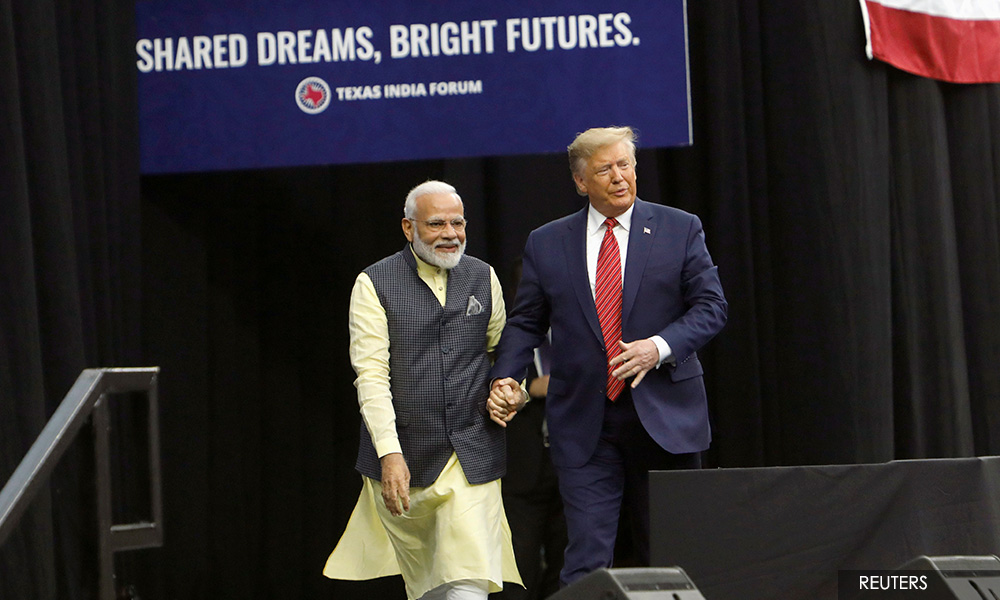
Aside from fatigue with our own political merry go rounds, I admit to having always cast an eye on the colourful world of Indian politics. What’s interesting about Kerala and Tamil Nadu is that the all-conquering Bharatiya Janata Party (BJP) of Prime Minister Narendra Modi has yet to make a serious dent in either state.
Indeed both Kerala and Tamil Nadu have a history of alternating governments – but not quite the sort you might expect...
COMMENT | In the southern tip of India is a town called Kanyakumari. It also happens to be located near the border between the states of Tamil Nadu and Kerala. Coincidentally both sides of my family hail from within 100km of that southern tip.
My Malayalee Catholic maternal side originates from small coastal villages between Kanyakumari and Kerala’s state capital Trivandrum while my father’s Brahmin family has roots in Thirunelveli in Tamil Nadu.
That might go some way towards explaining why I’m casting an eye towards India as state elections kick off this week in the two states as well as the union territory of Puducherry. State elections in far-flung Assam and West Bengal are also underway in the world’s largest democracy.
Mind you, given its size and the current Covid-19 pandemic, polling will be carried out over the course of a few weeks and results may not be known until May. Tamil Nadu alone has 62.6 million registered voters and West Bengal has a population of around 100 million!
Aside from fatigue with our own political merry go rounds, I admit to having always kept an eye on the colourful world of Indian politics. What’s interesting about Kerala and Tamil Nadu is that the all-conquering Bharatiya Janata Party (BJP) of Prime Minister Narendra Modi has yet to make a serious dent in either state.
Indeed both Kerala and Tamil Nadu have a history of alternating governments – but not quite the sort you might expect.
Back in 1957, Kerala’s electorate ushered in a democratically-elected Communist Party of India government under EMS Namboothiripad, and while it only lasted two years, Kerala has since alternated between Congress party administrations and Communist ones. Communist chief ministers like Namboothiripad, Achutha Menon, PKV Nair, EK Nayanar and VS Achuthanandan all took office through winning at the polls and stepped down when shown the door by the electorate.
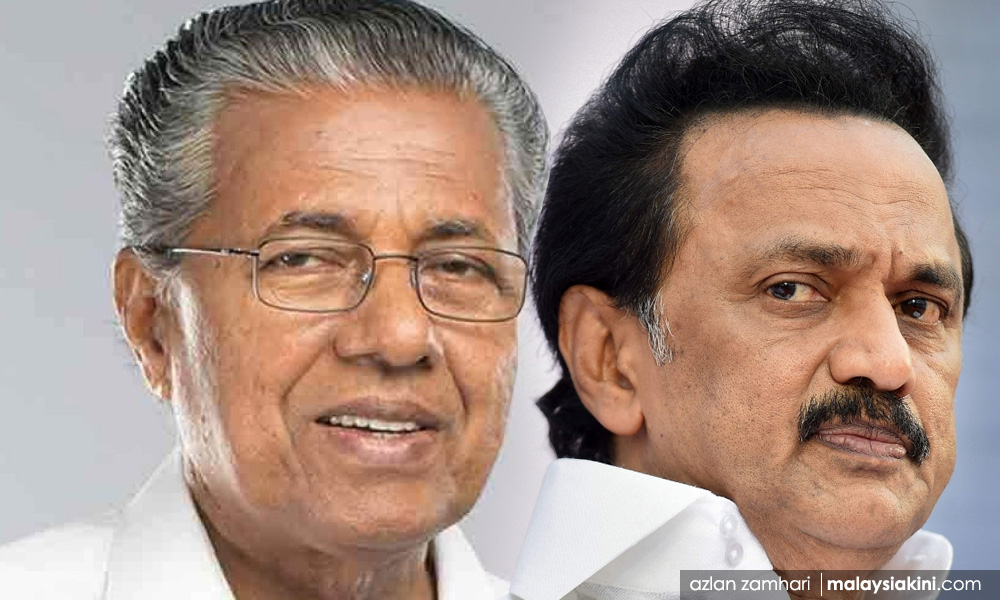
Current Chief Minister Pinayari Vijayan (above, on the left) is perhaps best known in Malaysia for his strong physical resemblance to former prime minister Dr Mahathir Mohamad, but he is also poised to break the trend of Kerala switching back and forth between the two parties.
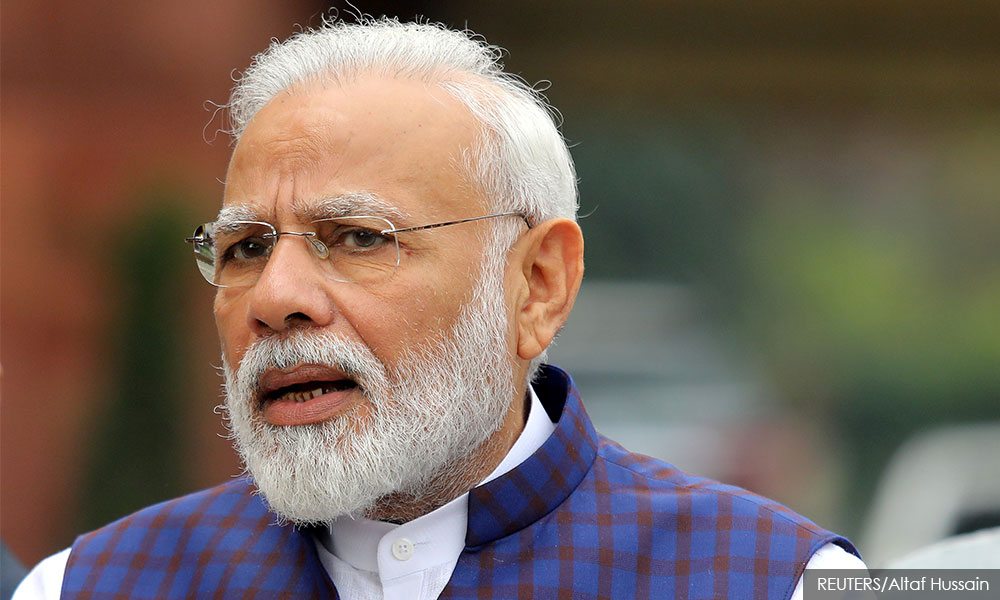
In the previous polls held in May 2016, the Communist-led Left Democratic Front triumphed with 91 out of the 140 available seats, while Congress’ coalition the United Democratic Front scored 47 seats and BJP’s alliance got just one seat.
It’s true that the Hindu nationalist party of Modi is making tiny inroads into Kerala, as shown by last year’s local elections, but it still is unlikely to win more than a handful of seats. Despite the optimism of Modi’s federal Home Minister Amit Shah and prominent Congress leader Shashi Tharoor, opinion polls predict another win for the Communists, albeit with a reduced majority.
This should be due in part to the fact that Kerala stands first in Human Development Index among the 36 states and territories in India. Communist Minister of Health and Social Welfare KK Shailaja has also been lauded by the United Nations for her handling of Covid-19 in the state.
Kerala also boasts India’s highest literacy rate, highest life expectancy and is second-lowest in terms of the number of people living below the poverty line. One can’t help but wonder what Malaysian anti-Communists such as the PAS president would make of such figures which compare favourably to states and countries ruled by Islamic fundamentalist parties.
Across the border, Tamil Nadu is preparing for a seismic change.
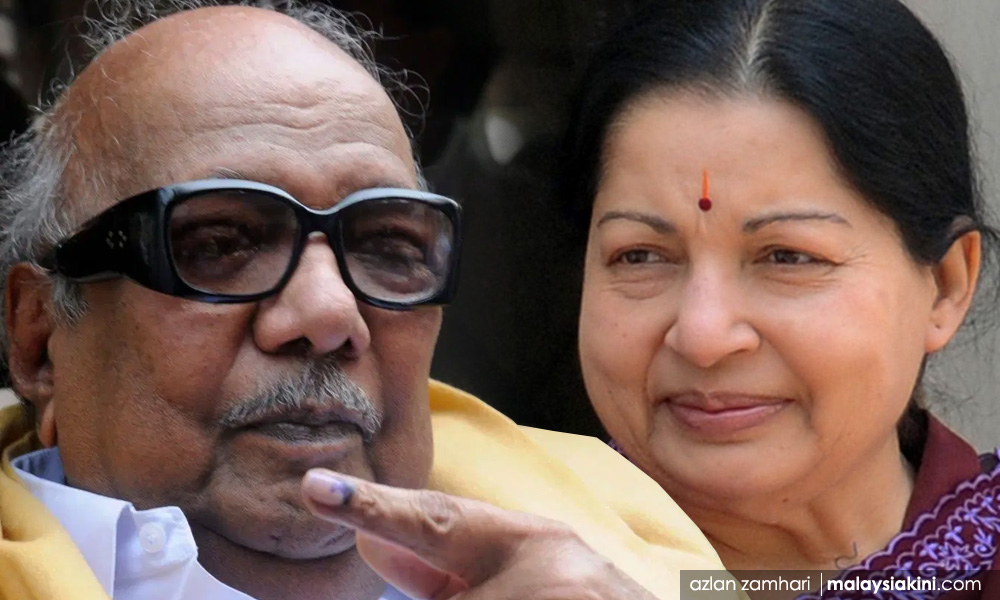
For many decades two sister parties turned bitter rivals, the Dravida Munnetra Kazhagam (DMK) and the incumbent All India Anna Dravida Munnetra Kazhagam (AIADMK), have also played musical chairs with the chief minister’s seat. However, the iconic leaders of each party - K Karunanidhi and J Jayalalithaa respectively, have both passed away since the last election.
The fact that each was associated with legendary actor MG Ramachandran, himself a former chief minister, gives you an idea of the power of cinema on the Tamil psyche. Karunanidhi, who served more than 18 years as chief minister over five separate spells, wrote movie scripts for both MGR and Sivaji Ganesan, while Jayalalithaa, who racked up 14 years in the hot seat, was MGR’s leading lady.
Honestly, despite their devoted following, each was tainted by accusations of graft and nepotism and I for one, am a bit relieved to see Tamil Nadu moving beyond entrenched elderly politicians who don’t want to leave the stage – and wouldn’t mind that here either!
The incumbent chief minister is EK Palaniswami of the AIADMK but there is every indication that a DMK-led alliance will come sweeping back to power under the leadership of Karunanidhi’s son and political heir MK Stalin (top picture, on right).
Yes, you heard that right. Stalin.
Stalin looks like a macha (in Tamil, literally brother-in-law, but can also mean ‘buddy’) but he was given the name of the former Soviet dictator because he was born in the first week of March 1953, which is also when Joseph Stalin died.
My friend Sreedhar is one Tamil Nadu voter who has had enough of the DMK/AIADMK duopoly and wants to see the BJP become a force in the state. He’s volunteering for the party’s campaign and told me why he’s passionate about Modi’s leadership.
“I like BJP s ideology and Hindutva (Hindu nationalism) ideas. The Congress Party ruled at the federal level but they were so corrupt. They hid many truths and had many scams and no development. In fact, they were ready to sell the country,” he says.
Sreedhar believes that since Modi took over as PM in 2014, India has enjoyed significant development and less corruption.
“This is through positive thinking and actions,” he told me.
Sreedhar also backed Modi’s controversial demonetisation move in 2016, saying while initially unpopular, it had led to a great increase in foreign reserves. He dismissed the idea that Modi was being outmanoeuvred by China in regional politics due to China’s involvement in the economic development of Sri Lanka and Nepal.
Sreedhar echoed the BJP party line on the issue of India’s widespread farmers’ protests, saying that they were not genuine protesters. The initial agitation was dominated by farmers from Punjab, who are mostly Sikhs, and the BJP has suggested that the movement was a conspiracy hatched by Sikh separatists.
Acknowledging that it was a tall order for BJP to win in Tamil Nadu, he was nonetheless sure of an improved performance from five years ago, when BJP contested all 234 seats in the state and won none of them.
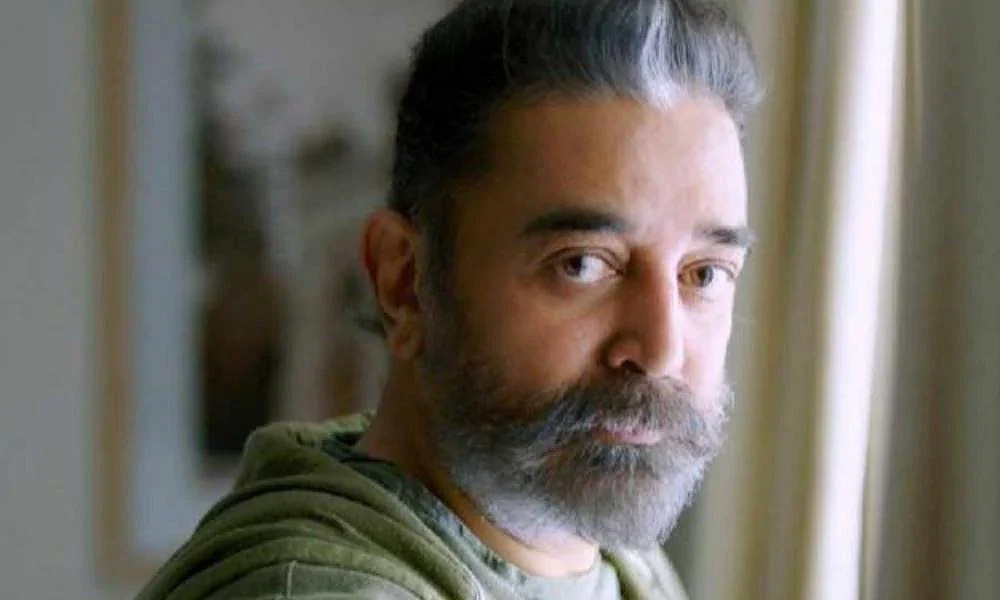
Like many, Sreedhar feels that actor Kamal Haasan’s foray into politics with Makkal Needhi Maiam is only going to have a spoiler effect.
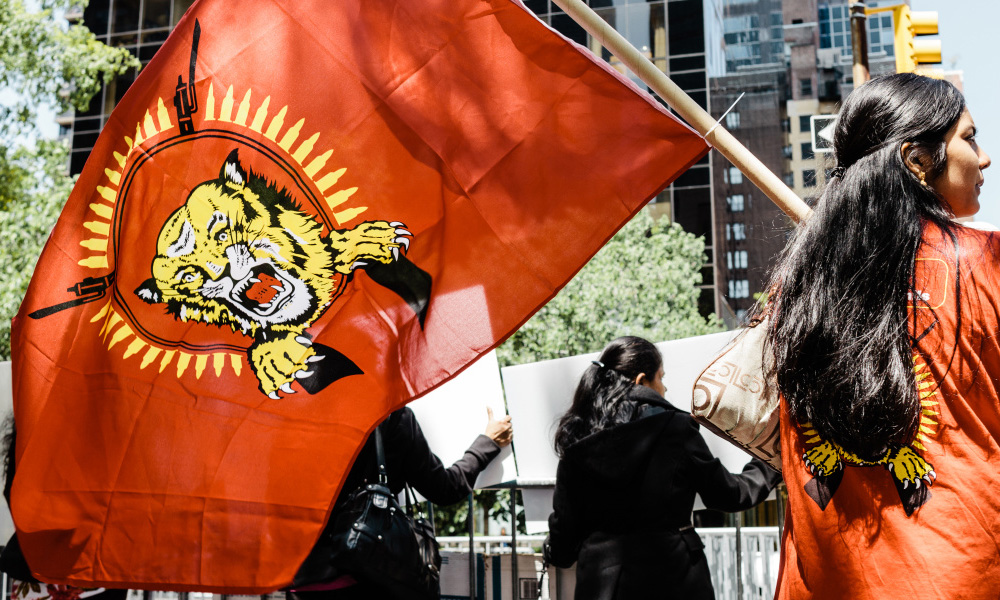
The same is likely for Makkal Munnetra Kazhagam (AMMK) which is led by TTV Dhinakaran – the nephew of Jayalalithaa’s designated heir VK Sasikala whose attempt to consolidate power was thwarted by a jail sentence. The controversial Naam Tamilar Katchi, which plays on sentimental support for the long-defunct LTTE group in Sri Lanka, is expected to be another also-ran.
MARTIN VENGADESAN is an associate editor with Malaysiakini.



Report this comment
Are you sure you want to delete this comment?
This action cannot be undone.