
LEADERSHIP | Stop being your own worst enemy
LEADERSHIP | While conducting numerous workshops on self-esteem over the last three decades, I have come across many participants who regarded themselves as being incompetent, inadequate or unlovable.
One senior manager rejected an offer to be the CEO of a leading Malaysian insurance company because he “perceived himself” as not being competent enough to lead the company effectively. He became a victim of self-doubt and never optimised his true potential.
Another “victim” of low self-esteem was an attractive, 25-year-old woman who stood 152 centimetres tall. She lacked self-acceptance due to her belief that she was “too short”. This belief resulted in her viewing herself erroneously as being “unattractive”. Due to this faulty self-image, she never fully portrayed her positive personality traits and also shied away from men.
There were other participants who disliked themselves for being dark-skinned, being overweight, bald, or having hairy legs and...
LEADERSHIP | While conducting numerous workshops on self-esteem over the last three decades, I have come across many participants who regarded themselves as being incompetent, inadequate or unlovable.
One senior manager rejected an offer to be the CEO of a leading Malaysian insurance company because he “perceived himself” as not being competent enough to lead the company effectively. He became a victim of self-doubt and never optimised his true potential.
Another “victim” of low self-esteem was an attractive, 25-year-old woman who stood 152 centimetres tall. She lacked self-acceptance due to her belief that she was “too short”. This belief resulted in her viewing herself erroneously as being “unattractive”. Due to this faulty self-image, she never fully portrayed her positive personality traits and also shied away from men.
There were other participants who disliked themselves for being dark-skinned, being overweight, bald, or having hairy legs and hands.
Take heed that low self-esteem can negatively impact virtually every aspect of your life, including self-acceptance, self-actualisation (optimising one’s potential), level of personal happiness, resilience, job performance, psychological wellbeing, health and interpersonal relations.
Hence, stop sabotaging yourself and being your own worst enemy by being a victim of low self-esteem. Regardless of your experiences, age or upbringing, you can build your self-esteem.
Enhancing self-esteem model
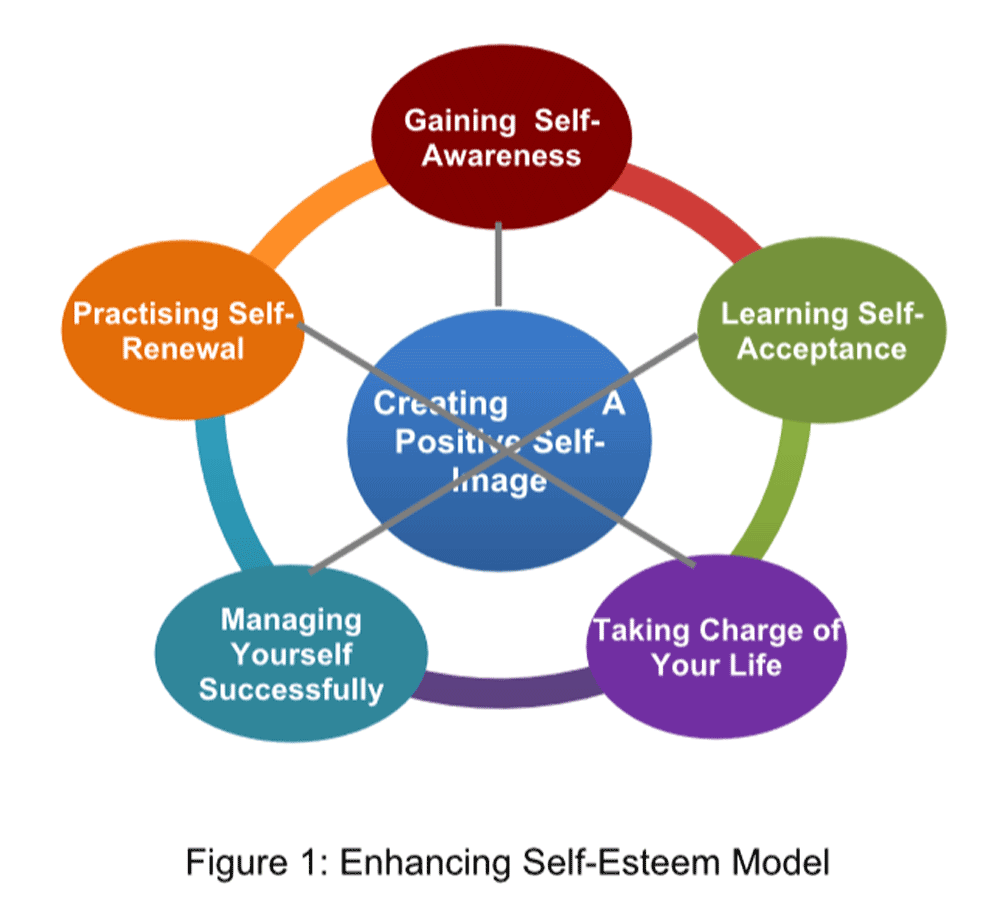
Based upon my extensive literature research and interactive experiences with thousands of workshop participants, I have developed a five-step model for building and maintaining high self-esteem (see Figure 1) with “Creating a Positive Self-Image” being the core of it.
Creating a positive self-image forms the core of the Enhancing Self-Esteem Model because as an adult, your level of self-esteem is primarily determined by your mental picture of yourself. Self-esteem is primarily an inside job; it is shaped by your beliefs about yourself.
In the words of Anton Chekhov, “Man is what he believes.” Simply put, your battles in life are won or lost in your mind. To enhance self-esteem, you need to transform your self-limiting beliefs into empowering beliefs.
The first step in enhancing your self-esteem is gaining self-awareness. All personal change begins with self-awareness which throws light on your existing beliefs and behaviour. You need to understand why you think and act the way you do. For example, to what extent are your current beliefs shaped by the judgements made by significant others - your parents, teachers or your close friends?
More importantly, self-awareness enables you to break free from the chain of erroneous beliefs through “enlightenment” or seeking the truth. One of the major causes of low self-esteem is irrational or wrong beliefs. Are your beliefs based on reality or are they the product of past negative conditioning?
Self-awareness also enables you to take inventory of your strengths which helps to increase your self-esteem and open new horizons to be scaled.
The second step is learning self-acceptance, which is a prerequisite for enhancing your self-esteem. Self-acceptance is basically respecting or loving yourself whilst acknowledging your shortcomings or limitations. It also involves accepting what you cannot change.
The third step is taking charge of your life by assuming self-responsibility, which promotes the feeling that you are competent to live and are worthy of happiness. To take charge of your life, you need to develop a personal mission statement; establish goals; formulate action plans to achieve your goals; and base your actions on self-chosen values.
The fourth step is managing yourself successfully. In this regard, you need to execute your action plans; review progress towards attainment of your goals and take corrective action if necessary; manage time successfully; practise self-discipline; and maintain resilience.
The fifth and final step is practising self-renewal, which helps to maintain or strengthen your level of self-esteem. In the mental dimension, you should commit yourself to think rationally and becoming a lifelong learner. Physically, you need to maintain physical fitness through proper nutrition, regular exercise and adequate rest.
With regard to the social dimension, you should establish good interpersonal relations with others, which will help you to fortify your self-esteem. Spiritually, you should maintain faith in yourself and in God, which provides hope and inspiration in moments of doubt and despair.
10 tips for enhancing self-esteem
1. Discover your true self. What are your inner thoughts and feelings? What are your strengths and weaknesses? Where are you headed in life? What does “success” mean to you?
2. Make a list of what you like about yourself. Recognise and appreciate your abilities and positive personality traits. Learn to love and accept yourself as you are. Improve your personal appearance by dressing differently, losing weight or changing your hairstyle. Accept gracefully what you cannot change.
3. Do not compare yourself unfavourably with others. You are unique. Count your blessings such as good health and a loving spouse instead of wallowing in self-pity. Never belittle yourself. Accept compliments with a “thank you” and a smile. Do your best with what God gave you!
4. Reengineer yourself. Identify and discard false beliefs about yourself. Many people have become their own worst enemy by accepting negative inputs from others as the gospel truth. Visualise success in your career and other aspects of your life. Success is 80 percent attitude and 20 percent aptitude. Have and reflect a positive attitude of “I can do it”. Never underestimate your abilities. Overcome your fears by doing exactly what you fear. Don’t worry about things beyond your control. Have faith in God and hope for the best.
5. Accept 100 percent responsibility for your life. Make a firm decision to change for the better. Avoid blaming others, fate or luck for your state of affairs. Be proactive; make things happen. Determine your long-term and short-term goals. Goals should be specific, measurable, attainable, relevant to your personal mission, and time-bounded. Base your actions on self-chosen values, not circumstances. Celebrate your accomplishments and successes.
6. Let go of perfectionism. No one is perfect. Give yourself the freedom to fail because perfectionists never feel “good enough”. Avoid having unreasonable expectations of yourself and others. Avoid labelling yourself or indulging in self-criticism.
7. Let go of your negative past and look to the future. Treat mistakes and failures as learning experiences or stepping stones to subsequent success. Avoid saying “I can’t do it”. Say instead, “I haven’t been able to do it up till now!” Be courageous and dare to take calculated risks.
8. Wake up happy. Start the day with positive thoughts. Associate with high achievers and friends who are nourishing. Avoid ‘negaholics’. Ignore any unkind or unjustified comments made by others about you. Unkind remarks are often compliments in disguise or mere manifestations of envy as reminded by Dale Carnegie that no one ever kicks a dead dog. Develop a good sense of humour.
9. Review progress towards attainment of your goals and take the necessary corrective action. Be flexible and adapt well to changes in your life. Maintain perseverance and self-discipline. Read inspirational literature when you are feeling down. Take heed of Robert Schuller’s reminder: “Tough times never last; but tough people do.”
10. Lead a balanced life and seek continuous self-improvement. Maintain your health through proper nutrition, exercise and sufficient rest. Read at least one new book every month and be open to new ideas. Accept constructive criticism as one often stops learning and improving without it.
To conclude, your level of self-esteem is greatly dependent on your self-image which is shaped by your dominant beliefs. When your self-image is adequate and intact, you develop feelings of self-competence and personal worth. Hence, stop sabotaging yourself by being a victim of negative self-image and low self-esteem. Make the commitment to transform your self-sabotaging beliefs into empowering beliefs which will ultimately result in greater success in all areas of your life.
Go for it - NOW!
RANJIT SINGH MALHI is a widely-quoted authority on self-leadership, peak performance and soft skills. He has written six books on personal excellence, soft skills and management, three of which have been translated into Arabic.
The views expressed here are those of the author/contributor and do not necessarily represent the views of Malaysiakini.