


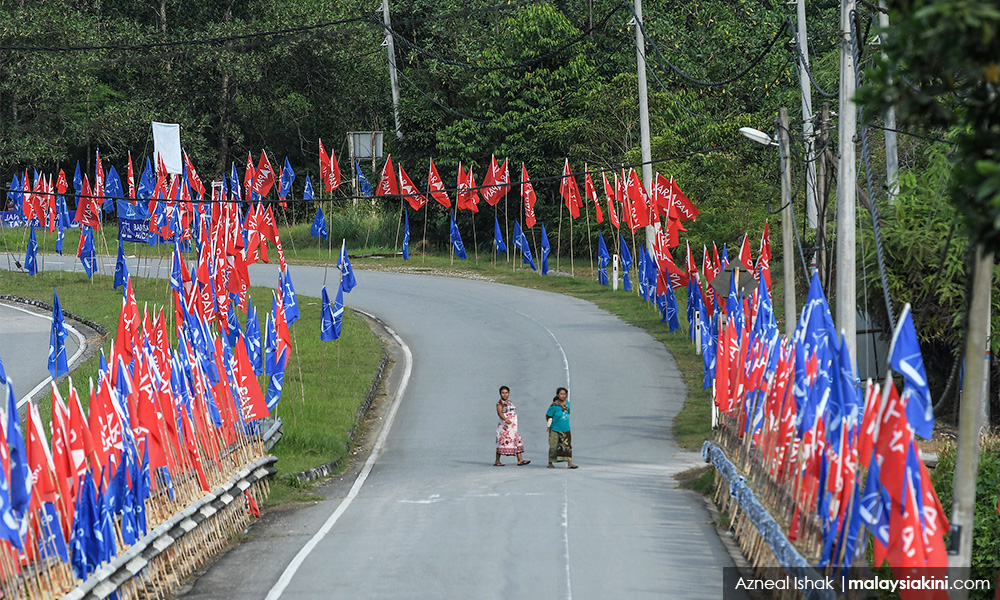

COMMENT | Voter education key to reducing rejected ballots among Orang Asli
COMMENT | From the detailed studies as explored in the first part of this special report, strong evidence has emerged for the relationship between rejected votes and Orang Asli majority areas.
Hence, this should open the discussion of the reasons underpinning the issue and solutions to remedy them.
1. Low literacy rate
From interviews with political workers and activists who frequently interact with the Orang Asli community including PSM secretary-general Sivarajan Arumugam, Pusat Komas’ Faribel Fernandez, Jaringan Orang Asal SeMalaysia activist Yusri Ahon and DAP’s Tanah Rata assemblyperson Chiong Yoke Khong, their answers share a common theme - Orang Asli communities have a low literacy rate.
Man Bakar, village head of Kampung Paya Lintah which is an Orang Asli village in the Jerantut parliamentary constituency of Pahang, echoed similar sentiments.
"That's because they don't know...
COMMENT | From the detailed studies as explored in the first part of this special report, strong evidence has emerged for the relationship between rejected votes and Orang Asli majority areas.
Hence, this should open the discussion of the reasons underpinning the issue and solutions to remedy them.
1. Low literacy rate
From interviews with political workers and activists who frequently interact with the Orang Asli community including PSM secretary-general Sivarajan Arumugam, Pusat Komas’ Faribel Fernandez, Jaringan Orang Asal SeMalaysia activist Yusri Ahon and DAP’s Tanah Rata assemblyperson Chiong Yoke Khong, their answers share a common theme - Orang Asli communities have low literacy rate.
Man Bakar, village head of Kampung Paya Lintah which is an Orang Asli village in the Jerantut parliamentary constituency of Pahang, echoed similar sentiments.
"That's because they don't know who to vote for," the 67-year-old shared when met at his village.
"For those who have voted in a few elections, there are not too many issues. The problem lies with illiterate people - some even find it difficult to mark their ballot papers."
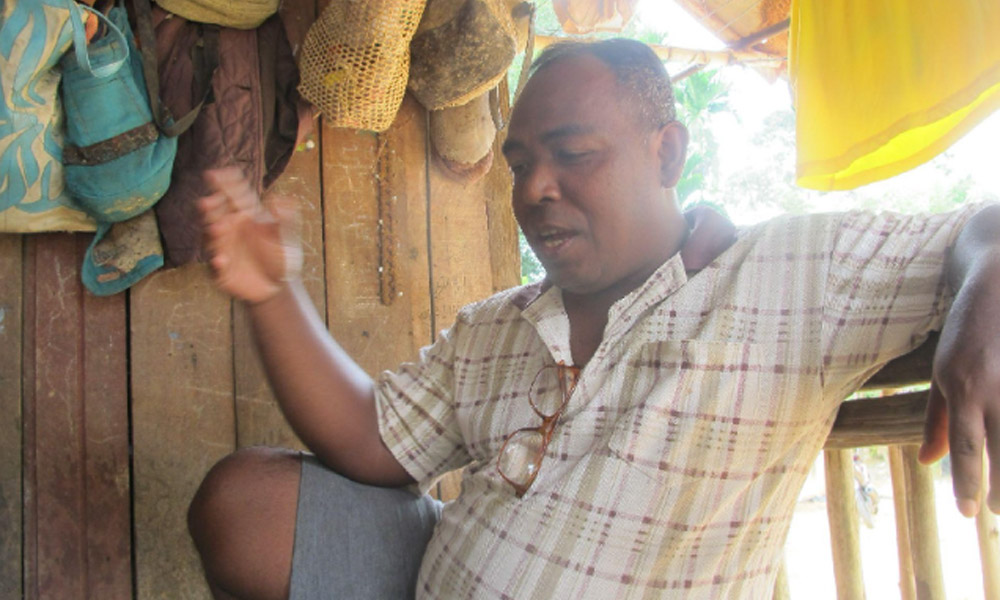
The village, a 20-minute drive from Jerantut town along paved roads, houses 28 voters who have voted in two or more elections. There are approximately 30 voters who will be voting for the first time in the upcoming general election.
In an interview with Sivarajan, he shares that the high illiteracy rate has not prevented younger Orang Asli generations from being involved with the challenges faced by their communities.
For example, Orang Asli communities worked with PSM to review the Telom hydroelectric dam project in Pos Lanai (Cameron Highlands parliamentary seat in Pahang) that would potentially displace 400 families in the area. In fact, the data shows that the rejected vote rate (RVR) has dropped among young Orang Asli voters.
Chiong agreed with this observation. He believed that the younger generation is more aware of external parties' outreach efforts. Still, Chiong shares that the older generation may not be aware or lack the motivation to engage with these efforts that are directed to improve voter education in these communities.

2. Poor voter education
As a former polling and counting agent, Yusri had experience in conducting campaigns about voter education among the Orang Asli communities.
"Before the (2018 general election), I conducted a workshop titled ‘Mari Mengundi’ (Let's Vote) to improve voter awareness and voter education," Yusri shared in an interview.
"I just wanted to see if their votes were (valid) or not. When I asked if they knew how to vote, specifically the older voters, they noted that they know how to vote."
Yusri also shared that poor voting practices can be challenging to remedy, especially among the older Orang Asli voters, due to a strong sense of respect for elders within the Orang Asli communities.
Abu Libut, a local in Kampung Sungai Kiol (Jerantut parliamentary constituency in Pahang), shares that Orang Asli voters also learn to vote through experience and not necessarily through voter educational campaigns.
Even when campaigns are hosted in the village, these voters may be confused by the instructions; naturally, the Orang Asli community are sceptical of the campaigns that are held by political parties.
3. Protest vote
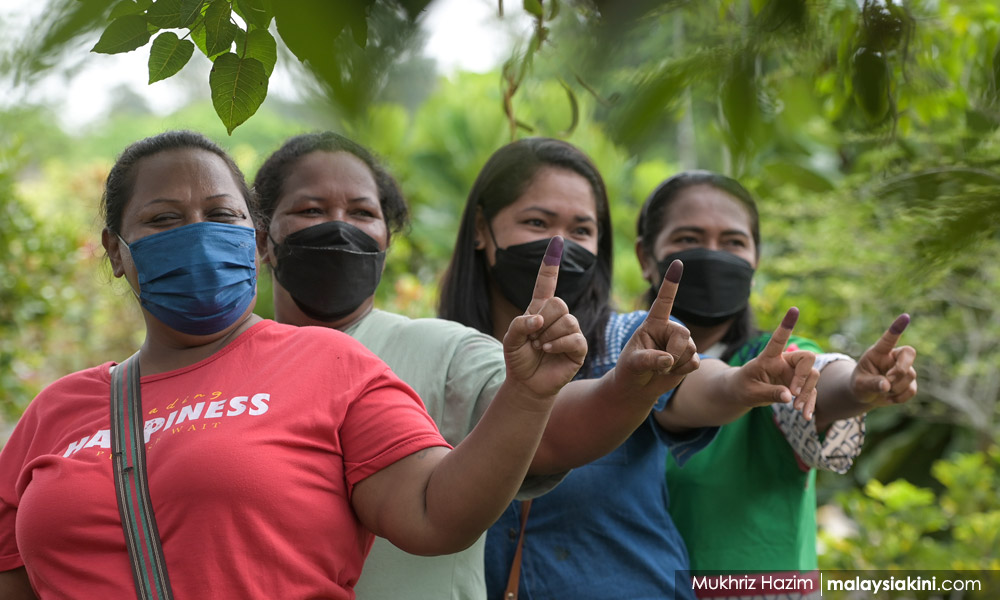
Bob Manolan Mohd, an Orang Asli from Pahang who was a PKR senator from 2018 to 2021, suggested that rejected ballots among the community reflect the Orang Asli’s frustration against the establishment and political parties.
“Among the Orang Asli communities, they are (fed up) with voting… There have been issues within their villages and they want to show their anger through voting through improper voting methods by spoiling the votes,” he shared.
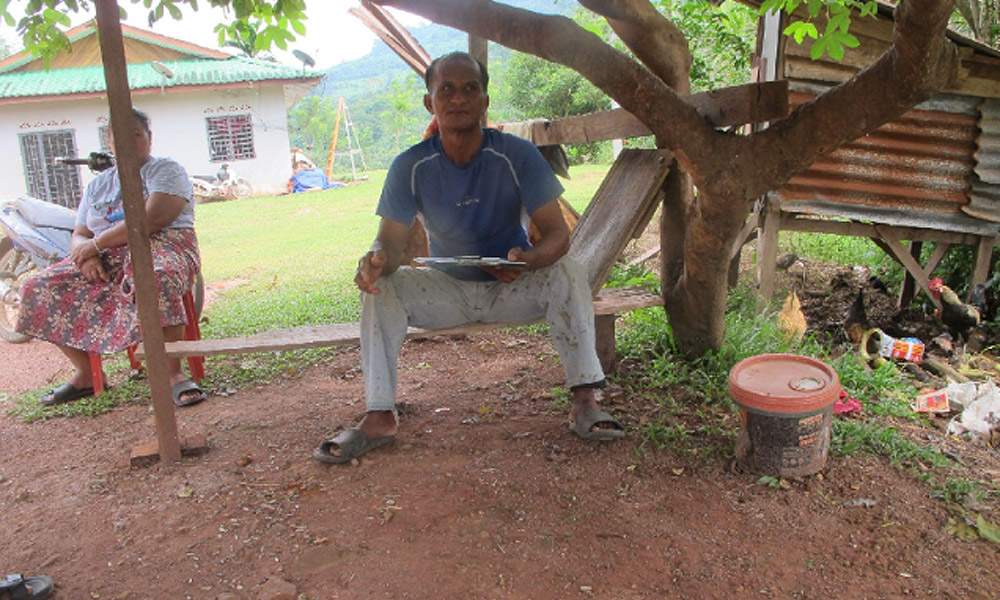
This view was brought forward in a discussion session with another Kampung Sungai Kiol resident.
"As individual voters, we are responsible for who we vote for," shared the local who has voted in two general elections.
"Some may choose to spoil the vote for a rebellious cause, and they know this. We do our best to satisfy our duties for those who want to vote responsibly."
Potential solutions
From surveys, interviews and statistical research, it can be seen that younger Orang Asli voters are more aware of the political issues surrounding their communities and who they will vote for.
Scott Edwards, a PhD candidate in international relations at the University of Birmingham’s Institute for Cooperation, Conflict, and Security (ICCS), wrote that there is a need for Pakatan Harapan to improve its grassroots campaign among Orang Asli communities.
Chiong equally shared this sentiment when he explained the Impian Malaysia project, one of DAP’s efforts to reach Orang Asli communities in Pos Sinderut, Pos Titum, Pos Betau and Pos Lenjang in Cameron Highlands.
The first-time assemblyperson compared DAP’s outreach efforts to those by the previous BN government which could reach out to these communities easily.
This is likely because Orang Asli constituencies may not be an area the opposition would “want to focus on”, according to Sivarajan.
He further adds that low chances of victory for the opposition demotivated them to pull their resources to politicise and educate the Orang Asli voters.
Conclusion
In conclusion, it is clear that there is a high correspondence of rejected vote rate (RVR) with Orang Asli majority areas.
As one of the researchers behind this study, Tindak Malaysia director Danesh Prakash Chacko believes that a close collaboration with NGOs that frequently liaise with these communities, Perak Orang Asli Development Department (Jakoa), and Orang Asli groups headed by the local communities are critical to resolving the RVR crisis.
This research should spur NGOs to call on the Election Commission to strengthen voter education for this community. If left unaddressed, the prevalence of rejected votes could be a decisive factor in forming a government.
HEW HOONG LIANG and DANESH PRAKASH CHACKO are part of electoral reform NGO Tindak Malaysia.
This story was produced with the financial support of the European Union in the form of a grant from Internews Malaysia. The contents are the sole responsibility of Internews and do not necessarily reflect the views of the European Union.
/file/1295/2a2904f61c3a3d065400fcb1b62c00ac.jpeg)


Report this comment
Are you sure you want to delete this comment?
This action cannot be undone.