


/file/publisher-c1a3f893382d2b2f8a9aa22a654d9c97/2022/09/2274ab3d69514999c40c08a6a21e0343.jpg)

HISTORY | Re-examining the 1915 Singapore mutiny
This leaderless and poorly coordinated rebellion was brought under control within two days, but it took about a month to round up the mutineers.
Despite being a well-documented event, several leading local and foreign historians have given an erroneous account of the 1915 Singapore Mutiny, including the major error of stating that the men of the Mountain Battery of the Malay States Guides (MSG) took an active part in the mutiny.
Hence, this article seeks to re-examine the incident, focusing on rectifying the factual errors prevalent in several historical works and shedding light on its actual causes based on Colonial Office records and other authoritative sources.
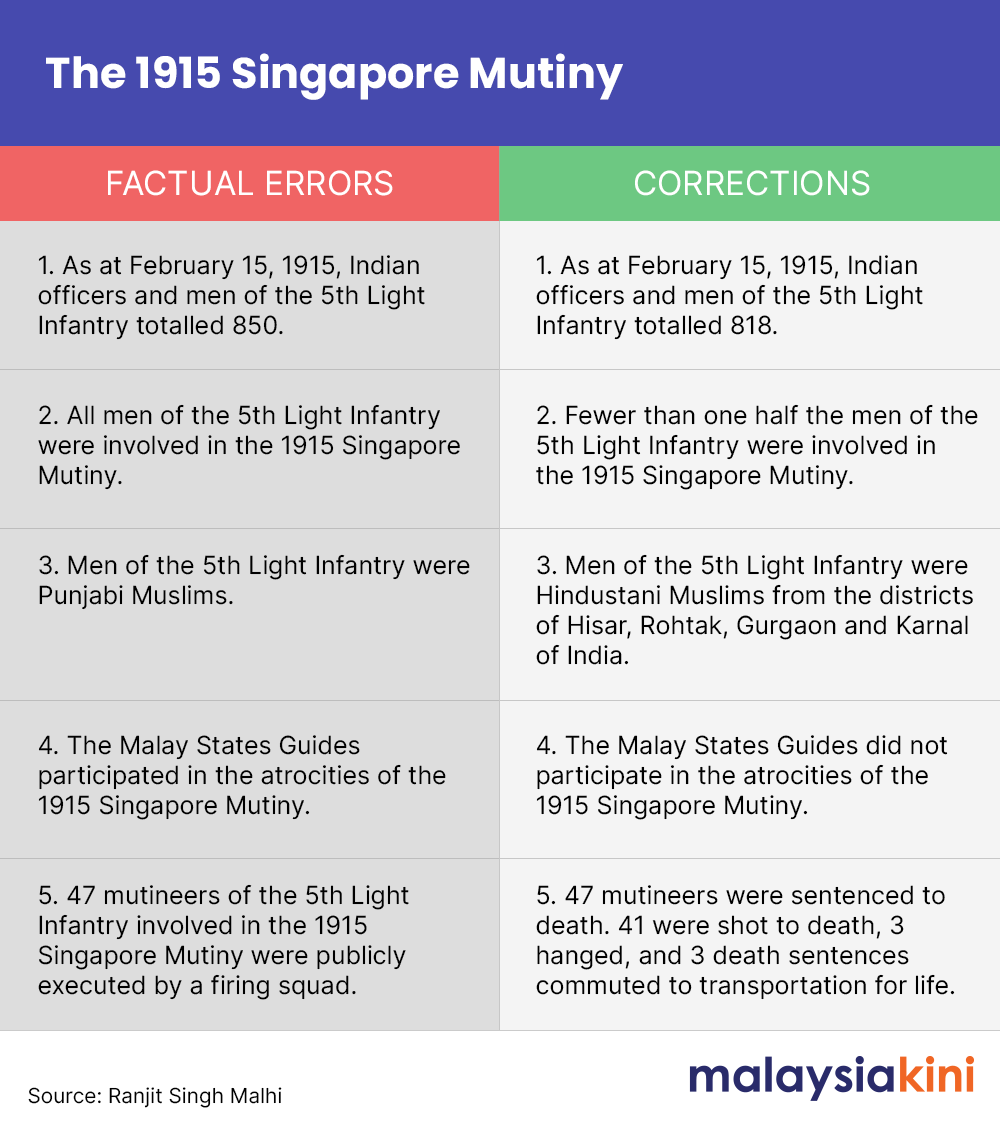
The following table summarises some of the factual errors and corrections...
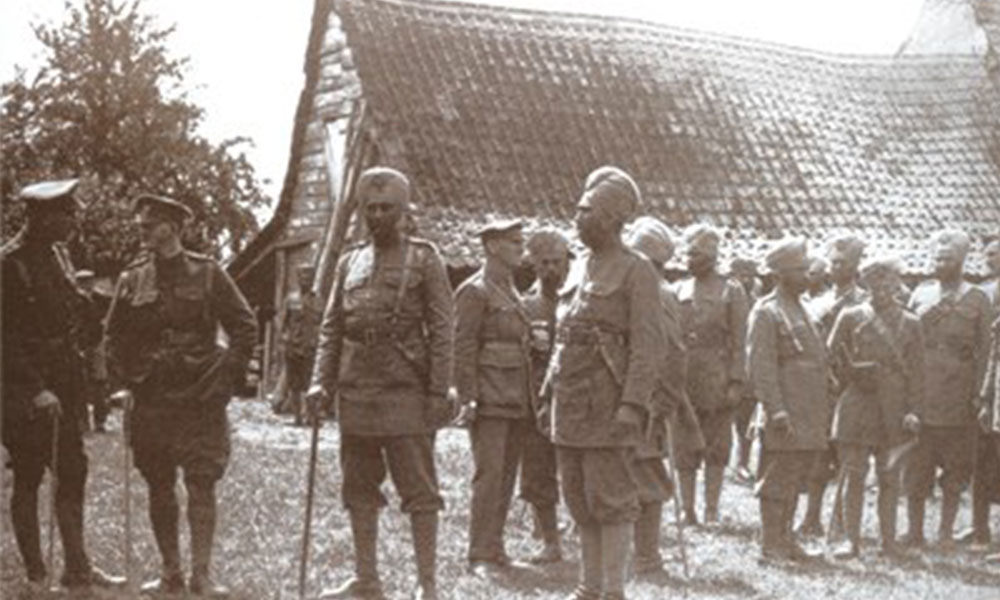
HISTORY | On Feb 15, 1915, at about 3pm, a short-lived rebellion broke out in Singapore involving about 300–400 Rajput Muslims of the British Indian Army’s 5th Light Infantry regiment.
This leaderless and poorly coordinated rebellion was brought under control within two days, but it took about a month to round up the mutineers.
Despite being a well-documented event, several leading local and foreign historians have given an erroneous account of the 1915 Singapore Mutiny, including the major error of stating that the men of the Mountain Battery of the Malay States Guides (MSG) took an active part in the mutiny.
Hence, this article seeks to re-examine the incident, focusing on rectifying the factual errors prevalent in several historical works and shedding light on its actual causes based on Colonial Office records and other authoritative sources.
The following table summarises some of the factual errors and corrections.
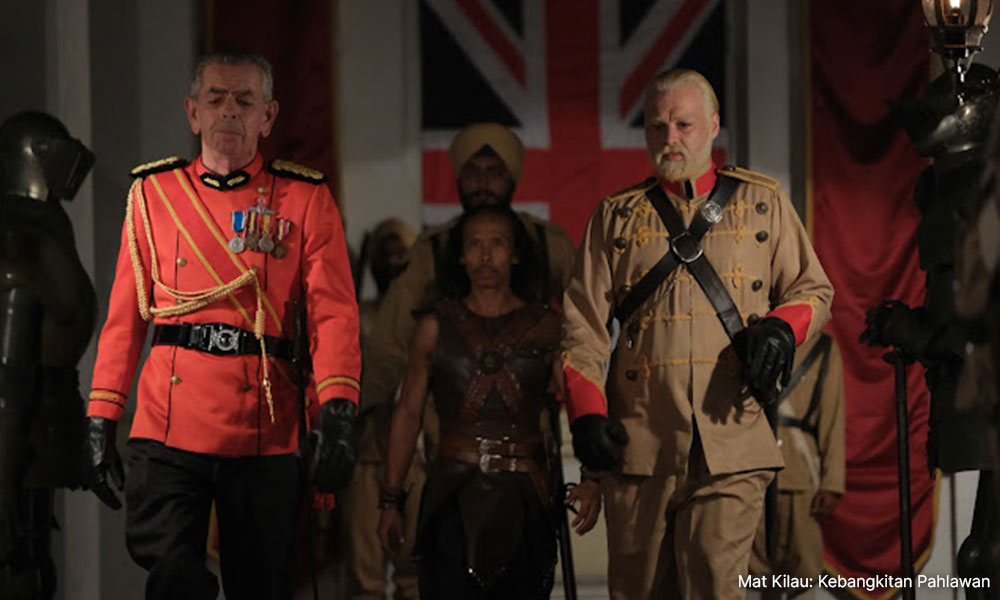
The Mountain Battery of the MSG was attached to the 5th Light Infantry at Singapore’s Alexandra Barracks.
At least six academicians have stated erroneously that the Mountain Battery was involved in the atrocities of the 1915 Singapore Mutiny which resulted in the death of 44 people - excluding the mutineers.
There is no evidence at all that the Mountain Battery of the MSG participated in the atrocities committed by the 5th Light Infantry.
Most of the Guides dispersed into the jungle with some of them surrendering the same night and others a few days later.
Indeed, the Court of Inquiry established by the British government cleared the Mountain Battery of complicity in the mutiny.
It is important to note that some of the Guides were forced to join the mutineers.
The Court of Inquiry admitted, “that the evidence of force having been used by the 5th Light Infantry to compel them [Guides] to participate in the Mutiny is very strong and connected; that there is no shred of evidence to connect the individuals with any of the outrages.”
It concluded: “On the whole, therefore, it may be said that any evidence which might connect the detachment of the Malay States Guides with the Mutiny is practically non-existent, and in the circumstances, seeing that they had few arms and but little ammunition, their conduct, though lacking in initiative, was perhaps justifiable.”
Mutiny participants
The ringleaders of the mutiny – Subedar Dunde Khan, Jemadar Chisti Khan, Havildar Imtiaz Ali, and sepoy Ismail Khan who fired the first shot of the mutiny - were all men of the 5th Light Infantry.
Out of the 213 men tried by court-martial for their involvement in the 1915 Mutiny, only 11 belonged to the MSG and all of the 47 insurgents sentenced to death were men of the 5th Light Infantry.
The 11 men of the MSG were given sentences of simple imprisonment – ranging from nine months to two years – for having arms in their possession.
There are also a few renowned academicians who stated erroneously that all of the men of the 5th Light Infantry joined the mutiny.
The truth is the 1915 Singapore Mutiny was started and conducted almost entirely by less than one-half of the 5th Light Infantry regiment - the right wing comprising Rajput Muslims.
The left wing of the regiment consisting of Pathans and Muslim Jats remained largely loyal.
Furthermore, a local history professor writing in an international journal (2014) about the 1915 Singapore Mutiny stated ridiculously that “...sepoy Ismail Khan fired the first shot killing the truck’s crew as well as those of the other remaining trucks.”
How can a single shot kill a number of people? The truth is Ismail Khan’s shot did not even kill a single person.
Causes of the mutiny
Pertaining to the causes of the 1915 Singapore Mutiny, it was the result of the interaction of various internal and external factors.
The British authorities tried their utmost to blame the outbreak of the mutiny on internal factors, primarily regimental jealousy, while downplaying the disruptive influences from outside, particularly that of the Ghadar movement.
In the words of Philip Mason, an authority on the Indian Army: “The mutiny at Singapore had the classic ingredients of any Indian mutiny – ineffective officers, disruptive influence from outside, [and] a military grievance.”
According to the Court of Inquiry’s findings, the prime cause of the mutiny had been “the very unsatisfactory state of discipline which had prevailed in the 5th Light Infantry apparently for some time.”
There was a low state of morale in the regiment. The Indian commissioned officers had scant admiration for the Commanding Officer of the regiment, Lieutenant-Colonel Martin.
He also meddled in almost every disciplinary case, often reversing judgements given by officers in Orderly Room cases.
This actions of Martin naturally angered the officers for it undermined their authority over the sepoys. Additionally, the British officers themselves were divided into two hostile camps.
Another cause was that the mutinous Rajput Muslims were distressed by rumours that the regiment was to be sent to Europe to fight against the Turks who were fellow Muslims.
In November 1914, Sultan Mehmed V of Turkey - Ottoman Empire - declared a jihad or holy war against Britain and her allies wherein all Muslims were obliged to support Turkey and Germany. Britain had earlier in August 1914, declared war on Germany.
Brigadier-General Ridout, General Officer Commanding the Troops in the Straits Settlements, whilst inspecting the regiment on the morning of Feb 15, 1915, did not mention the destination - Hong Kong - of the 5th Light Infantry when referring to their departure the next day at the call of duty.
The agitators and rumour mongers stirred dissatisfaction by spreading the news that the regiment was bound for Turkey and arguing that Muslim soldiers should not be battling one another when the real enemies were Britain and France, and not Turkey or Germany.
According to Rene Onraet, a former Inspector-General of Police, Straits Settlements, the 5th Light Infantry was “corrupted by German agents.”
Beginning Jan 23 till Feb 12, 1915 - relieved by men of the Johore Military Forces - about 50 men of the 5th Light Infantry, including Sepoy Ismail Khan who fired the first shot to signal the beginning of the mutiny, were ordered to guard the German prisoners-of-war at Tanglin Barracks.
German propaganda
Julius Lauterbach, a German prisoner of war, apparently stirred up sedition among some of the Indian soldiers by regaling that the Germans and their allies were winning the war in Europe and that the stories about British victories in France were false.
He also apparently told Jemadar Chisti Khan that the European cold climate would kill all the soldiers for Indian troops in Europe “do not die gloriously in battle; they die like sick dogs.”
German propaganda also deviously declared that the Kaiser had embraced Islam, made his pilgrimage to Mecca, and was the special protector of Islam.
There is also substantial evidence to prove that the Singapore Mutiny was not an “isolated incident” but rather a part of the Ghadar movement’s history.
The Ghadarites who played a major role in inciting the Indian troops at Singapore to rebel include Mujtaba Hussain @ Mul Chand, Gian Chand, Hira Singh, Giani Vir Singh, and Santokh Singh.
In the words of FC Isemonger and J Slattery who were Punjab police officials: “There is little reason for doubt, however, that without the incitements and misrepresentations of the Ghadr party the mutiny would have been most improbable, whatever grievances or indiscipline there might have been in the regiment.”
Indeed, it was part of the Ghadar movement’s strategy to seduce men of the British Indian Army to rebel as they not only had access to weapons but knew how to use them as well.
To conclude, the 1915 Singapore Mutiny was a rebellion against the British Raj brought about largely by the twin extraneous factors of Pan-Islamism and Ghadar propaganda which found favour in an ill-disciplined regiment characterised by ineffective leadership, disruptive factionalism among both the British and Indian officers, and low morale.
RANJIT SINGH MALHI is an independent historian who has written 19 books on Malaysian, Asian, and world history. He is highly committed to writing an inclusive and truthful history of Malaysia based on authoritative sources.
The views expressed here are those of the author/contributor and do not necessarily represent the views of Malaysiakini.
/file/publisher-c1a3f893382d2b2f8a9aa22a654d9c97/2022/08/7189ab7ed4abfa89f3853b3c1a2ba5e1.jpg)


Report this comment
Are you sure you want to delete this comment?
This action cannot be undone.