/file/publisher-c1a3f893382d2b2f8a9aa22a654d9c97/2022/09/e41e4a755434e413cf80a1d68859911a.jpg)

HISTORY | Christian missionaries in 19th-century Malaya
HISTORY | The history of Christian missionary activity in 19th-century Malaya is often intertwined with the history of colonial political expansionism. Indeed, colonialism was expected to ‘civilise’ the uncivilised ‘others’ in the so-called intellectually and materially backward lands. There is little doubt such ideas and practices formed the cultural basis, rationalising British attempts to ‘modernise’ Malaya's indigenous and immigrant inhabitants.
There is, however, more to the story of English missionary activities in 19th-century Malaya. Despite the attempts by Christian missionaries to Christianise and subvert Malay Islamic ideals, and despite the fact that Christian missionaries failed in their mission, both ended up coexisting peacefully, especially in the Straits Settlements.
The origins of missionary activity in the Straits of Malacca can be traced back to the establishment of the London Missionary Society (LMS) in England. It was founded in 1795 with the ‘holy’ mission of spreading Christianity. It published and distributed Christian writings in vernacular languages, as well as taught children and youth to read and write in schools.
The LMS in Malacca, founded in 1815, took on the stated role in the Straits. Interestingly, the Malay teacher then for such missionaries was Munsyi Abdullah, a prominent Malay linguist. He translated Christian works into Malay. Although there were Muslim scholars and clergy who opposed these activities, the missionary mission was rarely viewed antagonistically.
Meanwhile, Robert Morrison, the LMS’s founder, and clergyman William Milne attempted to convert Chinese immigrants by establishing an Anglo-Chinese College and a Christian publishing company. There were also attempts to convert the Malays...
HISTORY | The history of Christian missionary activity in 19th-century Malaya is often intertwined with the history of colonial political expansionism. Indeed, colonialism was expected to ‘civilise’ the uncivilised ‘others’ in the so-called intellectually and materially backward lands. There is little doubt such ideas and practices formed the cultural basis, rationalising British attempts to ‘modernise’ Malaya's indigenous and immigrant inhabitants.
There is, however, more to the story of English missionary activities in 19th-century Malaya. Despite the attempts by Christian missionaries to Christianise and subvert Malay Islamic ideals, and despite the fact that Christian missionaries failed in their mission, both ended up coexisting peacefully, especially in the Straits Settlements.
The origins of missionary activity in the Straits of Malacca can be traced back to the establishment of the London Missionary Society (LMS) in England. It was founded in 1795 with the ‘holy’ mission of spreading Christianity. It published and distributed Christian writings in vernacular languages, as well as taught children and youth to read and write in schools.
The LMS in Malacca, founded in 1815, took on the stated role in the Straits. Interestingly, the Malay teacher then for such missionaries was Munsyi Abdullah, a prominent Malay linguist. He translated Christian works into Malay. Although there were Muslim scholars and clergy who opposed these activities, the missionary mission was rarely viewed antagonistically.
Meanwhile, Robert Morrison, the LMS’s founder, and clergyman William Milne attempted to convert Chinese immigrants by establishing an Anglo-Chinese College and a Christian publishing company. There were also attempts to convert the Malays who did not appear to be openly hostile to the presence and intentions of the missionaries. Indeed, bibles were translated into Malay and sold to the Malays.
According to Ghazali Basri in his work, ‘Kristianisasi sebagai Sebuah Gerakan: Satu Tinjauan Sosiologi’ (1994), one J Moore even dressed like a Malay and adopted the Malay lifestyle to entice Malays to Christianity. Local officials eventually ordered him to stop the deception. The sale of bibles to Malays was subsequently prohibited.

The colonial authorities were genuinely worried about agitating the Malay community, particularly the local rulers, through such overt subversion attempts. Nonetheless, whenever missionary activities were conducted in a reasonable and non-offensive manner, both Christian colonialists and Muslim Malays engaged in a form of intercultural negotiation.
The earliest missionary publications were in various vernacular languages in the form of pamphlets and books. For example, in 1819, there were a staggering 19,000 copies of various Christian materials available in Malay. The ‘Malacca Chinese Monthly’, published in 1815, contained general knowledge and information about Christianity.
CH Thomsen of the LMS was one of those active members involved in missionary work among the Malays in Singapore. He learned Malay from none other than Munsyi Abdullah himself, and he was eventually able to translate the Bible into Malay.
Threatening image
It should be noted that Munsyi Abdullah did criticise the overt use of phrases like “Kingdom of Heaven”, “Word of God”, “Son of God”, and “My Father Who Is in Heaven”. Interestingly, he was asked by Benjamin Peach Keasberry of the American Board of Commissioners for Foreign Missions (ABCM) and friends to correct the translations in order to avoid projecting a threatening image to the Malays. The Board was in charge of translating ‘The New Testament’ into Malay.
ABCM also established a unit called Mission Press, which published religious and non-religious materials. It even published a number of Malay manuscripts, including ‘Hikayat Pelayaran Abdullah’, ‘Adat Segala Raja-Raja Melayu dalam Segala Negeri’ and ‘Sejarah Melayu’ (Malay Annals). Mission Press also published several controversial books, including ‘Comparison of the Religion of Jesus with the Religion of Mohammed’, ‘The Rise of Christianity’, and pamphlets titled ‘Spiritual lessons’.
When Keasberry died in 1875, William Girdlestone Shellabear was in charge of reviving the press. He joined the Singapore Methodist Church Mission and established the American Mission Press, which was later renamed Methodist Publishing House in 1906 and Malaya Publishing House in 1927. Shellabear was an important missionary who contributed to the development of Malay historiography in the 20th century.
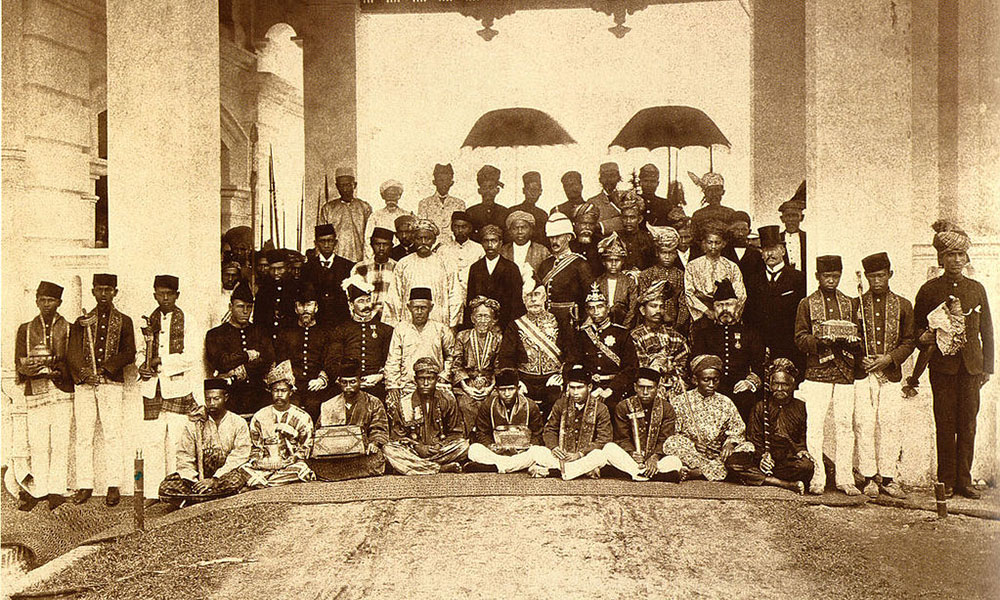
Christian missionaries in Malaya were well aware of the socio-religious role of the Malay sultans. They understood that in order to spread Christianity, the latter would have to play a significant influencer role by first accepting it and then ordering their subjects to do the same. As per the ‘Report of the Records of the Straits Settlements’, Christian missionaries left the Bible and other Christian materials in the possession of the rulers of Perlis, Terengganu, and Pahang.
According to missionary letters stored at the School of Oriental and African Studies in London, Thomas Beighton (1790-1844), a missionary in Penang since 1819, had a good relationship with the Sultan of Kedah, Sultan Ahmad Tajuddin Halim Shah. In Kedah, he and his friend, John Ince, were distributing Christian pamphlets. The New Bible was left in the Kedah palace.
Another missionary, WH Medhust, was also asked by the Sultan of Terengganu to explain in greater detail what the Bible said about Judgement Day and “the world to come”. The letters claimed that while Muslims accepted some aspects of the Bible, they did not accept all of it.
The establishment of missionary schools was another soft approach to eventually convince Malays to convert to Christianity by educating more Malay children to become literate. Even Johor’s Temenggung Ibrahim (1841-1862) sent his two princes to one of Keasberry’s school in Singapore in 1840.
English school in JB
The ‘Reports of the Straits Settlements Administration’ also reported that “there is, in Mr Keasberry’s Malayan School two brothers of Raja Kedah, a son of the Sultan of Johore, and several lads of good families of both Kedah and Johore.” Keasberry’s school was credited with influencing Johor’s administrator, Sultan Abu Bakar (1862-1895), to modernise and westernise state administration and governance in order to practise religious tolerance.
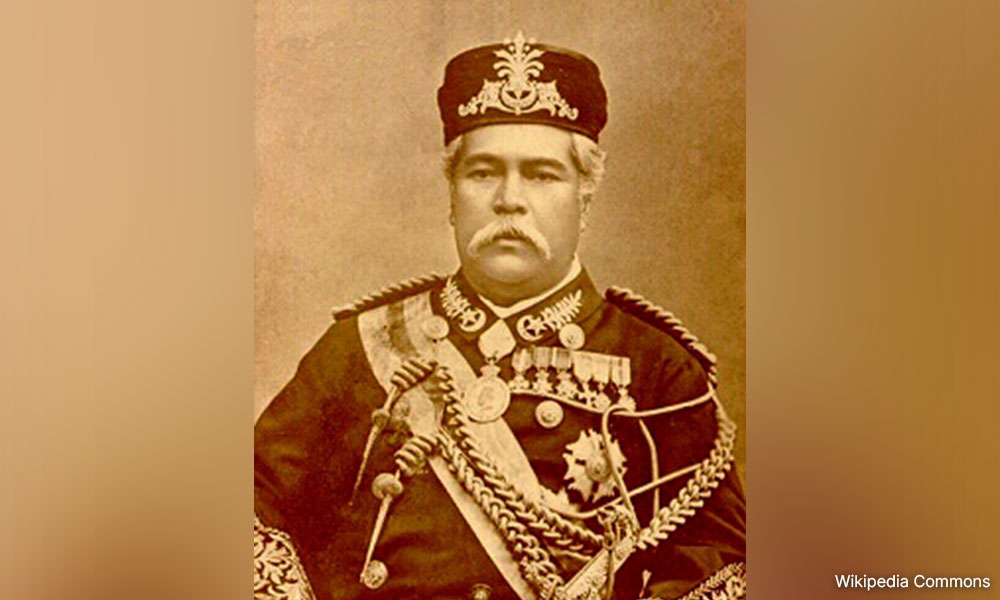
Abu Bakar himself established an English school in Johor Bahru in 1865, which was run by a Christian religious teacher and implemented the English curriculum. He also permitted church construction and was openly tolerant of Christianity and Europeans. In 1863, Abu Bakar even amended the Islamic law of Johor to make it more amenable to the adoption of European ideas.
In Malacca, Claudes Thomsen, a member of the LMS, established a Malay school in 1820 with the sole purpose of teaching children to read and understand the New Testament. A significant number of them were said to have learned to read and write English fluently. Beighton also founded a Malay school in Penang in 1819. According to reports, Malay students here were successfully taught to read the Bible.
Clearly, the Malays were not hostile to the gentle strategies of the Christian missionaries. However, problems arose when missionary writers began to belittle the Islamic religion. One piece by Beighton that landed into controversy was ‘The Comparison of the Religion of Jesus with the Religion of Mohammed’. It was an attempt to belittle the Quran while extolling the Bible.
Even as a person, Beighton was outrageous. He adopted a Malay child, baptised him, and named him Thomas John Ince. When the boy died, Beighton wrote a book called ‘The Story of Tom, That is Thomas J. Ince who was Loyal and Dedicated to Christianity as Stated’.
The Malays complained to Penang's governor, SG Bonham, and demanded that Beighton stop distributing his materials. Beighton, on the other hand, was able to persuade the governor that the majority of his writing was translation and aimed at stimulating inquiry, and that Munsyi Abdullah was translating these works himself.
Christian missionaries were ultimately unable to convert the Malays to Christianity despite the fact that Christianity was openly disseminated among them since the early decades of the 19th century. While the Malays tolerated it, they made it clear that they would not allow Christian ideology to be used to subvert Malay traditional ideas. Instead of vehement opposition, the Malay Muslim community chose to express their rejection of Christianity intellectually.
SIVACHANDRALINGAM SUNDARA RAJA is a professor at the Universiti Malaya’s History Department. He is a well-known scholar in the field of Malaysian economic history, with numerous local and international research publications to his credit.
The views expressed here are those of the author/contributor and do not necessarily represent the views of Malaysiakini.