


/file/publisher-c1a3f893382d2b2f8a9aa22a654d9c97/2022/11/a6c8ba97978af7c3d9af33b7d2986781.jpg)

COMMENT | How amendments to Constitution affected redelineation
COMMENT | In Part 1 of the series, we examined the possibility of a fair redelineation exercise and how it got annulled.
Subsequent 1962, 1973 and 1984 constitutional amendments diluted the concept of equality of voting strength, reduced EC powers in some areas and allowed EC not to comply with the redelineation principle.
However, some of the amendments of 1962 and 1984 were responsible for laying the grounds for the next two redelineation exercises getting annulled or...
COMMENT | In Part 1 of the series, we examined the possibility of a fair redelineation exercise and how it got annulled.
Subsequent 1962, 1973 and 1984 constitutional amendments diluted the concept of equality of voting strength, reduced the Election Commission’s (EC) powers in some areas and allowed the EC not to comply with the redelineation principle.
However, some of the amendments of 1962 and 1984 were responsible for laying the grounds for the next two redelineation exercises getting annulled or withdrawn.
Unused 1967-69/1971-1973 redelineation exercise
Before 1984, the EC was tasked to carry out a redelineation exercise eight to 10 years after the previous redelineation exercise.
Since the first redelineation took place in 1958 (for the Malayan side), the next redelineation exercise was scheduled no earlier than 1966.
There are a few things we need to be aware of for this exercise. The EC had lost its final authority on electoral boundaries. The final power to enforce boundaries was transferred to Parliament in 1962.
The 13th Schedule was introduced in 1962 to guide the principles of drawing the electoral boundaries (replacing Articles 116 (3), (4) and (5)).
One of the principles was a vaguely worded definition to contain malapportionment. The 13th Schedule 2 (c) states “the number of electors within each constituency ought to be approximately equal throughout the unit of review (for this instance, states of Malaya) except that, having regard to the greater difficulty of reaching electors in the country districts and the other disadvantages facing rural constituencies, a measure of weightage for area ought to be given to such constituencies, to the extent that in some cases a rural constituency may contain as little as one-half of the electors of any urban constituency”.
Together with Article 46 (which was silent back then on assigning parliamentary seats to each state), this clause allows the EC to carry out apportionment and redelineation together.
In 1962, the principle of simple multiple was codified in the 8th Schedule where a State Legislative Assembly size is the same or multiple that of the parliamentary seats of that state.
In 1966, the EC asked the federal government whether there were changes to the overall Dewan Rakyat size. The federal government responded in 1967 that there will be no changes and that the existing allocation of 104 members of the states of Malaya remains (stipulated by the 1962 amendments).
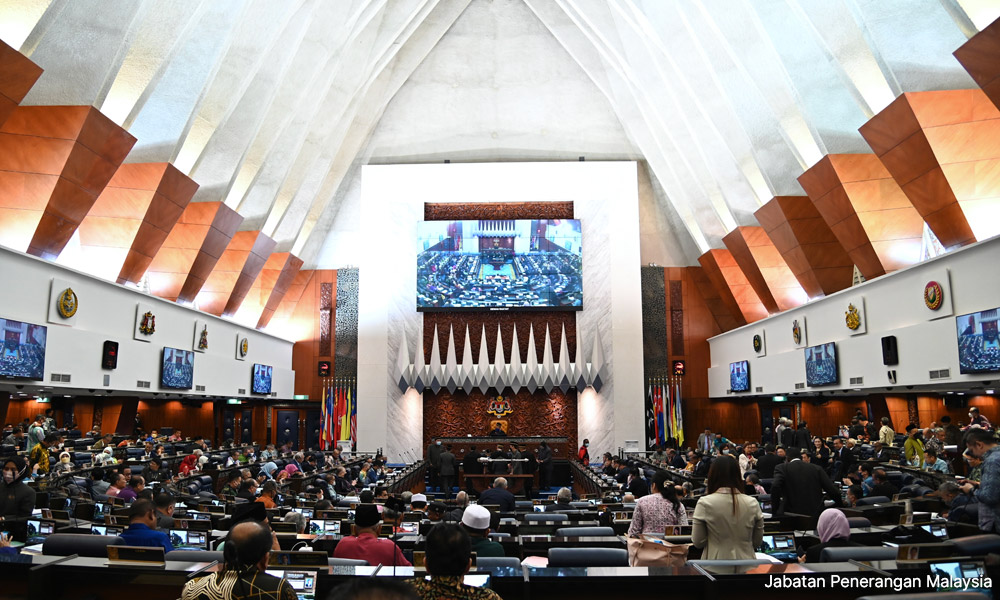
The EC commenced works on the redelineation exercise in 1967 (for the Malayan side) and in 1968, proposed boundaries were up for public consultation.
As the EC had the power to apportion parliamentary seats and suggest the state assembly size (to enforce the principle of simple multiple), the EC proposed the addition and deletion of parliamentary seats throughout the states of Malaya (to comply with the interstate equalisation principle).
Kedah, Penang and Selangor were set to gain one new parliamentary seat each, Negeri Sembilan was to lose one parliamentary seat and Johor was to lose two parliamentary seats.
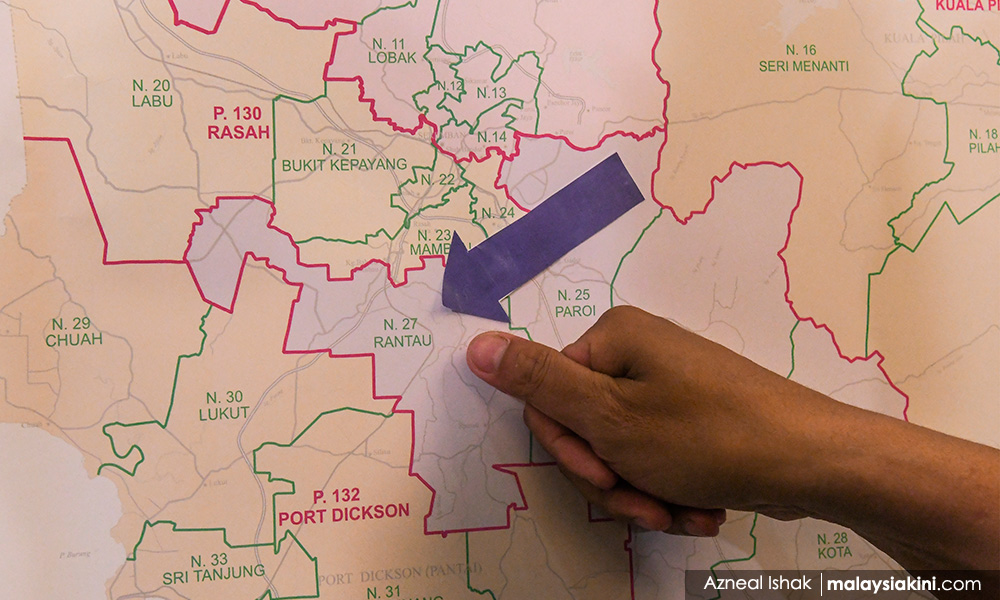
For the state assembly level, Kedah and Selangor were to gain two state seats, Penang three new state seats and Negeri Sembilan one new state seat. Johor was to lose four state seats. Significant boundary changes were done for the seats together with name changes.
Malapportionment definition
There are two major lessons from this exercise. The vaguely worded definition for malapportionment limits is up for multiple interpretations (eg +/-30 percent of the Electoral Quota (EQ), +/-33 percent of EQ).
By analysing the first proposal of the redelineation exercise, parliamentary constituencies were drawn within +/-33 percent of the state EQ. However, the definition of 13th Schedule 2 (c) made no reference to any state EQ.
As a matter of fact, the definition is insisting on the equalisation of constituencies throughout the states of Malaya. Once the analysis covers the entire range of parliamentary constituencies of Malaya, the smallest seat was 66.43 percent of national EQ to 142.72 percent of EQ.
In no way, the EC was breaking the constitutional rules as the definition was very vague. In short, this version of the 13th Schedule 2 (c) should not be the basis of fair malapportionment limits in Malaysia.
This redelineation exercise was suspended in 1969 due to the 1969 election and 1969-1971 emergency. Once the constitutional order was restored, the redelineation exercise resumed in 1971 and with changes of three EC secretaries, the redelineation report was finalised in May 1973.
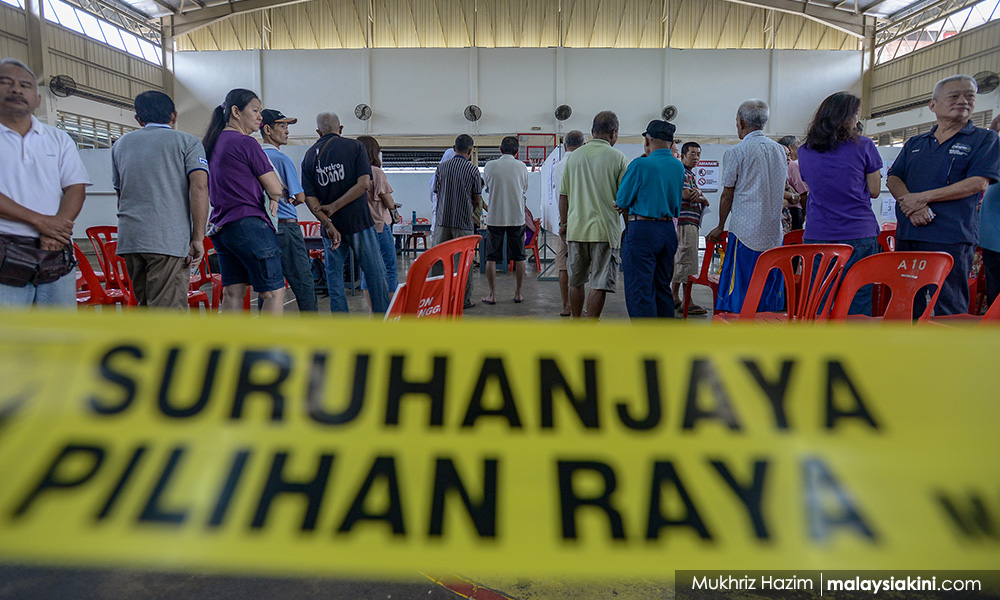
As per Section 9, Part II of the 13th Schedule, the redelineation report was presented to the prime minister. The next step was for the Dewan Rakyat to approve it. However, the Dewan Rakyat passed legislation to increase the parliamentary seats of the states of Malaya from 104 to 114.
The same legislation nullified the effects of the 1973 redelineation exercise. The same legislation ended the EC’s ability to apportion, as the Dewan Rakyat stipulated, the count of Parliament seats for every state. The lesson from this exercise is not to have a politicised body be the final approver of electoral boundaries
The 1967-69/71-73 redelineation exercise remains the last attempt by the EC to apportion seats throughout the states of Malaya and hence, an attempt to treat voters of different states equally.
Withdrawn 1992 Malayan redelineation exercise
In 1984, major constitutional changes were made in relation to redelineation. The upper 10-year limit for the next redelineation exercise was removed.
A new sub-clause was added – Article 113 (3)(a) where redelineation could be triggered earlier (before the eight years lapsed from the last redelineation) if the Dewan Rakyat or state assembly seat count was altered.
The same sub-clause allowed the EC to modify the contents of the 13th Schedule as it thinks necessary for the early redelineation exercise. However, the amendments were silent on how redelineation should be done if the Dewan Rakyat or state assembly seat count changed after eight years from the previous redelineation exercise.
On Nov 8, 1984, the 1984 redelineation exercise for Malaya (including the newly created Labuan) was completed (when the redelineation report was tabled to the prime minister).
On Oct 21, 1992, the Dewan Rakyat passed the legislation to increase the number of the Dewan Rakyat seats for the states of Malaya (Act A837). This Act was to take effect from Nov 20, 1992, and instructs the EC to carry out a redelineation exercise in line with Article 113 (3)(a).
Article 113 (3)(a) is meant for early redelineation that takes place if the composition of the Dewan Rakyat or state assembly changes before the next redelineation cycle. On Nov 9, 1992, the minimum of eight years had lapsed since the 1984 redelineation exercise. On Nov 26, 1992, the EC issued a public notice that their first round of redelineation proposals was up for review.
In December 1992, the Attorney-General Chambers informed the EC that the redelineation exercise being conducted was on a collision course with existing laws. It was found the 1992 redelineation exercise should not be using Article 113 (3)(a) but instead follow standard redelineation principles laid in Article 113 (2).
On Feb 11, 1993, the EC withdrew its redelineation review notice and the official reason for the withdrawal was ‘technicality’. Meanwhile, DAP filed legal proceedings to stop the redelineation exercise on three grounds: constitutional violation, going against the principle of one person one vote and lack of independence of the EC.
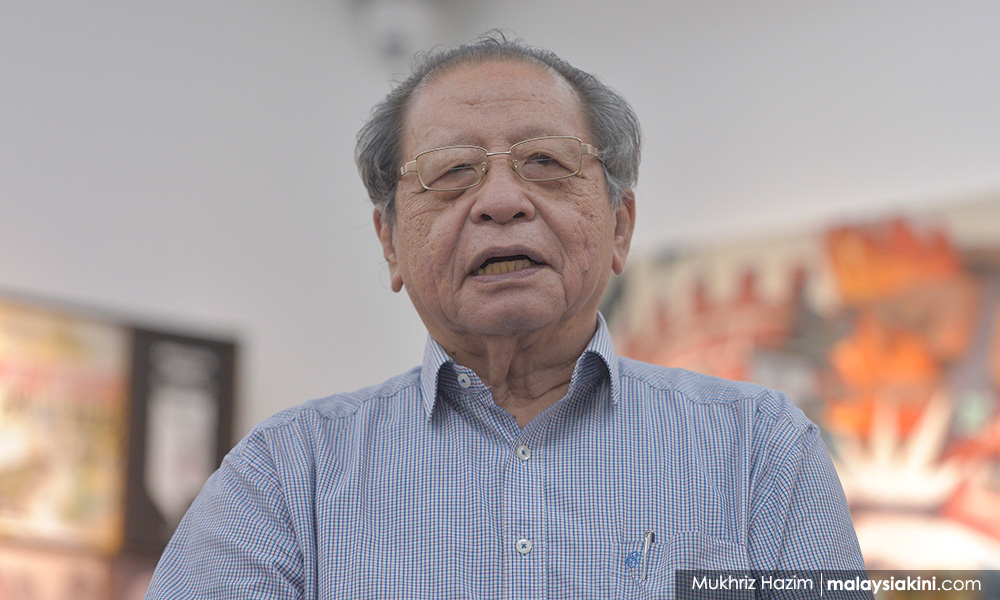
According to DAP veteran Lim Kit Siang, the said legal action compelled the EC to cancel the exercise to prevent public exposure in the courts.
On June 7, 1993, the Dewan Negara passed the legislation to address the redelineation approach where the composition of the Dewan Rakyat/state assembly changes after eight years have lapsed from the previous exercise.
Act A849 was passed and a new sub-clause – Article 113 (3)(b) - was introduced. If the composition of the Dewan Rakyat or state assembly alters after the eight years lapsed from the past redelineation exercise, the EC is to carry out a redelineation exercise of the areas affected by the alteration of the composition in line with Article 113 (2).
Article 113 (2) refers to the redelineation exercise carried out no less than eight years after the previous exercise and such redelineation exercise should create constituencies to follow the 13th Schedule.
Act A849 retrospectively came into effect on Feb 20, 1992. On July 23, 1993, the EC issued a public notice of the redelineation review (which reflects 1992 additions of the Dewan Rakyat seats and 1992-93 state assembly seat additions). This redelineation exercise was completed in 1994.
The 1992 redelineation exercise might be the only redelineation exercise in Malaysia that was prematurely stopped. This exercise should be studied deeply as a template to prevent unfair redelineation exercises in future.
Conclusion
These three redelineation exercises (1960, 1967-69/71-73, 1992) provide valuable lessons on framing the fair redelineation proposal, the dangers of certain constitutional amendments and even a measure for a redelineation notice to be withdrawn.
Among the exercises, the 1960 redelineation exercise remains the best example of the fair boundaries that can be formulated. A redelineation exercise that is grounded on non-vaguely worded grounds and without political interference yields fair constituencies for Malaysia, just like it happened in 1960.
DANESH PRAKASH CHACKO is a research analyst working on applying mapping technologies to various Sustainable Development Goals (SDG) projects at Sunway University. He is also the director of the electoral reform group Tindak Malaysia.
The views expressed here are those of the author/contributor and do not necessarily represent the views of Malaysiakini.
/file/publisher-c1a3f893382d2b2f8a9aa22a654d9c97/2021/11/065d00360b13c59c8d6921d2ebc456f0.jpg)
/file/publisher-c1a3f893382d2b2f8a9aa22a654d9c97/2019/11/f057de2ae7b5d1b3fb5dfc35feef5d15.jpg)


Are you sure you want to delete this comment?
This action cannot be undone.