


/file/publisher-c1a3f893382d2b2f8a9aa22a654d9c97/2023/05/519798bc1fe0540358c8590ecc41b5ed.jpg)

COMMENT | Should Anwar court Hadi and PAS?
Can Anwar reasonably link up with the PAS president? Is it politically possible?
Amidst the emotions that this must raise among Malaysians on both sides of the deep divide, there is no reason why one should not engage in a rational and reasoned discussion of what it will entail for all of us and how this can be made to work.
We must bear in mind that politicians take stands in public to get votes, not necessarily for what they believe in...
COMMENT | The report that Prime Minister Anwar Ibrahim hopes to rekindle brotherhood with Abdul Hadi Awang has understandably raised heckles, and perhaps even hope among some sectors over what it could mean for Malaysia going forward.
Can Anwar reasonably link up with the PAS president? Is it politically possible?
Amidst the emotions that this must raise among Malaysians on both sides of the deep divide, there is no reason why one should not engage in a rational and reasoned discussion of what it will entail for all of us and how this can be made to work.
We must bear in mind that politicians take stands in public to get votes, not necessarily for what they believe in.
Perhaps at the heart of this discussion, one issue will be paramount - whether PAS in government will be less dangerous than a PAS which is outside government and therefore, free to engage in unlimited and provocative politicking.
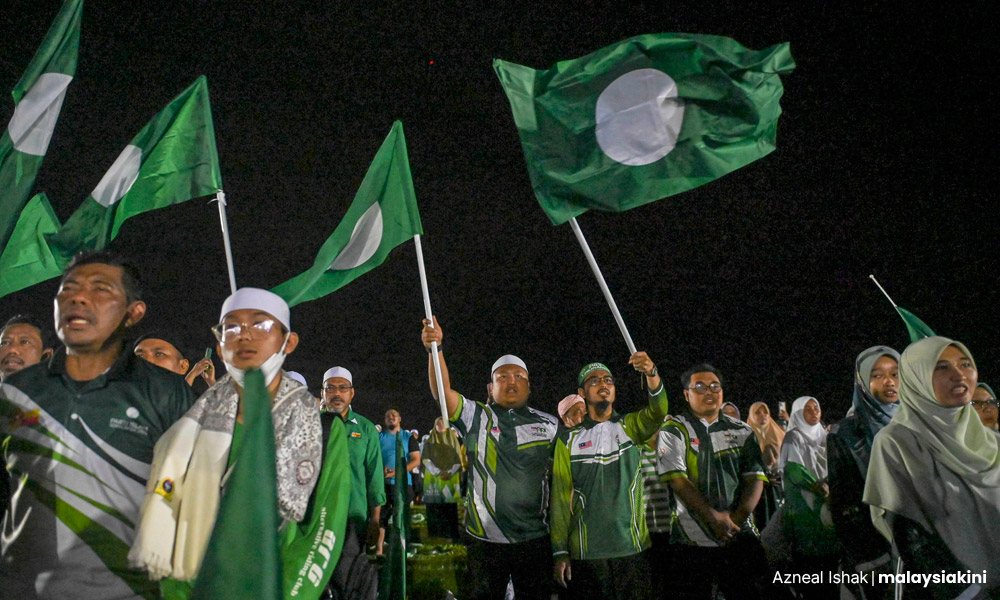
PAS is a major component of Perikatan Nasional (PN), the alliance that it formed with Muhyiddin Yassin’s Bersatu.
The latter was originally set up by Muhyiddin and Dr Mahathir Mohamad to oppose Umno under Najib Abdul Razak by Muhyiddin.
PAS established its pre-eminence as the most prominent Malay-Muslim party, winning 49 out of 70 MP seats contested for an impressive win rate of 70 percent, the highest among Malay-Muslim parties in Malaysia, according to reported figures.
It won seven seats for every 10 contested, an impressive win rate and emerged as the single party with the largest number of seats, pipping DAP’s 40 and PKR’s 31, the next two biggest.
By comparison, Umno, which had historically commanded Malay support, won just 26 parliamentary seats of 120 contested for an appalling win rate of just 22 percent, barely one out of five seats contested.
PKR, which can be billed as a multi-racial party with a Malay base, won just 31 seats out of 104 contested for a win rate of 30 percent, barely one in three contested.
It would have been worse if not for substantial non-Malay support. Its Malay-Muslim partner Amanah did no better with just eight seats out of 50 contested for a much poorer win rate of 16 percent.
For the record, Muhyiddin’s Bersatu, a bumiputera-only party, won just 25 seats out of 81 contested for a win rate of 31 percent, just above that of PKR. The only winner in terms of Malay votes was very clearly PAS.
Harapan lacks Malay support
While Pakatan Harapan as a whole won 81 seats, almost half or 40 of the seats came from DAP which contested 55 seats for the best win rate of all the major parties of 73 percent, beating PAS’ 70 percent.
The simple, inevitable truth from this simple analysis is that Harapan sorely lacks Malay support, even with Umno in its fold. The unity government, without PAS, leaves out a huge proportion of Malay support.
Whatever analysts may say to defend their positions, the results on the field definitely show that there was indeed a “green wave” among Malay voters in favour of PAS although we can argue till the cows come home why it happened.
It’s beyond the scope of this comment to go into that area - let’s deal with the results as they are.
If Anwar can get Hadi and PAS into the unity government, in one fell swoop, he will have put majority Malay support behind this government and in one go, squash all criticism that the government does not have Malay support and representation.
That will be quite a coup indeed and will help ensure the longevity of the current government until GE16 at least and probably beyond it as well.
And it may, if all things are done right, result in giving the country the political stability it needs to set the necessary stage for sustained growth with good economic and social policies - and yes, reduced corruption.
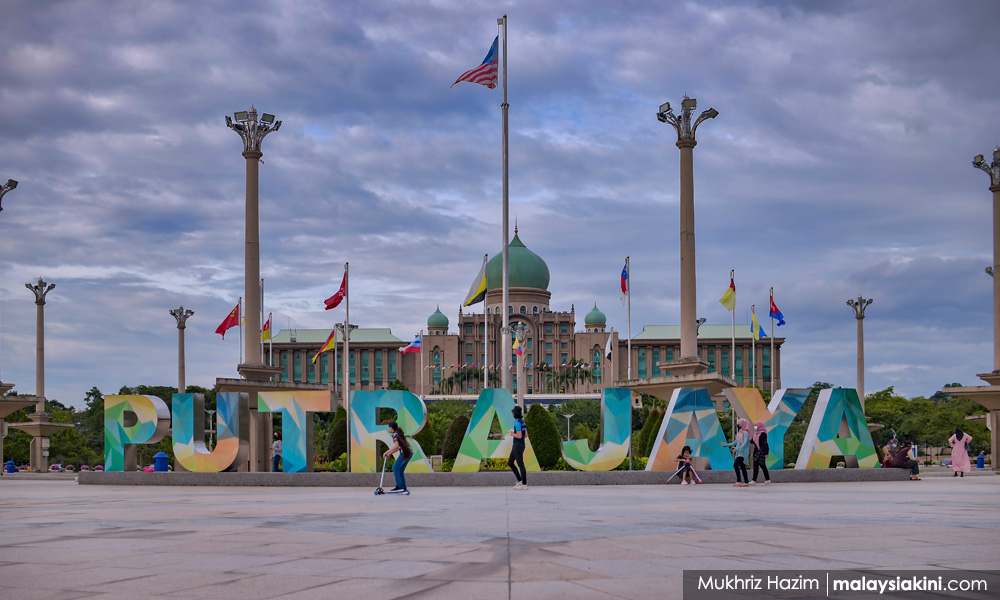
There are advantages for Anwar if he gets PAS and Hadi, of which the greatest is diversifying the support base to reduce reliance on any one party and therefore, making any effort to topple the unity government much more difficult.
That means, Anwar does not have to cater to the political needs of any of the parties in the unity government, including Umno (30 seats together with other members of the BN coalition) - which currently seems to have power far in excess of its numbers, DAP (40), Sarawak’s GPS (23) and even PAS (49).
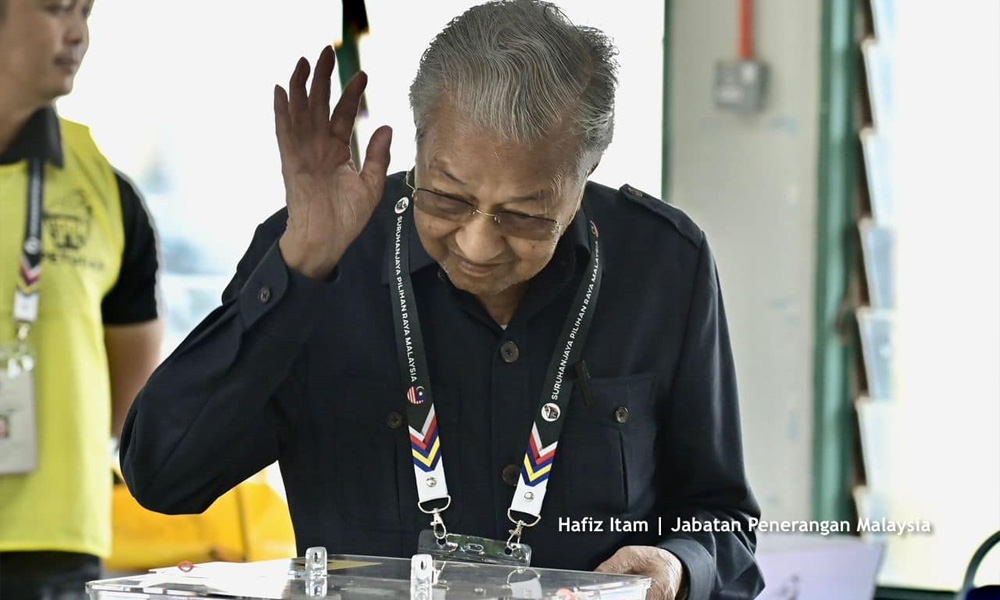
Also, there is that other gain that comes along with such an alliance with PAS - it will neutralise, for at least his lifetime, Mahathir’s sinister attempt to try and team up with PAS to achieve so-called Malay unity and in the process, topple the current government headed by a person he detests.
The success of such a coalition will depend on how deftly Anwar deals with the demands of all members of the coalition - effectively of all Malaysians.
This is to ensure that no Malaysians are unduly disadvantaged, everyone’s rights are protected, corruption is culled, and we march forward as one nation.
It is not impossible but it's a very delicate balancing act which needs to be finessed all along and requires courage to resist unreasonable demands when they are made, so much easier to do when you don’t have to depend on any one party.
Welcome to coalition politics, and one needs to understand and accept that PAS’ entry into the unity government, if it happens, is part of the democratic process and helps ensure that all sections of the public have a voice in government.
It needs sincerity and a genuine desire to understand all viewpoints for rationale and reason to prevail.
For it to work well, it needs public politicking and raucousness by all to reduce in favour of rapport and reconciliation, so much easier to achieve if all who matter are in the coalition.
They are big “ifs” but if we can do it, we have a better chance than at any other time since a long, long time ago when we achieved independence by speaking with one voice and one aim.
P GUNASEGARAM says that sometimes what seems the most impossible of alliances are possible - we have seen them these last few years. Let’s hope they bring some good this time.
The views expressed here are those of the author/contributor and do not necessarily represent the views of Malaysiakini.
/file/publisher-c1a3f893382d2b2f8a9aa22a654d9c97/2021/03/3425c9e58102a66d44c3f648e70ac1ad.jpg)
/file/publisher-c1a3f893382d2b2f8a9aa22a654d9c97/2023/04/20247ab15df5ccfb7e327a26dc91cf14.jpg)
/file/publisher-c1a3f893382d2b2f8a9aa22a654d9c97/2023/03/1dbb0a60c5d6414c83b23bff34c7a8bc.jpg)
/file/publisher-c1a3f893382d2b2f8a9aa22a654d9c97/2022/06/2c3b583e011f40a9de12deced08243bc.jpg)


There is no compulsion. AI has offered to PAS and it is up to PAS to decide. They can chose to accept or refrain. They chose their own destiny/ As PMX, he has extended the offer, the ball is now in their court.
Report this comment
Are you sure you want to delete this comment?
This action cannot be undone.