




Virtual slugfest over the supernatural
Two professors had a virtual boxing match although strangely enough they might not even have been aware of it. They were fighting not in actual combat but in the world of abstractions.
In one corner stood Professor Dr Hashim Awang, of Universiti Malaya's Malay Studies Academy. He delivered a lecture on Malay traditional healing methods at the university, saying Malay traditional healing methods should not be cast aside but studied.
"It should be ascertained whether these methods could play a complementary role to the modern medication available in the country," he said.
Two professors had a virtual boxing match although strangely enough they might not even have been aware of it. They were fighting not in actual combat but in the world of abstractions.
In one corner stood Professor Dr Hashim Awang, of Universiti Malaya's Malay Studies Academy. He delivered a lecture on Malay traditional healing methods at the university, saying Malay traditional healing methods should not be cast aside but studied.
"It should be ascertained whether these methods could play a complementary role to the modern medication available in the country," he said.
He was championing the credibility of Malay culture and traditions, in this case in the form of traditional medicines. He was championing the survival and continuity of Malay culture.
In the other corner was National Fatwa Council chairperson Professor Abdul Shukor Husin, who commented that spirits and supernatural beings are beyond the comprehension of the human mind as they involved the 'invisible world'.
"We don't want to promote a belief in tahyul (supernatural) and khurafat (superstition) which we do not know about."
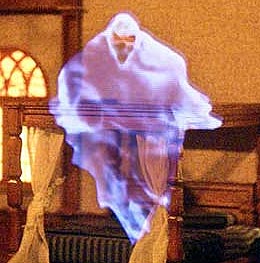 And he meant it too, for he issued a
fatwa
directing the Seremban museum to immediately close an exhibition on Malay ghosts, ghouls and supernatural beings. A
fatwa
is never trivial. It is the definitive authority on matters pertaining to Islamic laws, rules and parameters. It is spiritually binding. So the museum closed the exhibition immediately.
And he meant it too, for he issued a
fatwa
directing the Seremban museum to immediately close an exhibition on Malay ghosts, ghouls and supernatural beings. A
fatwa
is never trivial. It is the definitive authority on matters pertaining to Islamic laws, rules and parameters. It is spiritually binding. So the museum closed the exhibition immediately.
Both personalities are men of obvious intellect and substance. Both are learned, presumably Malay and Muslim and thereby protectors of Malay religion and culture under the ambit of untuk agama, bangsa dan negara (for the religion, race and nation).
Hashim protects culture and Abdul Shukor protects Islam. There shouldn't have been any contradiction and conflict between them. But there has been.
The fatwa in principle decreed that the supernatural and superstition should be expunged from the Malay mental domain. Furthermore it would render Hashim the champion and promoter of proscribed and deviant supernatural beliefs. And it is within this context that I say the two professors are in a fight.
No wishing it away
The moot point is this invisible supernatural world is alive and well in Malay culture. That is to say it exists beyond the exhibition and in Seremban. Neither is it limited to traditional medicines alone.
Just look at the number of pawang and bomoh plying their traditional medicinal skills. They are not dispensers of traditional medicines per se . They form the bridge or are agents between the supernatural world and traditional medicine. Today they are not really a dying breed.
Superstitions are not about to die either though admittedly these are not as plentiful as, say a generation ago. Again pawang and bomoh are arguably prime propagators of superstitions.
Now that a decree has been formulated, announced and acted upon, Abdul Shukor and the fatwa council have something else to do.
 There ought to be a thorough follow-through programme to expunge all supernatural influences ubiquitous and pervasive in Malay psychology and culture. Otherwise the
fatwa
would amount to no more than extinguishing a bush fire.
There ought to be a thorough follow-through programme to expunge all supernatural influences ubiquitous and pervasive in Malay psychology and culture. Otherwise the
fatwa
would amount to no more than extinguishing a bush fire.
For example, people might begin to think that the world of the supernatural exists only when an exhibition is organised and only in Seremban.
What is the value of a fatwa when it is inconsistent and localised? This would surely lead to contradiction, confusion and even conflict. A follow-through is imperative.
Follow-up action?
That is a massive task but of course there are many ways of doing it. I take the liberty to suggest some which the fatwa council might wish to mull over:
1. Declare all traditional medicines to be haram .
2. Declare all practitioners of traditional medicines like pawang and bomoh as subversive and anti-religious elements.
3.. Order them to immediately stop plying their trade.
4. Declare those consulting pawang and bomoh as propagators of haram activities.
5. Inform them that such activities are sinful.
6. Declare Hashim's studies and teachings deviant to the Islamic religion.
7. Make Hashim renounce and retract his studies and teachings.
8. Place Hashim under detention somewhere near Ulu Yam should (6) and (7) be ignored.
9. Label his work as a 'sensitive item' to the general population.
10. Proscribe all books on Malay tradition and custom.
11. Books already on the shelf should be withdrawn immediately.
I dare say none of this will happen (the exhibition and Seremban excepted). For, eight of these points (that is, save 6, 7 and 8) will be suitably ignored as the public is mercifully forgetful and forgetting fast.
Keep it quiet for today and tomorrow everything will be forgotten. Anyway who says there has been a fight between the two professorial champions of Malay culture? It existed only in the thwarted minds of those harbouring pemikiran secara barat (who think the western way).
For items (6) (7) and (8), again nothing will happen. And why not? For this please kindly refer to my article on the Sultan, the mufti and the MP. In the case of Hashim, he is on the right side of the ethnic line.
What happens to any attendant and inherent inconsistencies and contradictions, and to possible conflicts? Historically this is what is going to happen: ignore it and let nature takes its course; what is a little ripple in an ocean of huge waves?
In other words, let the forgetful and easily forgetting mind play its part - it never fails.
AB SULAIMAN is an observer of human traits and foibles, especially within the context of religion and culture. As a liberal, he marvels at the way orthodoxy fights to maintain its credibility in a devilishly fast-changing world. In his free time, he loves to read, travel and play golf (although his game could be better).


Are you sure you want to delete this comment?
This action cannot be undone.