


/file/publisher-c1a3f893382d2b2f8a9aa22a654d9c97/2024/07/8522649232b7907cf66278bca9babd15.jpg)

COMMENT | Bandar Kinrara Tamil school poser
This school holds a special place in my heart and that of my family, as my son completed his primary education there.
It is the largest Tamil school in the area, originating as an estate school decades ago.
With its adjacent field and newly constructed building, accommodating around 700 students, this school is the preferred choice for parents residing nearby to enrol their children.
As a part of the Indian community and...
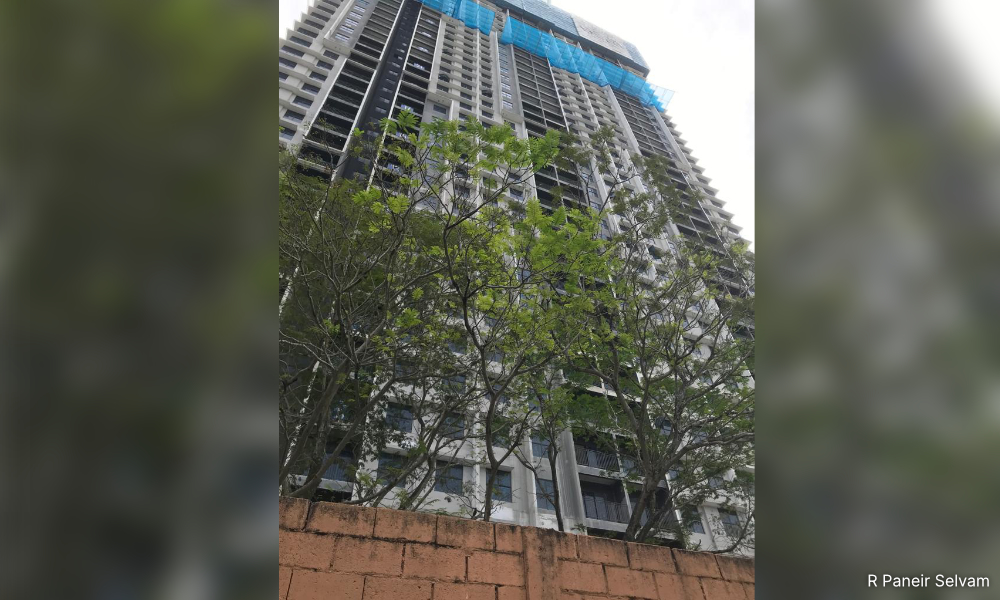
COMMENT | I was completely taken aback recently upon discovering that a section of SJKT Bandar Kinrara will be demolished to make room for the road expansion leading to a new condominium project that is currently underway.
This school holds a special place in my heart and that of my family, as my son completed his primary education there.
It is the largest Tamil school in the area, originating as an estate school decades ago.
With its adjacent field and newly constructed building, accommodating around 700 students, this school is the preferred choice for parents residing nearby to enrol their children.
As a part of the Indian community and parent of a former student, it is my responsibility to share my perspective on this issue.
During the town hall meeting held last Sunday by the school's board and the Parent Teachers-Association, I felt some relief after hearing the explanations provided by the board members and the assurance given by Batu MP P Prabakaran that the situation is being addressed and will be personally looked into.
Looking beyond racial lens
However, questions came up within me regarding the origins of this issue. While Tamil school-related matters hold significant importance to the Indian community, particularly to the Tamils who constitute the largest sub-ethnic group of Indian Malaysians, it is essential to analyse this specific issue beyond racial lens.
Firstly, the school is classified as a national-type primary school, which indicates that all staff, including teachers, are appointed by the federal government.
Being categorised as a government-aided school, the responsibility to address any issues lies with the federal government. It is essential for both state and federal authorities to step in and collaborate on finding a solution that prioritises the well-being of the students and the school.
Given the significant roles of both levels of government in this matter, it is crucial to emphasise that this is not merely a community concern but rather a national educational issue.
This raises another question - how the state and federal governments would respond if the school were a national school, a religious school or a national type Chinese primary school?
Limited press coverage
Secondly, it is noteworthy that there has been limited coverage of this issue in mainstream media, with only a few online news platforms such as Malaysiakini and Tamil TV channels reporting on it.
The selective attention of the mass media towards this particular matter, which involves a Tamil school, raises questions and warrants further scrutiny.
Moreover, it is imperative for both the current ruling parties, Pakatan Harapan and BN, to take this issue seriously.
Recently, Deputy Prime Minister Ahmad Zahid Hamidi emphasised the need for Harapan and BN to collaborate as a loose coalition in preparation for the upcoming election.
With that in mind, the government should realise that Indian voters hold significant influence in numerous constituencies and are considered kingmakers.

The concerns regarding Tamil schools are of utmost importance to these voters. Any mishandling of this issue by either Harapan or BN could potentially be exploited by the opposition to sway Indian voters.
With PAS and Bersatu actively devising strategies to win over Indian voters in the upcoming 16th general election, the role of Indian voters in determining the electoral outcome becomes even more crucial, especially since Malay voters are already divided among various factions.
Oversight by lawmakers
Besides, the commendable initiative taken by Kinrara assemblyperson Ng Sze Han and Seputeh MP Teresa Kok to address the issue was marred by a fundamental error.

Their representatives attended a meeting with the developer and Kuala Lumpur City Hall (DBKL) on Dec 7 last year without the presence of the school board members or PTA representatives.
It would have been more appropriate for the representatives to walk away from the meeting in protest, as the absence of school representatives renders any proposed solutions questionable.
This oversight has raised unnecessary suspicions within the Indian community regarding their role in this matter.
It is very surprising that seasoned politicians such as them did not recognise the importance of involving school representatives in finding a viable solution.
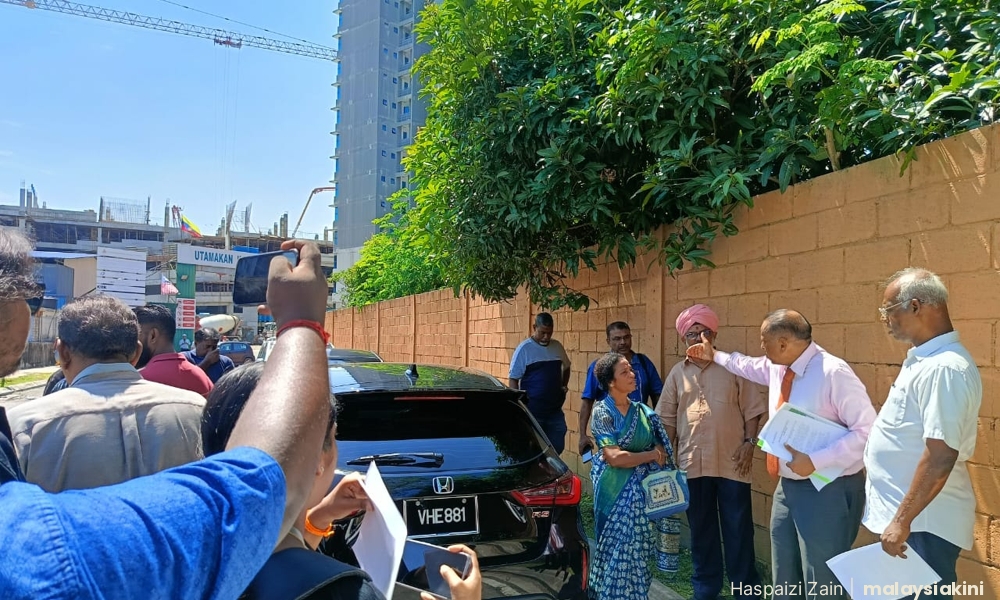
On that note, I am also puzzled by the fact that DBKL has granted approval for the construction of a condominium by the developer near the school.
Additionally, I am concerned about whether they have carried out an environmental impact assessment (EIA), as the increased traffic flow will lead to future congestion in the area and create a nuisance for the teachers and students due to the anticipated rise in noise levels upon the completion of the project.
This issue is intricate and requires careful handling. Pointing fingers will not solve the problem and may only make it worse.
However, it is essential to protect the interests of the students and the school. I believe that compensation and relocation are not viable solutions.
Instead, the developer should use their resources and expertise to find an alternative solution that does not involve encroaching on school land.
And I say without hesitation that my allegiance lies with the school and any other schools encountering a comparable challenge.
In the meantime, I earnestly trust that Prime Minister Anwar Ibrahim, who consistently emphasised the following statement during his election campaigns, will thoroughly investigate this issue to protect the welfare of both the school and its students.
“Anak Iban, anak saya; anak Cina, anak saya; anak Melayu, anak saya; anak India, anak saya dan anak Kadazan; anak saya.” (An Iban child is my child; a Chinese is my child; a Malay child is my child and a Kadazan child is also my child).
R. Paneir Selvam is the principal consultant of Arunachala Research & Consultancy Sdn Bhd (Arrescon), a think tank specialising in strategic national and geo-political matters.
The views expressed here are those of the author/contributor and do not necessarily represent the views of Malaysiakini.
/file/1163/f862ee811fd17fbd597592fbfa207cb4.jpeg)
/file/publisher-c1a3f893382d2b2f8a9aa22a654d9c97/2024/01/4802f2f3e5cb94690b28db2195d9bfc4.jpg)
/file/1200/fb2afb68aa369122984fb8caa4a173d2.jpeg)
/file/publisher-c1a3f893382d2b2f8a9aa22a654d9c97/2023/11/51af6e716239a5b81fce78dfab03dd39.jpg)
/file/publisher-c1a3f893382d2b2f8a9aa22a654d9c97/2023/04/1d5b7817b89b20cb7618f0cbfcc69698.jpg)


Are you sure you want to delete this comment?
This action cannot be undone.