


/file/publisher-c1a3f893382d2b2f8a9aa22a654d9c97/2020/07/a3f575df9ab60d703cc2f58bf240b253.jpg)

COMMENT | Revisiting Najib's RM42m SRC conviction
COMMENT | I write this in response to Malaysiakini’s article titled “Amid full pardon push, Najib’s FB swipes at SRC trial judge again” which I find has many inaccuracies that need to be corrected.
Therefore I am compelled to write this in the context of the leaked letter from the MACC to the chief justice dated Feb 20, 2023, asking for action to be taken against judge Mohd Nazlan Mohd Ghazali based on MACC’s investigations. The existence of this leaked letter was confirmed in Parliament in April 2023.
It is unclear how the investigation by the MACC was conducted during Latheefa Koya’s administration, but after her departure and under new leadership, the MACC investigation revealed the following:
1) Three judges declined the case
There were three other judges who refused to replace the existing judge in the SRC case involving former prime minister Najib Abdul Razak before Nazlan agreed to take over the case. This may suggest that the judges were individually approached instead of being automatically and randomly selected to prevent forum or judge shopping...
COMMENT | I write this in response to Malaysiakini’s article titled “Amid full pardon push, Najib’s FB swipes at SRC trial judge again” which I find has many inaccuracies that need to be corrected.
Therefore I am compelled to write this in the context of the leaked letter from the MACC to the chief justice dated Feb 20, 2023, asking for action to be taken against judge Mohd Nazlan Mohd Ghazali based on MACC’s investigations. The existence of this leaked letter was confirmed in Parliament in April 2023.
It is unclear how the investigation by the MACC was conducted during Latheefa Koya’s administration, but after her departure and under new leadership, the MACC investigation revealed the following:
1) Three judges declined the case
There were three other judges who refused to replace the existing judge in the SRC case involving former prime minister Najib Abdul Razak before Nazlan agreed to take over the case. This may suggest that the judges were individually approached instead of being automatically and randomly selected to prevent forum or judge shopping.
Questions as to why the three other judges had rejected taking the case should also be asked as to what was their reason for rejecting. It is standard practice that a judge can only recuse himself in court after being selected for a case but it appears this was not followed.
2) Funds didn’t originate from Kwap
Through a money trail investigation, the MACC also found that the funds deposited into Najib’s account did not originate from a Retirement Fund (Incorporated) (Kwap) loan. Instead, the funds came from a loan taken by a private company, Putrajaya Perdana Berhad, from Maybank.
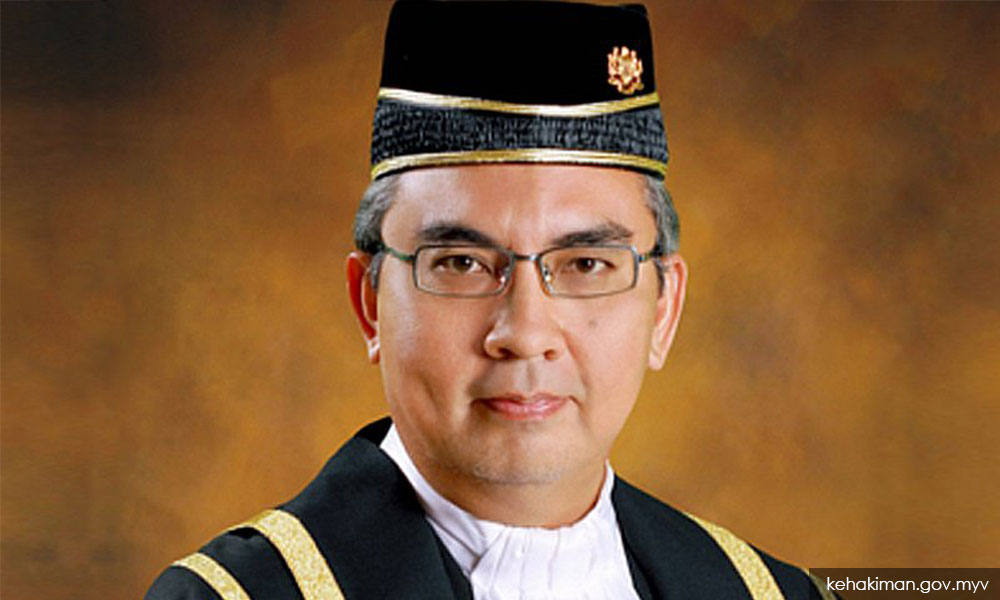
This occurred while Nazlan was serving as the chief legal advisor and secretary of Maybank. The MACC stated there was a strong possibility that Nazlan was involved in the loan approval process.
The MACC also reported that during Nazlan’s tenure at Maybank, the institution had proposed the establishment of SRC by 1MDB.
Impact on predicate charges:
Since the funds did not originate from Kwap, the fundamental charge that “Najib participated in a cabinet meeting to approve a government guarantee for SRC to secure a loan from Kwap” in the year 2011 became flawed (or cacat as Anwar calls it) and should have been dismissed.
With the collapse of the predicate charge, the funds deposited into Najib’s account cannot be deemed illicit in the context of this case, and the Anti-Money Laundering Act (Amla) charges against Najib should also have been dropped.
However, in June 2023, Anwar justified this by saying that the “source of funds is not relevant to prove a CBT (criminal breach of trust) charge”. This finding is baffling as CBT is the reason why funds are considered illegal under Amla. This decision will have far-ranging implications that just sitting in a meeting will lead to CBT charges because funds originating from elsewhere not related to the CBT charge enter your account four-and-a-half years later.
3) Funds originated from Ihsan Perdana
The MACC also found that the RM42 million funds deposited into Najib’s account four-and-a-half years later in late 2014 and early 2015 did not come directly from SRC. Instead, the funds originated from Ihsan Perdana, which transferred the funds to Najib’s account.
Ihsan Perdana is a separate company and is not the “CSR (corporate social responsibility) arm of SRC” as alleged in Malaysiakini’s story but it is true that SRC appointed Ihsan Perdana as a CSR agent. Ihsan Perdana also receives funds from other companies including Genting for CSR activities.
• If there was any misuse of power or Amla violation, it likely occurred at the level of Ihsan Perdana and not SRC. This is because SRC legally appointed, approved, and paid funds to Ihsan Perdana, and no wrongdoing was alleged or disputed in the court proceedings of the SRC case.
• Legitimate transfer order:
The funds transferred to Najib’s account cannot be considered illicit because the CEO of SRC himself instructed his office (including the CFO and senior accounting officers) to transfer the funds to Najib’s account, citing “CSR programmes” as the purpose on the transfer form.
Moreover, the RM42 million funds were used by Najib for CSR purposes and charitable contributions, not for personal use which is why the judge had said that Najib is guilty because it was not his right to give the RM42 million to charity - not because Najib robbed, stole, or swiped RM42 million.
The situation becomes even stranger as it is now proven beyond doubt by the existence of Swift fund transfer documents, Ambank’s testimony, MACC’s testimony, and the Royal Malaysia Police (PDRM)’s testimony in court that Najib did indeed receive at least RM642 million from Saudi Arabia including from the Saudi Arabia’s Finance Ministry bank account directly into Najib’s bank accounts.
Najib had also given away these RM642 million for various CSR work including flood aid over four years and none for his own personal spending despite the fact that these funds are fully legitimate and Najib had never been charged for receiving these from Saudi Arabia.
So the question is why would Najib want to “take” RM42 million when he had fully given away RM642 million?
Implications for Amla charges:
The Amla charges against Najib became invalid for the second time because there was no evidence that the funds were illicit or unlawfully obtained.
4) MACC action against Nazlan
After investigating the above matters, the MACC chief commissioner sent a letter to the chief justice urging disciplinary action to be taken against Nazlan in the SRC case.
• Chief justice’s decision:
This request was rejected. The chief justice decided, through a written judgment in the Federal Court that was hurriedly announced and held on Feb 24, 2023, which is four days after the MACC letter to the chief justice. The Federal court decision which states that the MACC and the attorney-general could only investigate or prosecute a judge after consulting with the chief justice had been strongly criticised by the MACC and a former chief justice.
Therefore, based on her own judgement which was made after the letter from MACC to her, she then decided MACC was wrong to investigate Nazlan and hence no action should be taken.
In light of the new findings above that arose from the MACC investigations done after Najib was sent to jail, perhaps it is now time to revisit Najib’s conviction and prison sentence.
ERIC SEE-TO is the former BN strategic deputy director during the Najib administration. He started writing using his real identity after deciding to shed his alter ego Lim Sian See following a debate with Economy Minister Rafizi Ramli.
The views expressed here are those of the author/contributor and do not necessarily represent the views of Malaysiakini.
/file/publisher-c1a3f893382d2b2f8a9aa22a654d9c97/2023/01/004b5bf494f2b45bcac83aaf1ec94878.jpg)


Are you sure you want to delete this comment?
This action cannot be undone.